
A short video caught my attention recently. In it, John Piper, a well-known Evangelical pastor, reads a prayer generated by an AI system. He had asked the machine to compose words in the style of a respected theologian. The prayer itself was rich in biblical language, filled with references to God’s glory and grace. Piper acknowledged that the words were impressive, yet he concluded that they were not truly prayer. His reason was simple: the machine cannot feel.
For Piper, this is decisive. Prayer, he insists, must come from a heart that feels the worth of God’s grace. If no heart is present, no matter how eloquent the words may be, it cannot count as praise. This view immediately raised questions. Can words themselves, regardless of their origin, become a vehicle for reflection and worship? Is feeling always the necessary measure of authentic prayer?
My own response moves in a different direction. Words are human creations, and they remain powerful even when spoken without strong emotions. Throughout history, believers have used set texts, liturgies, and prayer books. They did not always invent their own words or pour out spontaneous feelings. Instead, they let the words shape them. This history suggests that the real power lies not in the originality of our expression, but in the God who receives us through any expression.
The Protestant Suspicion of Set Words
To understand Piper’s resistance, we need to look at the tradition he comes from. Many Evangelical churches emphasize spontaneous prayer. The assumption is that words must flow directly from the heart in order to be authentic. A prayer that is read from a page may feel like an empty formality. The danger of repetition, in this view, is that it becomes mechanical and lifeless.
This suspicion has deep roots. The Reformation was in part a protest against rigid forms that seemed to stifle faith. Reformers wanted prayer to be more personal, less dependent on clerical mediation. Over time, this preference for spontaneous words hardened into a conviction: genuine prayer must be heartfelt, original, and unscripted.
Piper stands firmly in this stream. He believes that the central purpose of the universe is to produce people who feel the glory of God’s grace. Words, no matter how grand, are not enough if the feeling is absent. In his eyes, an AI prayer may mimic theology, but it cannot display the heart’s delight. That is why he dismisses it as empty, even if the text sounds impressive.
The Power of Prayer Books
Yet this is not the only Christian perspective. In Catholicism, Orthodoxy, and Anglicanism, the use of fixed prayers is not only accepted but celebrated. Believers recite the Psalms, the Rosary, or the words of the Book of Common Prayer. These texts are centuries old, polished by tradition and sanctified by generations of use.
The strength of such prayers is not spontaneity but continuity. They connect the individual to the wider body of believers across time and space. They offer words when one’s own heart feels dry or distracted. They teach theology through repetition and form character by steady practice. In these traditions, reciting a prayer does not make it less authentic. On the contrary, the act of recitation itself is a humble submission to words that are greater than any single person’s invention.
The contrast is striking. Where Evangelical voices like Piper stress personal expression, liturgical traditions emphasize formation through shared words. Both approaches have their value, but they rest on different assumptions about what makes prayer meaningful. This difference opens the door to considering AI not as an intruder but as another possible source of language that can serve faith.
Language as a Vessel of Grace
At the heart of this discussion is the nature of language itself. Words are never the final reality. They point beyond themselves. No matter how eloquent, they remain inadequate to express the full majesty of God. The Bible itself acknowledges this gap, reminding us that the Spirit intercedes with groans too deep for words.
If this is true, then the insistence that our own spontaneous words must carry the weight of authenticity may risk a form of pride. We may begin to imagine that our effort, our emotion, or our originality is what makes a prayer acceptable. In reality, all prayers are imperfect. Their value lies not in the skill of the speaker but in the grace of the listener. God receives them not because they are eloquent but because he is merciful.
This perspective changes the way we view AI-generated prayers. If even human words are always inadequate, then a machine’s words are no worse. They too can serve as vessels. What matters is not whether the words are produced by a heart but whether the believer who reads them opens themselves to God through them. The real asymmetry is absolute: God’s grace descends regardless of our effort.
AI as a Mirror of Eloquence
This leads to an irony. Those who object most strongly to AI in matters of prayer and writing are often those whose professional life depends on eloquence. The publishing industry resists AI because it threatens the uniqueness of authorship. Celebrity pastors resist it because their sermons are built on the craft of persuasive language.
AI holds up a mirror to these experts. Its strength is precisely the art of assembling words into compelling form. When pastors or authors declare that human words are categorically different from machine words, they may be unconsciously defending their own authority. The danger is that eloquence itself becomes sacred, and those who master it gain a privileged position.
Yet eloquence has always been a gift and a temptation. It can inspire, but it can also deceive. The fact that an AI can imitate eloquence so well should remind us that language, however beautiful, is not the source of grace. It is at most a vessel. The temptation to glorify words must be resisted, whether those words come from a preacher or a program.
Missionary Possibilities of AI
If we set aside fear, the potential of AI in missionary and educational work is enormous. Unlike a single pastor shaped by one denomination, an AI can provide explanations drawn from a wide range of traditions. It can explain the meaning of salvation from Catholic, Lutheran, and Reformed perspectives. It can translate resources into many languages instantly. It can answer questions at any hour, anywhere in the world.
For seekers who have no church nearby, or for new believers who feel intimidated, this accessibility is invaluable. AI can generate devotionals, study guides, or prayers tailored to personal situations. Far from replacing the pastor, it can serve as a companion and a teacher. It democratizes knowledge that was once limited to those with access to libraries or trained ministers.
This does not erase the need for human community. A machine cannot embody compassion, presence, or witness. But it can prepare the ground. It can support the missionary who travels far, the believer who struggles alone, or the student who wants to understand theology without bias. In these ways, AI is not a threat but a tool for extending the reach of faith.
The Danger of Human Effort as Criterion
Returning to Piper’s position, the real issue is not his love for authentic prayer but his assumption that human effort is the decisive measure. If only words that come from a feeling heart count as prayer, then those who use written prayers, prayer books, or even AI texts are left outside. Such a conclusion risks excluding millions of believers who rely on tradition and discipline rather than spontaneous overflow.
This assumption also risks amplifying spiritual pride. If I believe that my words are sacred because they flow from my own heart, I may forget that even my best words fall short. If I look down on others who read prayers from a book, I may miss the humility that such recitation embodies. And if I insist that AI-generated words are invalid, I may be placing too much weight on human originality.
The paradox is clear. By stressing the importance of human feeling, one can end up exalting human effort over divine grace. True humility lies in the recognition that no effort, whether ours or the machine’s, can bridge the gap. Only God’s love does.
Humility in the Age of AI
This recognition leads us to humility. Prayer is not about displaying our eloquence before God but about placing ourselves before him honestly. Sometimes that honesty means admitting we cannot find words. At such times, a prayer book or even an AI-generated text can help. The point is not that the words are sacred but that we are willing to be guided by them into God’s presence.
AI may even deepen humility by removing the illusion of originality. When I read a text that I know came from a machine, I cannot pretend that its beauty is my achievement. I must simply accept it as a gift, a set of words I can inhabit for a moment. In this way, AI can play a role similar to liturgy: it gives me language not my own, and asks me to bring myself into it with sincerity.
This is not a replacement for personal prayer. It is a supplement, a reminder that God’s grace can reach us through any medium. The lesson is not to glorify AI but to let it serve as one more tool that directs us away from ourselves and toward God.
Beyond the Pulpit and the Page
The resistance to AI among pastors and authors also reveals a broader cultural pattern. Both groups have built their authority on the mastery of words. The pastor’s eloquence, the author’s originality, the professor’s command of style—all are forms of social capital. AI threatens to blur this distinction by showing that eloquence can be generated at scale.
This does not mean that human words lose all value. But it does mean that their uniqueness should not be idolized. If the publishing industry clings to originality and pastors cling to authenticity, both may be protecting not only truth but also their own status. AI exposes the fragility of that position. It democratizes eloquence, and in doing so it forces us to ask what really matters in our communication.
In faith, the answer is clear. What matters is not whether the words are ours but whether they lead us into love, repentance, and worship. Whether they come from a saint, a stranger, or a machine, words remain servants of something greater.
God’s Grace, Any Medium
The heart of the matter is simple. Prayer does not depend on the origin of the words but on the God who hears them. To insist that only spontaneous human words count is to risk spiritual pride. To imagine that eloquence itself is sacred is to forget that all language falls short. The truth is that grace is not limited by our efforts.
When we use AI-generated prayers, we are not exalting the machine. We are admitting that words, wherever they come from, are never enough. We are relying on God to meet us through them. In this sense, AI may serve the same role as a prayer book: a scaffold that guides us, a vessel that carries us, a reminder that the real power is not in the words but in the love that answers them.
Every prayer is the same confession: our efforts are nothing, God’s grace is everything. That is the humility that opens us to his presence. And if a machine can provide words that help us see that truth more clearly, then those words too can become a path toward him.
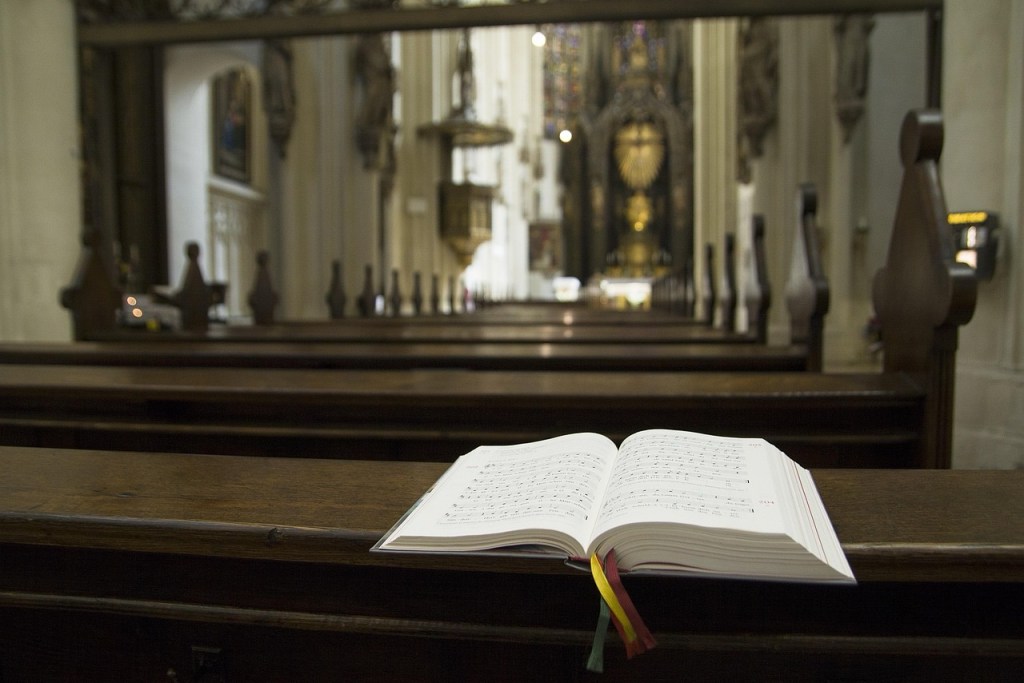
Image by Anrietta_Titova
 Tom’s Blog
The heart is the key… organic consciousness can never truly be replicated, I opine.😇
LikeLiked by 1 person
Thank you for sharing your thoughts. I agree, the heart truly is central, and no machine can replicate the mystery of living consciousness. My own reflection is that even when we pray with words from other mediums, whether from traditional books or even AI, they can still point us back to God. The key is always the heart, and God’s grace that humbles us and makes any words, however limited, become a path toward Him. 🙏😊
LikeLiked by 1 person
🙏💖🙏
LikeLiked by 1 person