
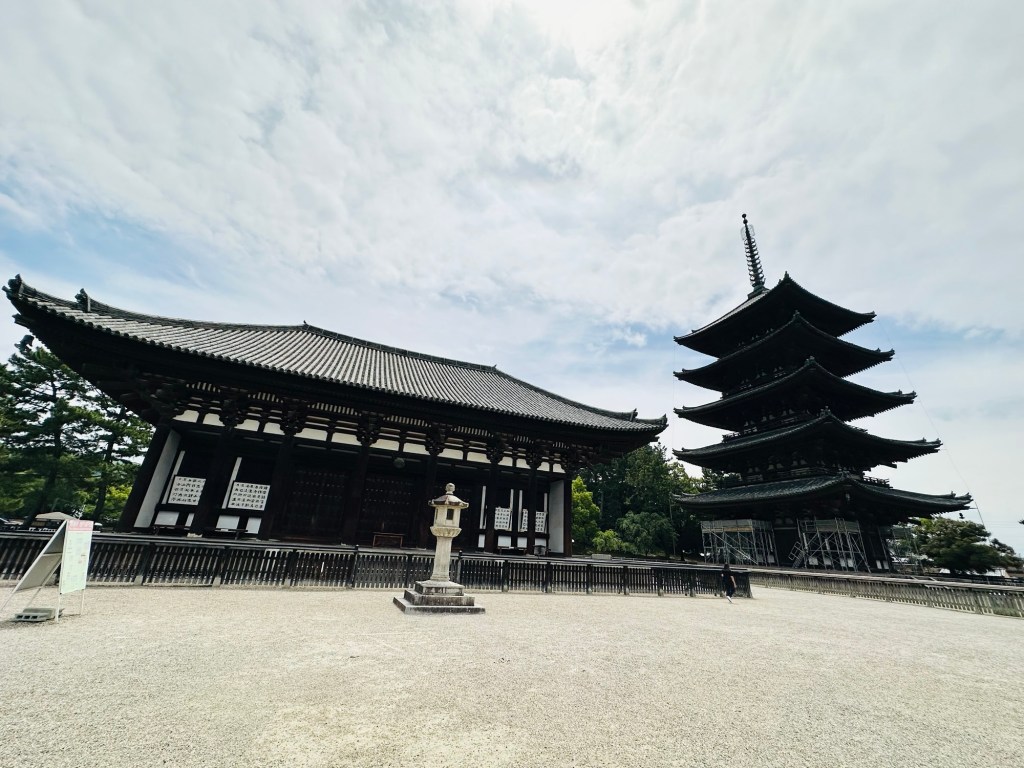
Everyday life often feels like a sequence of events, each one passing quickly into the next. A conversation, a notification, a memory, a breeze on the face. But beneath this fleeting surface lies something more layered. In the Yogācāra tradition of Mahayana Buddhism (also known as the Consciousness-Only school, or Yuishiki in Japanese) experience is not one-dimensional. It is composed of eight distinct streams of consciousness, ranging from the immediate touch of sensation to the vast, unconscious storehouse of karmic imprints.
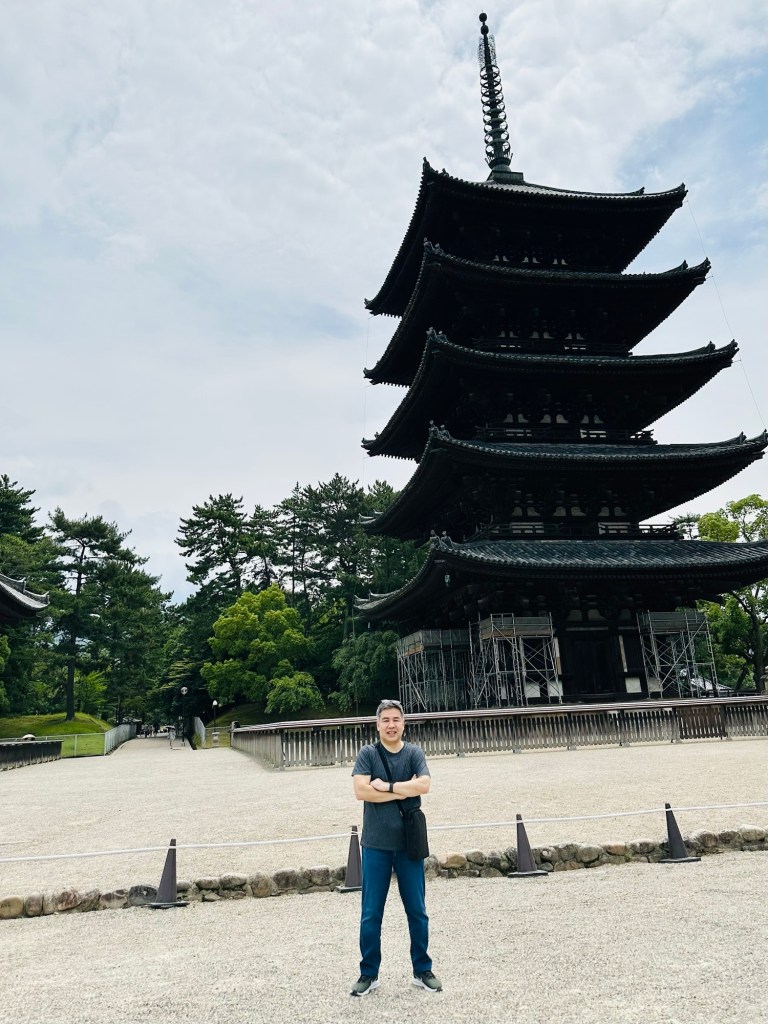
This perspective has always felt close to home for me. Near my hometown of Nara stands Kōfukuji Temple, one of the oldest and most historically significant temples in Japan. While its five-story pagoda is an iconic symbol of the city, its deeper legacy lies in being the central temple of the Hossō school, the Japanese transmission of Yogācāra. As a child, I passed by the temple countless times without fully realizing that its quiet presence carried the teachings of a tradition that views the world not as a collection of separate objects, but as patterns and flows within consciousness itself.
Some of these layers are easy to recognize. We see, hear, touch, and taste. We think and remember. But others remain hidden, like the seventh consciousness that clings to a false sense of self or the eighth consciousness, the ālaya, which stores the traces of our actions across lives. These layers are not stacked like shelves. They are woven through each other, forming a braid of perception, memory, judgment, and desire.
This layered view offers a way to understand why moments that seem shallow can move us deeply, and why events that appear profound might leave no lasting mark. The surface and the depth are never as separate as they seem. A passing phrase can reopen an old wound. A glance can awaken a forgotten longing. The paradox lies in the fact that even the smallest moments can carry the weight of the infinite.
Digital Presence and the Question of Depth
Imagine sitting through a work meeting on a video call. You see the faces of your colleagues, hear their voices, perhaps even joke or collaborate. Everything functions. Yet something feels thinner than it would in person. The conversation is compressed, the pauses feel unnatural, and the silence between words stretches awkwardly.
Many have felt this distinction, especially in the years of widespread remote work. In-person meetings seem to have a physical fullness. There is a background hum, a shared sense of space, a natural rhythm that can’t be duplicated through a screen. The sensory consciousnesses, particularly touch and spatial awareness, are more fully engaged in physical proximity. The body understands presence in a way the mind does not.
However, the situation is not as simple as digital equals shallow and physical equals deep. Online relationships can grow surprisingly rich. Late-night chats, careful emails, shared creative work, even quiet moments of presence over video can build trust and emotional resonance. At the same time, it is possible to spend entire days in a physical office with someone and remain emotionally distant.
What this shows is that depth does not come only from physical nearness. It comes from how the different layers of consciousness are engaged. When the sixth consciousness (the thinking, reflecting mind) is aligned with emotional openness, and when the seventh consciousness (the ego layer) softens its grip, real connection can happen even through mediated forms. A written letter can touch the soul. A message on a screen can reach the storehouse.
Even the act of reading reflects this paradox. A digital book can be profoundly moving, but many still feel a difference when holding a physical copy. The scent of the paper, the weight of the object, the act of turning a page; these engage the body in subtle ways. Yet it is not the format that gives the book its meaning. It is how the experience flows through all the layers of the self, leaving seeds that may bloom years later.
The One-Year Thought Experiment
Now imagine being told that you have only one year left to live. Time shrinks. Everything becomes sharper. A simple sunrise feels more radiant. A meal with friends becomes a memory in the making. Suddenly, nothing is ordinary.
In such a moment, the entire structure of consciousness becomes active. The sensory levels notice things they previously ignored; the texture of fabric, the sound of birds, the shift in temperature. The thinking mind tries to grasp the situation, spinning plans and regrets. The ego resists, grasping at identity, bargaining, denying. And deep below, the storehouse begins to stir. Old dreams, unspoken words, half-formed desires come rising to the surface.
This is not just imagination. It is a way of recognizing how time pressure uncovers the complexity of what it means to be conscious. Life is not lived in one layer but across many, and mortality touches all of them. It turns routine moments into thresholds. A simple act like writing a letter or listening to a loved one becomes a meeting point between the immediate and the eternal.
Yogācāra provides a map for this terrain. It helps us see that the mind does not function as a single voice but as a chorus. Some parts fear. Some parts seek. Some remember. Some simply witness. The drama of impermanence unfolds across all levels, revealing how much of life is usually hidden under habit and delay.
When time feels short, we do not suddenly gain new senses. We simply become more awake to what has always been present. And in that wakefulness, we may discover not just urgency, but clarity. The layers of consciousness, once fragmented, begin to speak to each other. And something resembling wisdom starts to emerge.
One Lifetime in the Shadow of a Kalpa
From another angle, however, even a full human life is barely a drop in the ocean. In Buddhist cosmology, the path to full awakening spans unimaginable lengths of time. The image of the three great asamkhyeya kalpas, vast periods beyond calculation, is often used to show just how deep and slow the process of transformation can be.
One analogy describes a mountain a hundred miles wide, made of solid rock. Every hundred years, a goddess passes by and brushes it with a fine silk cloth. When the mountain is finally worn away, that is the length of one kalpa. To imagine three of them is to stand before a horizon of time that defies comprehension.
Yet Yogācāra teaches that the actions of this tiny life matter immensely. Each choice, each thought, each intention plants a seed in the eighth consciousness. These seeds may not bear fruit in this life, or even the next, but they become part of a stream of becoming that stretches far beyond what the eye can see.
This view transforms the way we think about importance. We often imagine that meaning must come from big achievements, permanent legacies, or visible success. But in this longer view, meaning comes from sincerity, care, and alignment. To act with awareness, even once, is to participate in the shaping of a karmic future.
We are not asked to accomplish everything in one lifetime. We are asked to plant the right seeds. This does not make life less meaningful. It makes it more sacred. A single moment of kindness, a choice made with integrity, a habit broken in silence; these are not small things. They are openings in the fabric of time.
Living in the Paradox
All of this brings us to a kind of tension that cannot be resolved but must be lived. Life is brief, yet it touches the eternal. Presence is elusive, yet always available. The mind is both deceiver and mirror, both maze and path.
The digital and the physical, the short and the long, the personal and the cosmic; none of these are absolute opposites. They overlap. They interfere. They reveal each other. Presence does not depend on medium or duration. It depends on attention, on willingness to be touched, and on the alignment of inner layers.
We often look for depth in the wrong places. We search for it in settings, in credentials, in volume. But depth arrives quietly. It arrives when the senses open without clutching, when the ego softens its grip, and when the mind listens instead of reaching. It arrives when we stop treating the moment as a means to an end.
Even the smallest acts can carry this quality. The way we look at someone. The way we hold a cup. The way we listen when someone speaks from a place of pain. These are not gestures lost to time. They are inscriptions on the storehouse of being.
To live with this awareness is not to be perfect. It is to be faithful. To walk as if each step matters, even when the road is unclear. To write, speak, and touch the world as if time itself is listening. And perhaps it is.
Image: A photo captured by the author
 Tom’s Blog