
Religion in public schools is not just a legal or cultural debate—it’s about how we prepare students to engage with the profound mysteries of existence. Across the United States, states like Texas, Oklahoma, and Louisiana are revisiting the role of religious education, introducing Bible-based programs and exploring ways to teach about faith traditions. Beyond the controversy lies a deeper, more urgent question: What does exposure to religion offer in a world grappling with meaning, morality, and mortality?
The Power of Exposure
Religion, much like culture, helps us make sense of the diverse realities that shape human experience. When students study religious traditions, they aren’t just learning about rituals or doctrines—they are stepping into the realm of awe, grappling with the incomprehensible, and discovering how humanity has sought to articulate the great mysteries of life.
This kind of exposure carries immense value. First, it helps students avoid falling into the trap of blind fundamentalism. By encountering multiple religious perspectives, they learn to appreciate diversity, develop tolerance, and resist rigid, dogmatic thinking. At the same time, exposure to religion also protects against the opposite extreme: nihilistic relativism or the belief that nothing really matters. Without a sense of shared meaning, it’s easy to fall into a worldview dominated by skepticism or a reliance on science alone to answer life’s biggest questions.
Religious traditions sit at the intersection of wonder and reason. They offer poetic, symbolic, and often deeply personal ways of articulating the mysteries of existence. For students, engaging with these ideas provides a framework for exploring the universal questions that define the human condition: What is our purpose? What happens after death? How should we live together?
Life, Death, and the Universe
At some point, we all confront life’s most profound realities: the inevitability of death, the vastness of the universe, and the search for meaning. Religious traditions, whether through sacred texts, rituals, or philosophies, represent humanity’s attempts to grapple with these questions. They offer guidance, wisdom, and often, comfort.
For students, studying religion in an academic setting is not about adopting a specific belief system—it’s about preparing for these encounters with the unknown. Texts like the Bible (Christianity), the Quran (Islam), the Bhagavad Gita (Hinduism), and Buddhist teachings such as the Dhammapada provide profound insights into justice, morality, impermanence, and the eternal. They remind us that, while scientific and technological advances have reshaped our world, they cannot fully address the deeper questions of existence or the nature of human suffering and enlightenment.
Through this lens, religious education becomes more than a subject; it becomes an exploration of what it means to be human.
Striking a Balance
Teaching religion in public schools requires walking a delicate line. It is not about preaching or indoctrination, but about presenting religion as part of the broader human story. This balanced approach acknowledges two fundamental truths: no single perspective holds all the answers, and every tradition offers something valuable.
When done thoughtfully, religious education can inoculate students against two extremes. On one hand, it prevents rigid fundamentalism by exposing them to the rich diversity of beliefs and encouraging open-mindedness. On the other, it protects against the hollow relativism that can arise when diversity is misunderstood as a lack of meaning.
This middle path doesn’t dilute religion into mere culture, nor does it elevate any single tradition. Instead, it frames religious texts and traditions as humanity’s collective response to awe and mystery—an approach that respects both individual beliefs and shared human experiences.
A Skill for Modern Life
In today’s world, where cultures and perspectives constantly intersect, religious literacy is more important than ever. It allows students to understand the symbols, stories, and values that shape societies, providing them with a deeper appreciation of history, literature, and current events. But it also does more than that—it fosters empathy and curiosity.
When students encounter different faith traditions in a respectful, academic setting, they begin to see the common threads that unite us as humans. They learn to approach differences with understanding rather than fear. This is not just a skill for the classroom; it’s a skill for life, equipping them to navigate diverse workplaces, communities, and relationships.
A Journey of Wonder
Ultimately, religious education is about more than the study of texts or traditions—it’s about equipping students to face life’s biggest questions with courage and curiosity. Whether grappling with the concept of justice in the Bible, exploring the nature of duty in the Bhagavad Gita, understanding the relationship between faith and reason in the Quran, or reflecting on the path to enlightenment and the nature of suffering in the teachings of the Dhammapada, students gain tools to navigate the profound mysteries of existence.
This journey is not one of answers, but of exploration. Religion teaches us that the human experience is filled with questions we cannot fully answer, and that it’s okay to live in that tension. This perspective encourages humility, wonder, and a deeper connection to the world around us.
A Path to Understanding Life’s Big Questions
The inclusion of religious education in public schools is not without challenges, but it is a step toward preparing students for the complexities of life. By studying religion as part of the human story, students gain insight into history, culture, and their own place in the world.
More importantly, they learn to approach life’s great mysteries not with fear or indifference, but with awe and curiosity. In a world that often feels divided, this shared exploration of meaning can be a powerful tool for understanding ourselves and each other.
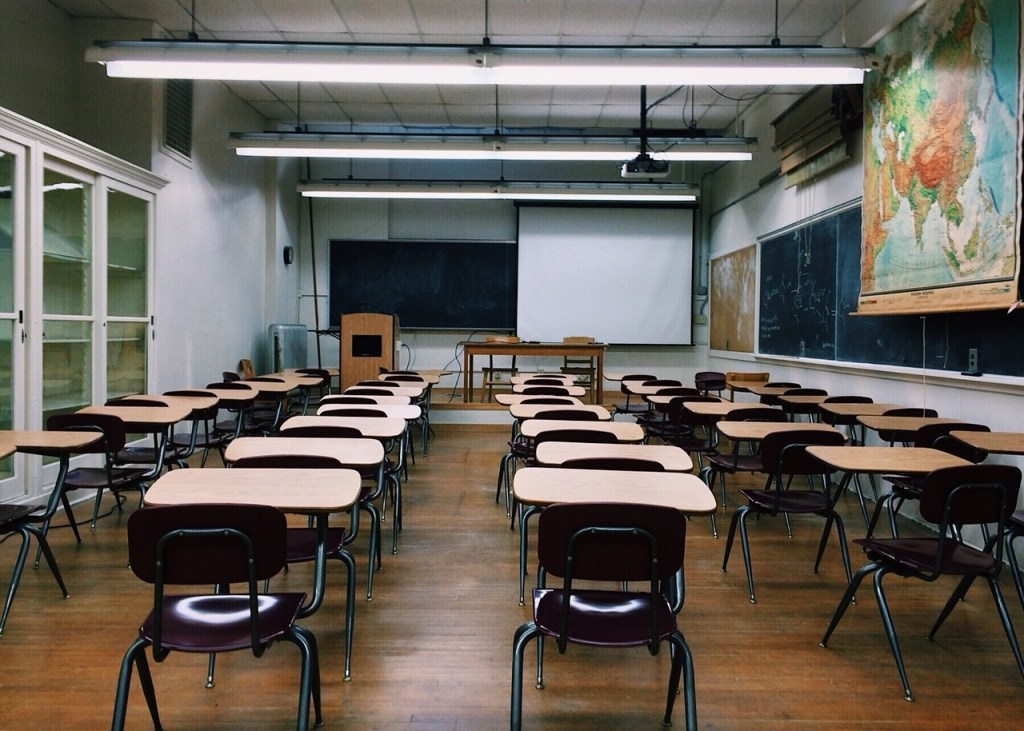
Image by WOKANDAPIX
 Tom’s Blog
What if – and I tell it as a Buddhist Priest – instead of religion, we teached sprituality?
Teaching spirituality instead of religion in schools, especially public ones, could foster greater understanding and inclusivity. Religion just reflects specific doctrines and practices tied to particular cultural or historical contexts.
In contrast, spirituality addresses universal questions about meaning, purpose, and connection that resonate across humanity. By focusing on spirituality, schools could nurture values like empathy, mindfulness, and interconnectedness without imposing the constraints of specific religious beliefs.
This approach respects diverse perspectives while promoting a deeper exploration of what it means to be human.
LikeLiked by 2 people
Thank you for your thoughtful comment. 🤗
I agree that “spirituality” offers a pathway to explore what is essential, cutting through the differences that often arise from our attachment to the varied attributes of “religion.” Religion, when approached in education, hopefully, can provide an opportunity to awaken the “eye of the spirit,” enabling us to embrace and respect one another’s religious differences.
This does not mean advocating for a relativistic approach where beliefs are picked like preferences, but rather encouraging an existential commitment to one’s faith—a commitment so profound that one can live and die by it. At this level of understanding, we can also genuinely honor and recognize the faith of others, knowing how deeply sincere they are in their own journey.
From this perspective, if we can make, there would be no contradiction between being religious and being spiritual, even they can complement one another beautifully. I believe your stance as a Buddhist priest reflects this harmony—seeking deeper truths while respecting diversity. Thank you again for sharing your insights! 🙏
LikeLiked by 1 person