
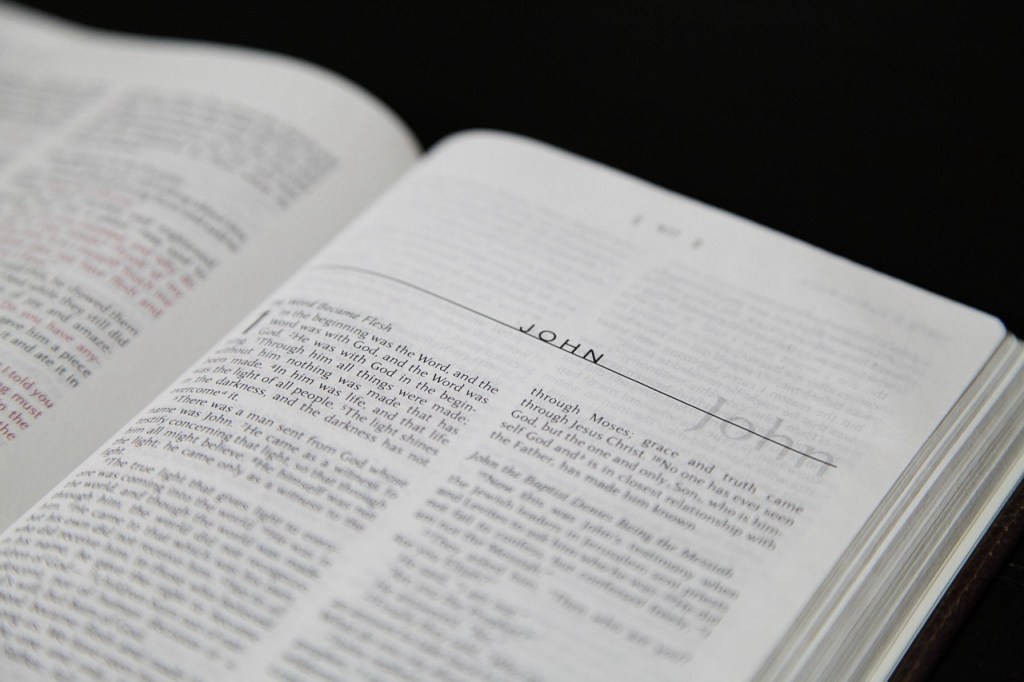
The opening verses of the Gospel of John are distinguished within the New Testament for their poetic resonance and profound theological depth. Known as the Prologue of John, this passage offers not a genealogy, as in Matthew, nor a birth narrative, as in Luke, but rather a philosophical and almost mystical reflection on the nature of the “Word” (Logos).
Through language that is rich in rhythm, symbolism, and repetition, John’s prologue embodies the qualities of prose poetry—a form that merges the continuity of prose with the intensity and suggestiveness of poetry. The resulting effect is a meditative exploration that invites readers to ponder the mystery of Christ’s divinity and role in creation. By drawing on poetic structure and language, John elevates the passage into a sacred meditation that establishes Christ as central to both the cosmic order and spiritual renewal.
This opening passage serves not only as an introduction but as an invitation into contemplation, drawing readers toward themes of light, life, and divinity. By combining theological insights with poetic form, John presents a narrative that transcends simple storytelling, urging readers to engage with the nature of existence, creation, and divine presence. Through its layered language, the prologue becomes an experience that resonates with readers, linking the creation narrative of Genesis to the new creation offered through Christ.
Prose Poetry and Sacred Text
Prose poetry blurs the boundaries between prose’s continuous text and poetry’s condensed, heightened language. Typically lacking formal verse structure, prose poetry creates moments of reflection or insight, allowing abstract or spiritual themes to be expressed in a way that evokes contemplation. John’s prologue captures this form, presenting theological truths with poetic intensity. Through its language, the passage reaches beyond factual statements, using repetition, rhythm, and symbolism to invite readers into a meditative experience. The opening lines set this tone:
In the beginning was the Word, and the Word was with God, and the Word was God. (John 1:1)
Here, each phrase builds on the last, creating a rhythm that compels readers to slow down, dwell on the meaning, and absorb the gravity of the words. The poetic form allows John to convey the unity and timelessness of the Word in a manner that engages both the intellect and the spirit, transforming theology into an experience of worshipful reflection.
Parallelism in Beginnings: John and Genesis
John’s choice to begin his Gospel with “In the beginning” is a deliberate echo of Genesis, signaling a profound parallel that invites readers to consider Christ’s arrival as a new act of creation. Genesis opens with the words:
In the beginning God created the heaven and the earth. And the earth was without form, and void; and darkness was upon the face of the deep. And the Spirit of God moved upon the face of the waters. (Genesis 1:1-2)
In this passage, God’s creation begins in darkness, a void awaiting divine intervention. The creation account emphasizes God’s sovereignty and power, as He speaks light into existence and brings order to chaos: “And God said, Let there be light: and there was light” (Genesis 1:3). This moment marks the first act of divine creation, a foundational expression of God’s authority over darkness and disorder.
Similarly, John’s prologue introduces the concept of light overcoming darkness, but in a new, spiritual dimension:
In him was life; and the life was the light of men. And the light shineth in darkness; and the darkness comprehended it not. (John 1:4-5)
While Genesis describes a physical creation, John’s text speaks of spiritual illumination. Here, light symbolizes divine truth and the life-giving presence of Christ, a force that penetrates a world darkened by ignorance and separation from God. John’s language builds on the Genesis narrative, suggesting that Christ’s coming is a continuation of God’s work, bringing not just physical light but spiritual renewal. This parallel deepens the connection between the Old and New Testaments, as the creative word that brought forth light in Genesis is now embodied in Christ, who brings eternal life to humanity.
The Symbolism of the Word and Creation
The use of the “Word” (Logos) in John’s prologue introduces a concept that bridges Jewish and Greek thought. In Genesis, God creates the world through His word, a force of command that transforms chaos into order:
And God said, Let there be a firmament in the midst of the waters, and let it divide the waters from the waters. (Genesis 1:6)
This divine word is a creative power, speaking life and structure into a formless void. God’s spoken word is not just an utterance but an expression of His will, an active agent that shapes reality. By contrast, John presents the Word not merely as God’s speech but as a person, the eternal Logos who is both with God and is God:
All things were made by him; and without him was not any thing made that was made. (John 1:3)
In John’s interpretation, the Word is not only an instrument of creation but the very essence of divine reason and truth. Christ, as the Logos, embodies God’s creative power and serves as the foundation of all existence. Through this symbolism, John’s prologue suggests that Christ is integral to the cosmos in a way that reflects the Genesis account while expanding its meaning. The Word in John is both transcendent and personal, revealing God’s nature and presence in a manner that transforms the act of creation into a relational encounter.
Light and Darkness: Spiritual Continuity and New Meaning
Light and darkness are recurring symbols in both Genesis and John, each representing the fundamental dichotomy between divine order and chaos, revelation and obscurity. In Genesis, light is God’s first creation, a sign of His power to bring form and beauty out of emptiness:
And God saw the light, that it was good: and God divided the light from the darkness. (Genesis 1:4)
This act establishes a pattern of separation, where light symbolizes God’s active presence and goodness, standing in contrast to the darkness that initially covered the earth. Light here is both a physical phenomenon and a metaphor for divine authority and purity.
In John’s prologue, light takes on an additional, spiritual significance as a symbol of Christ’s presence and guidance:
In him was life; and the life was the light of men. And the light shineth in darkness; and the darkness comprehended it not. (John 1:4-5)
Here, light is not merely an element of creation but the essence of Christ’s gift to humanity. It represents spiritual understanding, life, and salvation—qualities that penetrate human ignorance and despair. John’s language suggests a persistent struggle between light and darkness, a theme that resonates with Genesis but gains new meaning. While Genesis portrays light as God’s means of ordering the physical world, John depicts it as a source of spiritual renewal, one that offers hope yet is often misunderstood or rejected. This symbolism of light and darkness serves as a bridge between the creation narrative and the promise of salvation, connecting the two in a poetic continuum.
The Language of Mystery and Revelation
John’s prologue is filled with language that invokes mystery, using paradoxical and symbolic expressions to suggest truths that extend beyond human comprehension. The phrase “the Word was with God, and the Word was God” (John 1:1) introduces a concept of unity and distinction within the divine nature, a paradox that has inspired theological exploration for centuries. Similarly, Genesis begins with mystery, describing a void covered in darkness until God’s Spirit moves upon the waters. This initial ambiguity reflects the unfathomable nature of creation, a process that humanity can observe but never fully understand:
And the earth was without form, and void; and darkness was upon the face of the deep. (Genesis 1:2)
John’s text carries this mystery forward, suggesting that Christ, as the Word, embodies God’s ineffable presence and is the means by which divine truth enters the human world. By choosing language that emphasizes mystery rather than clarity, John’s prologue aligns with the tradition of prose poetry, where meaning is often suggested rather than explained. The text invites readers to meditate on the nature of God and Christ, not as a problem to be solved but as a mystery to be revered.
The Prologue as Sacred Prose Poetry
The prologue of the Gospel of John stands as a powerful example of sacred prose poetry, weaving together theological insight and poetic language into a meditation on creation, light, and divine presence.
By echoing the Genesis account, John’s Gospel establishes a connection between the physical and spiritual, suggesting that Christ’s coming represents a new creation, one that transforms humanity’s understanding of God. The parallel themes of light and darkness, the role of the Word, and the use of mystery all serve to deepen this connection, creating a sense of continuity between the Old and New Testaments.
As prose poetry, John’s prologue invites readers into a space of reflection and reverence, allowing them to encounter the divine mystery of Christ in a way that is both intellectual and experiential. Through its structure and symbolism, the passage transcends mere doctrine, becoming a meditation on the nature of existence and the promise of renewal. By merging the literary beauty of poetry with theological depth, the prologue becomes not only an introduction to John’s Gospel but a timeless text that resonates with the light shining in darkness—a sacred moment of contemplation for all who seek to understand the divine.
Image by Sang Valte
 Tom’s Blog
This is a good study. John’s Gospel may be my favorite.
LikeLiked by 2 people
Thank you for your comment. Yes, it’s profoundly beautiful and timeless. 🤗
LikeLiked by 1 person