
Osamu Tezuka’s “The Phoenix” (Hi no Tori) is a monumental work in the world of manga, renowned for its deep exploration of life, death, and rebirth through a series of interconnected stories. Among these, the “Karma” chapter stands out as a particularly poignant narrative, weaving together themes of destiny, suffering, and redemption.
My journey back to this story began with a revisit to another chapter of “The Phoenix,” the “Future” volume. This re-encounter with Tezuka’s visionary work rekindled memories of “Karma,” a chapter that has lingered in my mind since my teenage years.
The reason for this enduring impact is not just the masterful storytelling or the intricate character development, but the profound philosophical questions that “Karma” raises. It’s a story that transcends time and culture, delving into the depths of the human spirit in a way that few other works do.
As I reflect on this story once more, it strikes me how relevant its lessons remain, and how the journey of its characters – Gaō and Akanemaru – mirrors the complexities of our own lives. In this piece, I aim to explore not only the storyline of “Karma” but also the insights and reflections it provokes, offering a glimpse into why this chapter of “The Phoenix” is a masterpiece of not just manga, but literature as a whole.
Historical Context
“The Phoenix: Karma” transports us to the Nara period of Japan (710 to 794), a time when the country was navigating the complexities of cultural and political change. This historical backdrop is not merely a setting but a canvas on which Osamu Tezuka paints a story rich in historical authenticity and mythical depth. The era, known for its artistic and spiritual pursuits, forms a fitting stage for a tale that delves deep into the human psyche and the artistry of the soul.
At the heart of “Karma” are two characters whose lives are as contrasting as they are interconnected. Gaō, born in a remote fishing village, faces a life marked by tragedy and violence. His journey from a brutal past, marred by the loss of an arm and an eye in a tragic accident, to a path of artistic redemption, forms one pillar of the narrative. On the other side stands Akanemaru, a character embodying a different set of struggles. He is an educated and initially kind-hearted sculptor, whose life takes a turn following a fateful encounter with Gaō. Akanemaru’s journey from a passionate artist to a figure consumed by fame and wealth provides a stark contrast to Gaō’s path.
The narrative of “Karma” is a complex interplay between these two characters, with each of their choices and actions echoing themes of fate, ambition, and moral transformation. As the story unfolds, we see how their lives intersect and diverge, creating a tapestry that explores the depths of human suffering, the quest for artistic perfection, and the redemptive power of self-realization. The chapter is a study in contrasts and similarities, challenging the reader to consider the nature of destiny and the choices that define us.
Gaō’s Story
Gaō’s story in “The Phoenix: Karma” is a poignant tale of suffering and redemption. His life begins under the shadow of a tragic accident that leaves him with a lost arm and eye, setting the tone for a life marked by hardship and alienation. Growing up in a remote fishing village, Gaō faces not only physical challenges but also the emotional burden of being ostracized and feared by his community. This isolation fuels a deep-seated anger and resentment within him, shaping his early years into a saga of pain and bitterness.
Gaō’s journey into adulthood is a descent into brutality. He becomes the leader of a band of bandits, a role that allows him to channel his rage into acts of cruelty and violence. His life takes a significant turn with the tragic incident involving his wife, Hayame. The realization that Hayame, who he mercilessly kills under a misconception, was the reincarnation of the ladybug he once spared, serves as a pivotal moment in Gaō’s life. This revelation shatters him, awakening a sense of guilt and a deep questioning of his past actions.
Gaō’s journey from a troubled youth to adulthood is marked by a descent into a life of brutality. As the leader of a band of bandits, he channels his long-held rage and bitterness into acts of violence, establishing a fearsome reputation. Despite his harsh exterior, there are moments that hint at a deeper, more complex character within him.
Gaō’s philosophy of life, shaped by his harsh experiences, is one of survival at any cost. He often expresses a belief that life is a brutal struggle where the strong must kill before being killed. This harsh worldview is a response to the relentless cruelty and rejection he has faced. Hayame, his wife, who followed him out of her own tragic circumstances, often listens to these grim reflections with a deep sadness in her eyes. Her presence, though silent, is a constant reminder of the humanity that Gaō struggles to suppress.
The turning point in Gaō’s life comes with a devastating misunderstanding. Influenced by the deceitful words of a bandit, Gaō comes to believe that Hayame’s intention was to kill him, as a form of vengeance for his past actions. Blinded by anger and betrayal, Gaō kills Hayame, only to later discover the heart-wrenching truth – Hayame was the ladybug he had unconsciously spared years ago. She had returned in human form, the only being who truly understood and accepted him, despite his hardened exterior.
This realization strikes Gaō with the full force of his past cruelty and the profound loss of the only person who had seen through to his buried humanity. The tragic irony of killing the one creature who had come back to him in a human form, embodying forgiveness and understanding, leaves him shattered. It marks a turning point, awakening a deep sense of guilt and prompting a profound reevaluation of his life and actions. This moment of tragic enlightenment becomes the catalyst for Gaō’s transformation, leading him on a path towards redemption through art and introspection.
The depth of Gaō’s transformation is gradually revealed through his encounters with the wandering monk, Ryoben. Under Ryoben’s guidance, Gaō discovers a talent for sculpture, a medium through which he begins to channel his tumultuous past and emotional scars into something profound and beautiful. His sculptures, often reflecting the suffering and depth of life, become a means for him to confront his past and seek redemption. This artistic journey marks a significant shift from his former self, as he moves away from violence and towards a path of introspection and spiritual healing.
As Gaō’s story unfolds, we witness the evolution of a man who, from the depths of despair and guilt, finds a semblance of peace and purpose in his artistic expression. His sculptures, imbued with his life’s pain and realizations, stand as silent testaments to his complex journey. In the end, Gaō’s life is a narrative of transformation, showing how even the most troubled soul can find redemption and meaning through the power of creativity and self-reflection.
Akanemaru’s Journey
Akanemaru, the foil to Gaō in “The Phoenix: Karma,” starts his journey with noble intentions. As a young, educated individual with a deep passion for sculpture, Akanemaru represents the purity of artistic ambition and the desire to create beauty. His early life is characterized by dedication and an earnest pursuit of artistic perfection. This period of his life paints him as an idealist, someone who sincerely believes in the power and purity of art.
The trajectory of Akanemaru’s life takes a pivotal turn following a chance encounter with young Gaō. This meeting, which results in Akanemaru being injured and robbed, not only leaves him physically impaired but also marks the beginning of a gradual shift in his character. The injury to his arm, while a setback, becomes a catalyst for his resilience. He works tirelessly to overcome his physical limitations, eventually gaining recognition in high society for his skills. However, this pursuit of recognition slowly erodes the purity of his initial artistic aspirations.
As Akanemaru gains fame and wealth, the core of his character begins to change. The once humble and dedicated artist becomes increasingly consumed by a desire for more recognition and power. His initial passion for creating art that reflects beauty and truth gets overshadowed by his growing ego and ambition. This transformation is a gradual process, subtly shifting Akanemaru from a sympathetic character into one whose actions and motivations are driven by self-interest.
The sculpting competition with Gaō serves as a critical moment in Akanemaru’s moral decline. Confronted with Gaō’s profound and authentic artistic talent, Akanemaru’s confidence is shaken. In a desperate bid to maintain his status, he resorts to exposing Gaō’s past, thereby manipulating the situation to his advantage. This act of betrayal against Gaō, driven by fear and jealousy, marks the culmination of Akanemaru’s transformation from an idealistic artist to one corrupted by his own success.
Akanemaru’s journey in “The Phoenix: Karma” serves as a cautionary tale about the corrupting influence of fame and power on one’s character and artistic integrity. His story contrasts sharply with Gaō’s, highlighting how personal choices and external circumstances can lead to vastly different life paths. Akanemaru’s character arc, from purity to moral corruption, challenges readers to reflect on the true meaning of success and the importance of staying true to one’s values and artistic vision.
The Sculpting Competition
The sculpting competition between Gaō and Akanemaru in “The Phoenix: Karma” is not just a contest of skill, but a culmination of their individual journeys and a clash of contrasting philosophies. Organized by the high society, curious about the talents of these two renowned sculptors, the competition becomes a pivotal event in the narrative. For Akanemaru, it is an opportunity to solidify his status among the elite, while for Gaō, it is a chance to express his profound understanding of life and suffering through his art.
As the competition unfolds, it becomes evident that Gaō’s work, particularly his demon roof tiles, possesses a depth and authenticity that Akanemaru’s pieces lack. Gaō’s sculptures, shaped by his life’s hardships and realizations, resonate with a truth that transcends mere technical skill. This realization hits Akanemaru hard, shaking his confidence and forcing him to confront the hollow nature of his pursuit for fame and recognition.
Faced with the likelihood of defeat, Akanemaru resorts to underhanded tactics. He reveals Gaō’s violent past and the incident that led to his own arm’s injury, swaying public opinion against Gaō. This act of betrayal is driven by Akanemaru’s desperation to maintain his status and reveals the extent of his moral corruption. The competition, meant to be a celebration of artistic prowess, turns into a stage for Akanemaru’s self-preservation at any cost.
The revelation of Gaō’s past leads to his harsh punishment – the loss of his remaining arm. This brutal act symbolizes the ultimate price Gaō pays for his past deeds, despite his transformative journey. Remarkably, Gaō accepts his fate with calm resignation, embodying a stoic acceptance of life’s vicissitudes. He leaves the scene, not with bitterness, but with a quiet dignity, dedicating the remainder of his life to creating Buddhist sculptures, a testament to his spiritual growth and artistic dedication.
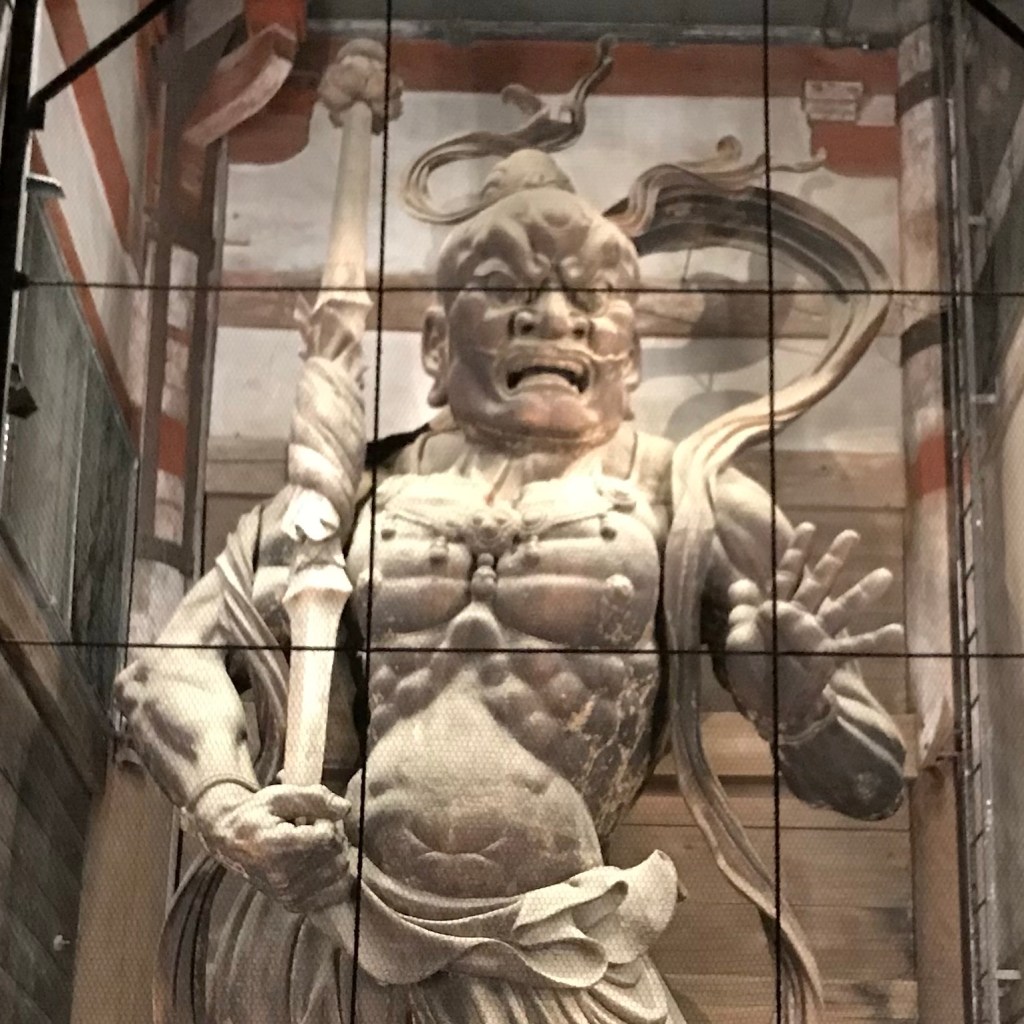
While Akanemaru retains his position and power, the victory is tainted. The fire at the Great Buddha Hall in Tōdaiji Temple, where Akanemaru is involved in a significant project, serves as a metaphorical reflection of his inner turmoil and the destructive consequences of his choices. In contrast, Gaō’s legacy, though marred by tragedy, is enriched by his artistic and spiritual journey, leaving behind works that speak of his deep understanding of life’s suffering and beauty.
Role of the Phoenix
In “The Phoenix: Karma,” the Phoenix plays a more understated yet profoundly symbolic role compared to other chapters in Osamu Tezuka’s series. Rather than being a direct agent of change, the Phoenix manifests as a dreamlike presence, appearing to both Gaō and Akanemaru during pivotal moments of their internal struggles. This ethereal presence of the Phoenix underscores the themes of fate, life, and the cyclical nature of existence.
For Gaō, the Phoenix appears during moments of deep introspection and guilt, especially following the tragic death of Hayame. In these dreams, the Phoenix doesn’t offer direct guidance or intervention but serves as a mirror to Gaō’s conscience, prompting him to reflect on his actions and their consequences. For Akanemaru, the Phoenix’s appearances are more reflective of his internal conflict and the loss of his artistic purity. The Phoenix, in his dreams, becomes a symbol of what he has lost in his pursuit of fame and a reminder of the transient nature of power and success.
The minimalistic intervention of the Phoenix in “Karma” is a departure from its more active roles in other chapters of “The Phoenix.” This subtlety adds a layer of realism to the story, as the characters are left to navigate their paths largely on their own, with the Phoenix serving more as a contemplative figure rather than a catalyst for change. This approach allows the story to focus deeply on the characters’ choices and their consequences, emphasizing the human aspect of their journeys.
The Phoenix’s role in “Karma” can be seen as a representation of life’s paradoxes and the complexity of the human condition. It doesn’t provide clear answers or easy resolutions but instead reflects the inherent ambiguities and challenges of life. The Phoenix’s presence in the story reminds readers that, like Gaō and Akanemaru, we often face our struggles and find our paths without clear guidance, navigating the complexities of life with our perceptions and convictions.
Themes and Insights
One of the most prominent themes in “The Phoenix: Karma” is the exploration of fate and redemption. Through the contrasting journeys of Gaō and Akanemaru, Tezuka delves into how fate intertwines with personal choices, shaping the course of one’s life. Gaō’s transformation from a figure of violence to a reflective artist suggests a path to redemption, emphasizing that one’s past does not irrevocably dictate the future. In contrast, Akanemaru’s descent from purity to moral decay shows how the pursuit of superficial gains can lead one astray from their true path.
Tezuka’s narrative skillfully explores the complexities of human nature. Gaō, despite his brutal past, is portrayed with a sense of empathy, highlighting his capacity for change and depth of character. Akanemaru, on the other hand, starts as a sympathetic character but gradually reveals a darker, more self-centered side. This contrast presents a nuanced view of morality, suggesting that goodness and vice coexist within individuals, influenced by circumstances and choices.
“The Phoenix: Karma” also delves into the theme of artistic integrity. Gaō’s sculptures, created from a place of genuine emotion and experience, contrast with Akanemaru’s works, which, although skillful, lack the same depth and authenticity. This difference highlights the importance of staying true to one’s artistic vision and the idea that true artistry comes from within, reflecting the artist’s experiences and inner truths.
The story offers a critical view of the corrupting influence of power and fame. Akanemaru’s moral decline is directly tied to his increasing obsession with status and recognition. This serves as a cautionary tale about the dangers of losing sight of one’s values and the hollow nature of achievements that are pursued at the expense of one’s integrity.
“The Phoenix: Karma” invites readers to reflect on their own lives and choices. It encourages contemplation on the nature of suffering, the pursuit of personal goals, and the impact of our actions on ourselves and others. The story underscores the idea that our lives are a complex interplay of fate and free will, and that redemption and understanding often come through facing and embracing our deepest challenges.
Sculpting Fate
“The Phoenix: Karma,” a chapter from Osamu Tezuka’s magnum opus, stands as a profound exploration of the human condition. This story, with its intricate narrative and deep philosophical undertones, transcends the boundaries of its medium, achieving a timeless quality that resonates with readers across generations. The journeys of Gaō and Akanemaru, rich in their complexity and emotional depth, offer a mirror to our own lives, reflecting the myriad choices and paths that shape our existence.
The themes of fate, redemption, moral complexity, and the true essence of artistic integrity in “Karma” continue to be relevant in today’s world. These themes encourage us to reflect on our own lives, the nature of our ambitions, and the impact of our choices. The story serves as a reminder that true growth and understanding often come from facing our deepest struggles and staying true to our core values.
Revisiting “The Phoenix: Karma” has been a journey of rediscovery for me, bringing back the profound impact it had during my teenage years. The story’s ability to evoke such a range of emotions and thoughts is a testament to Tezuka’s genius as a storyteller and artist. It reinforces the idea that great stories, like “Karma,” are not just tales to be read but experiences to be lived and pondered upon. As I conclude this reflection on one of my favorite chapters from “The Phoenix,” I am reminded of the power of literature to touch our hearts, challenge our minds, and inspire our spirits.
 Tom’s Blog
One thought on “Sculpting Fate”