Arts, Books & Writing
Browse every article in this topic. Filter by year or month, or search only within Arts, Books & Writing.
Browse this topic
By year
By month
Select a month
Search within Arts, Books & Writing
Articles in this category
-

Exploring the Cycles of Being in Sci-Fi and Theology
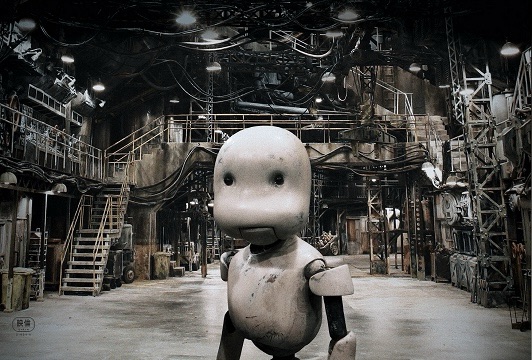
Throughout myth, religion, and science fiction, humanity has long grappled with the mysteries of creation, consciousness, and transcendence. These themes explore the complex dynamics between creators and their creations, challenging our understanding of existence, autonomy, and the possibility of moving beyond individual limits. Works like Alien: Covenant and 2001: A Space Odyssey illustrate this dynamic…
-
2001: A Space Odyssey: Technical Realism and Metaphysical Vision
Stanley Kubrick’s “2001: A Space Odyssey” stands apart from all other science fiction films, even 56 years after its release. While countless space epics have graced the screen since 1968, none have matched its exceptional fusion of scientific precision and philosophical depth. The film’s meticulous attention to space physics, astronautical engineering, and astronomical phenomena created…
-
Why Sophisticated Prose Still Captivates
In an age of truncated social media posts and casual blogs, one might assume the death of elegant prose. Yet beneath the casual veneer of digital discourse runs a deeper hunger – a yearning for language that transcends the mundane, that carries readers aloft on wings of carefully crafted sentences and precisely chosen words. Like…
-
Lost and Found in Translation
Every attempt to understand reality comes wrapped in the particular language and cultural framework we inhabit. Ancient Greek thinkers worked within the structures of their language, which shaped how they conceived of being, essence, and logic. Aristotelian categories emerged from a language rich in logical connectives and abstract noun formation. This pattern repeats across philosophical…
-
A Fresh Perspective on the One Year War
For those who grew up with the original Mobile Suit Gundam in 1979, watching Requiem for Vengeance in Netflix evokes a complex mixture of nostalgia and discovery. The childhood experience of gathering with friends to watch both the TV series and theatrical versions created lasting memories of a groundbreaking series that redefined mecha animation. These…
-
The Evolution of Japanese Writing
The Japanese language, like all languages, began as a purely oral tradition. The transformation into written form came through the adoption of Chinese characters, marking the beginning of Japan’s complex relationship with written communication. These borrowed characters, known as Manyōgana, served as the foundation for recording Japan’s earliest literary works, including “Kojiki” and “Manyōshū.” As…
-
Professional Jargon and Social Barriers
Professional jargon serves as both a bridge and a barrier in modern society. Within specialized fields like law, medicine, and technology, precise terminology enables clear communication among experts. A surgeon can describe exact procedures to colleagues, while lawyers can draft contracts with minimal ambiguity. Yet this same linguistic precision creates walls between professionals and the…
-
The Persistence of Complex Languages
The relationship between Chinese characters and East Asian societies presents a compelling study in contrasts. During the nineteenth and twentieth centuries, as Western influence swept across Asia, these ancient writing systems faced unprecedented scrutiny. The colonial era brought stark awareness of Western technological and economic advantages, leading many to question whether the intricate system of…
-
Beyond Intellectual Showmanship
In today’s world, where information is abundant and time is limited, the way we engage with books is rapidly changing. Particularly in non-fiction, readers are no longer as enamored with long, voluminous works. Instead, they seek concise, focused content that delivers value without unnecessary elaboration. Yet, many non-fiction books, especially those by well-known authors, continue…
-
Homo Faber, Man the Tool Maker
Humans have long been distinguished by their ability to create and use tools. This capacity has earned our species the moniker “Homo faber,” or “Man the Tool Maker.” While the scientific community recognizes us as Homo sapiens, emphasizing our cognitive abilities, the concept of Homo faber highlights our unparalleled skill in shaping the world around…
-
The Evolution of U.S. Writing Style
The writing style that is widely practiced and taught in the United States today, and increasingly in the global academic and business scene, is heavily influenced by the rise of modern journalism and its cultural impact. This style prioritizes clarity, efficiency, and accessibility, with an emphasis on directness—often represented by the “conclusion-first” structure found in…
-
Communication in Early Childhood
While browsing online, I stumbled upon a TED Talk that caught my attention – not for its subject matter initially, but for its presenter. There, on the iconic red circular carpet, stood Molly Wright, a seven-year-old girl, confidently addressing a global audience. As I watched, I found myself captivated not only by her poise but…