
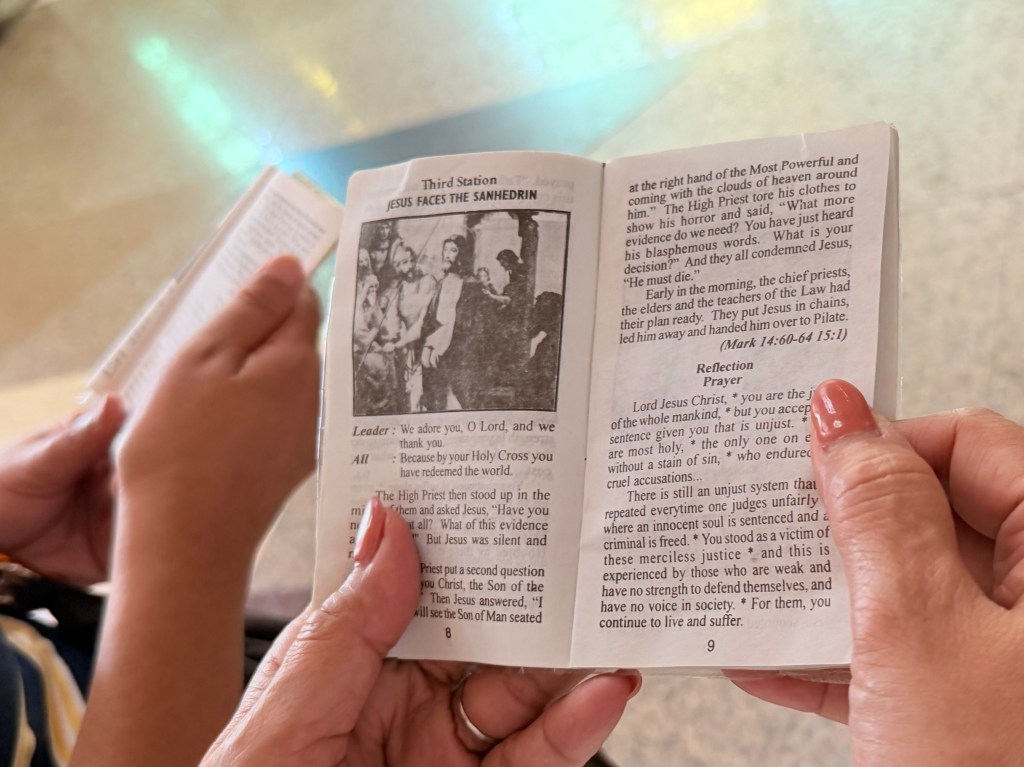
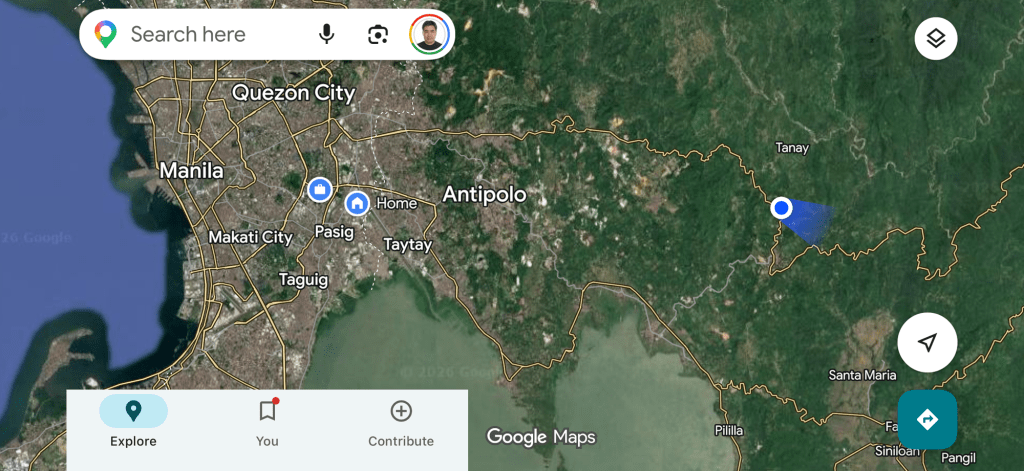
Every year during Holy Week, we find ourselves returning to a familiar path. Not necessarily the same roads or the same churches, but the same intention that gently gathers us again. The practice of Visita Iglesia has become part of our shared rhythm, something that Lalaine, my wife, Ezra, one of our close friends, and I have carried forward over the years. Sometimes we travel to Tagaytay or Batangas, and sometimes we remain within Metro Manila. This year, however, we felt drawn toward the mountain areas of Tanay, where the journey itself would demand more from us.
Visita Iglesia is a simple idea in structure but not in experience. We visit seven churches and pray through the 14 Stations of the Cross, usually completing two stations per church. On paper, it sounds organized and achievable. In reality, it requires time, physical movement, coordination, and a willingness to let the day unfold without complete control. It is not only a sequence of visits. It is a progression, where each station builds upon the last, and each place shapes the tone of the next.
Over time, this annual practice has changed its meaning for us. It is no longer something we do out of curiosity or obligation. It has become something we return to with memory, with expectation, and with a sense of openness to whatever may happen along the way. This year, we began at around ten in the morning, not fully aware of how long the day would stretch, nor how many unexpected moments would become part of the journey itself.
The First Station Before the First Church
Before we even reached our first church, the day had already begun to take its own direction. As we were preparing to leave, Ezra noticed that one of the tires seemed slightly off. It was not completely flat, but there was enough concern for us to stop by a nearby gas station to check. What we found was a nail lodged firmly in the front tire, something that could have easily caused trouble later, especially as we were planning to drive into mountain roads.
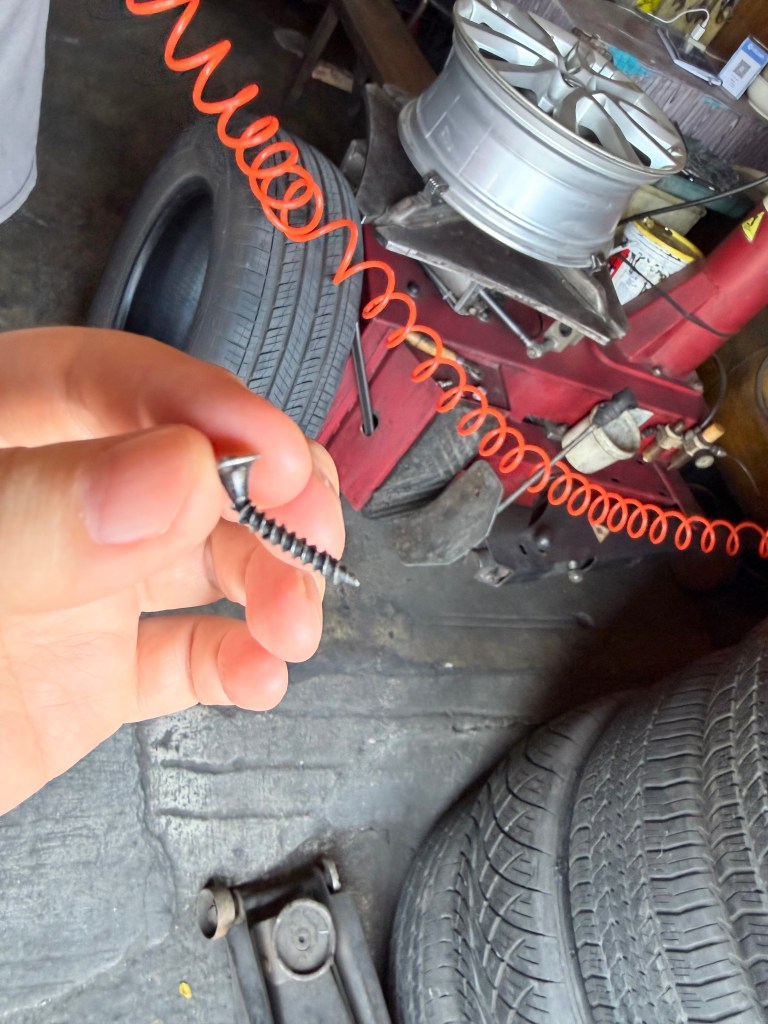
Instead of becoming a setback, the moment turned into a blessing. We had the tire repaired immediately, and in that small pause, we became aware of how easily the entire day could have unfolded differently. Had we not noticed it, we might have encountered a far more serious situation somewhere along the slopes of Tanay. The timing felt almost intentional, as if we were being gently asked to slow down before we even began.
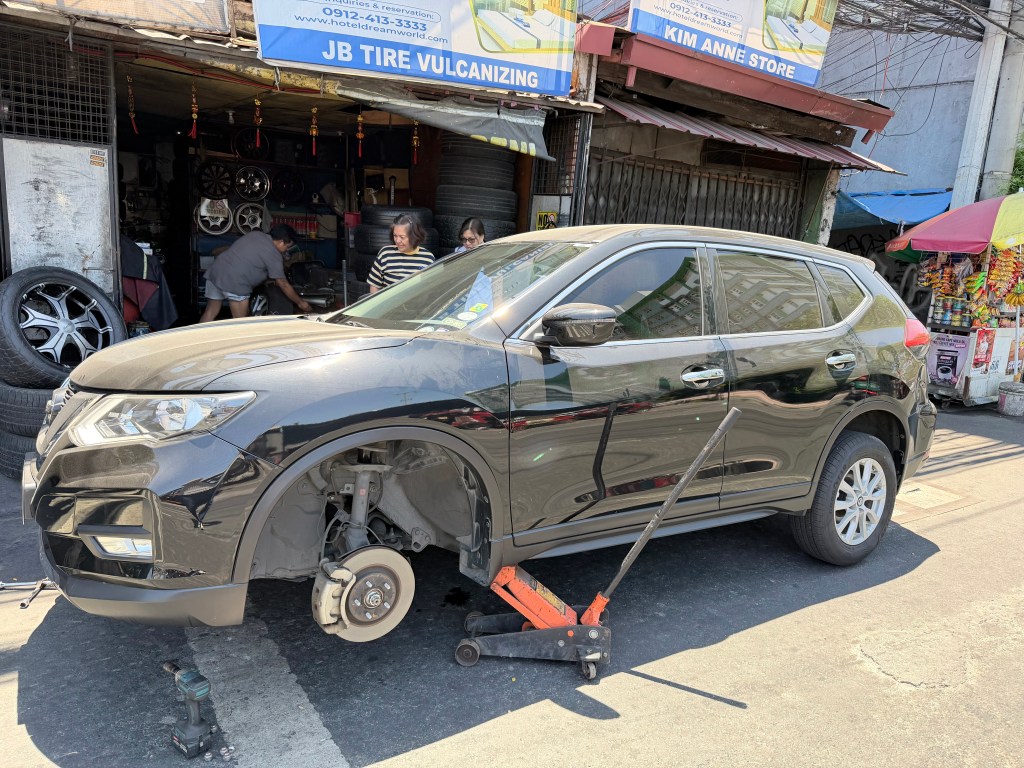
Later, we joked about it, calling it our “first station,” a small but fitting beginning to a day centered on the symbolism of nails, suffering, and endurance. Yet beneath the humor was a deeper recognition. The journey would not be perfectly planned or controlled. It would include interruptions, adjustments, and moments that required us to respond rather than proceed as expected. In that sense, the pilgrimage had already begun, even before the first prayer was spoken.
Beginning in Manila: Christ the King and Antipolo
Our first formal stop was Christ the King Parish in Greenmeadows. The morning light was still soft, and there was a sense of calm as we began the first stations. Starting in the city gave us a kind of grounding, a familiar environment before we moved toward more distant and demanding locations. It allowed us to settle into the rhythm of prayer, to align ourselves before the day expanded.
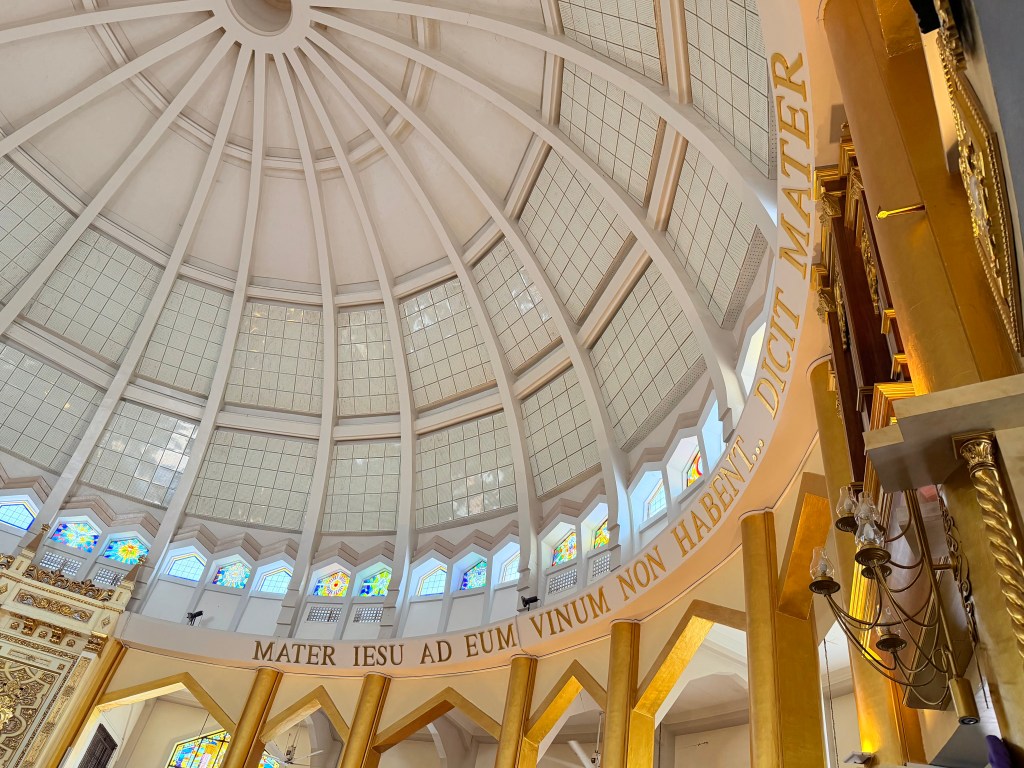
From there, we made our way to Antipolo Cathedral, a place where history and devotion meet in a steady and enduring way. Inside the cathedral, what captured our attention was not only the architecture but the Latin inscription that encircled the space. The words, “Mater Iesu ad eum vinum non habent… dicit mater eius ministris: quodcumque dixerit vobis, facite” (Ioannes 2:3–5), unfolded like a narrative along the walls.
This reads: “The mother of Jesus said to Him, ‘They have no wine’… His mother said to the servants, ‘Do whatever He tells you’” (John 2:3–5).
The passage moves gently from Mary’s awareness of need to her instruction of trust, revealing a pattern that is both simple and profound. Standing there, we were reminded that faith often begins not with grand gestures, but with noticing, responding, and entrusting what we see to something greater than ourselves.
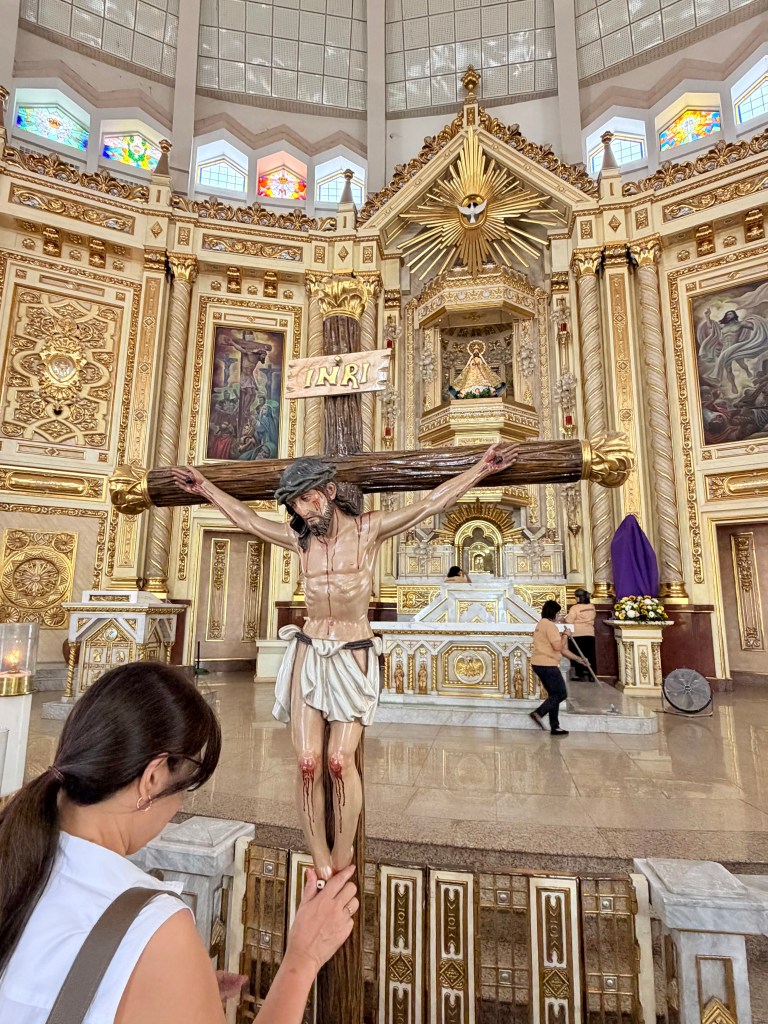
Standing there, we were reminded that faith often begins with noticing. Mary does not perform a miracle herself. She observes, she brings the concern to Jesus, and then she invites others into trust. It is a simple movement, yet it carries a profound structure of faith. In that moment, the cathedral was not just a destination within our route. It became a point of orientation for the entire day, setting a tone that would accompany us as we continued.
Into the Mountains: Roads, Distance, and Anticipation
After Antipolo, the journey began to shift. As we headed toward Tanay, Rizal, the environment gradually transformed from the familiarity of the city into the openness of the mountains. The roads became more winding, the elevation began to change, and certain stretches felt closer to off-road terrain than to a standard drive. This transition required a different kind of attention, one that was more engaged and more present.
Driving through these mountain paths was not merely a means of reaching the next church. It became part of the pilgrimage itself. Each turn, each incline, and each narrow passage demanded focus, and in doing so, it pulled us into the immediacy of the journey. There was an excitement in this, a recognition that reaching these places would not be effortless, and that effort itself was meaningful.
At the same time, there was a subtle shift happening internally. As the roads became more demanding, so did our awareness of what it meant to continue, to persevere, and to move forward together. The physical journey mirrored something deeper, something that could not be easily described but was nonetheless felt.
A Pause Along the Way: Lunch and the Sierra Madre
Along this mountain route, we found ourselves stopping for lunch at Dean & Deluca, an unexpected yet welcome presence in such a setting. The contrast was striking. A refined and cozy restaurant, placed along a rugged and scenic road, overlooking the vast expanse of the Sierra Madre. It was not something we anticipated, and perhaps that was precisely why it stood out.
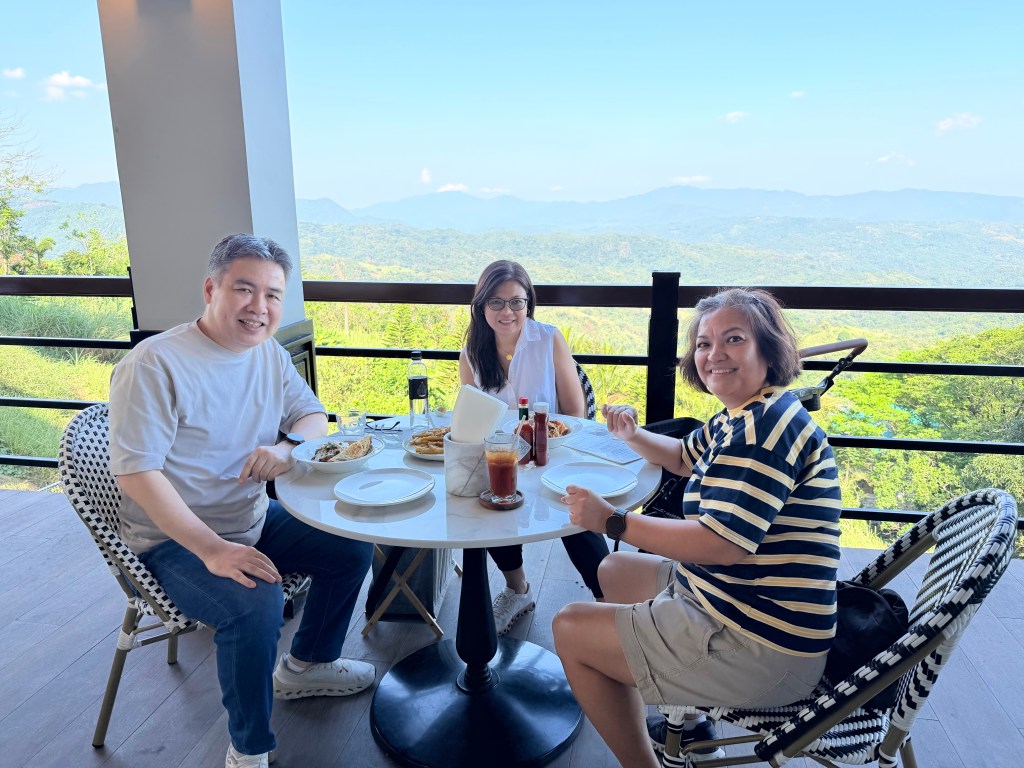
As we sat and shared a simple meal, the view before us created a sense of both distance and closeness. The mountains stretched far beyond what we could fully see, yet the moment itself felt contained and intimate. The transition from prayer to table, from silence to conversation, unfolded naturally, without any sense of interruption.
This pause reminded us that a pilgrimage is not made only of solemn or intense moments. It is also sustained by rest, by nourishment, and by the joy of being together. These intervals do not break the journey. They deepen it, allowing each step that follows to carry a little more meaning.
Regina Rica: Help Along the Way
Our next stop brought us to Regina Rica, where we completed the fifth and sixth stations. The surrounding hills and the gentle presence of Mary created an atmosphere that felt both peaceful and supportive. There was a sense that the place itself was holding the journey, allowing us to rest not physically, but inwardly.
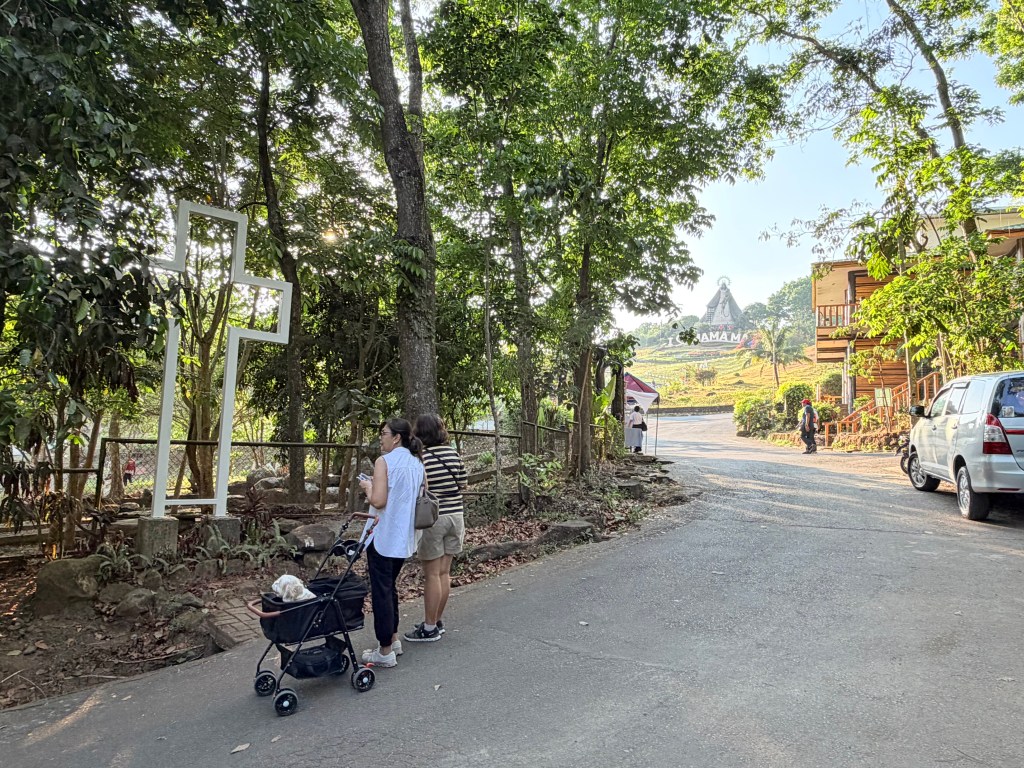
The themes of these stations, Simon helping to carry the cross and Veronica offering a simple act of care, resonated more deeply in that setting. These were not grand acts of heroism. They were moments of assistance, brief yet meaningful, where someone chose to step in and share the burden. In that space, this idea felt close and tangible.
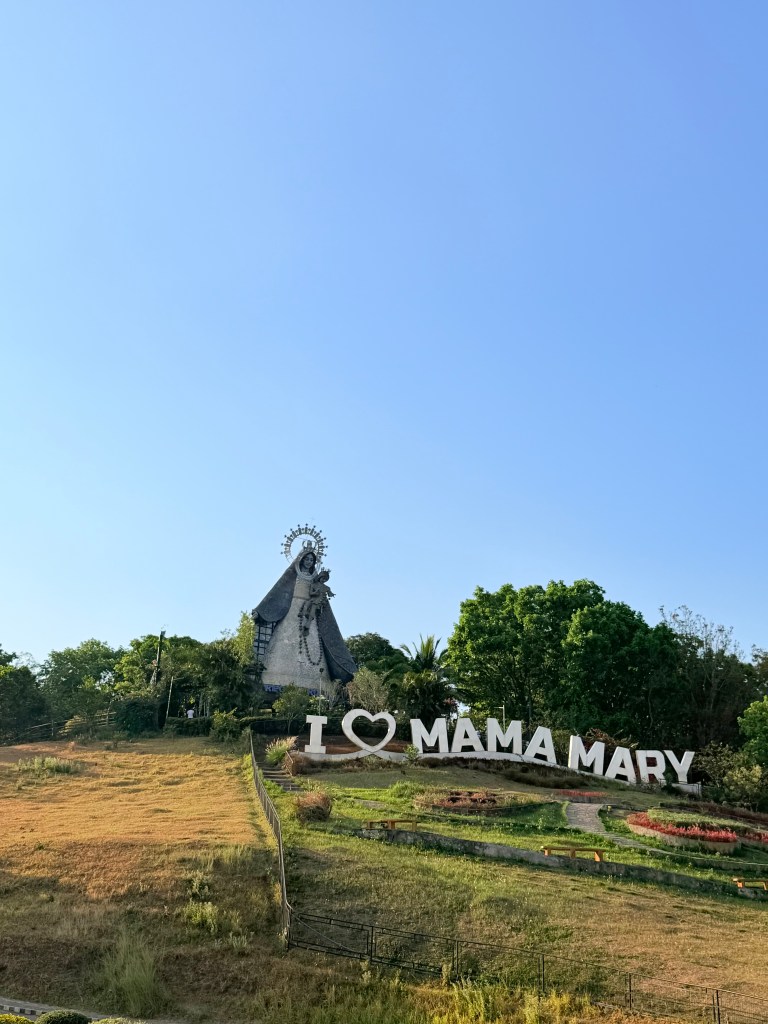
We were reminded that no one carries their burdens entirely alone. Even along a path marked by suffering, there are moments of help, often small, often unnoticed, yet significant. In that space, our prayers felt lighter, not because the weight had disappeared, but because it was understood as something shared.
The Holy Face: Encountering Humanity in Christ
From there, we continued to Diocesan Shrine of the Holy Face of Manoppello, where we prayed the seventh and eighth stations. The devotion to the Holy Face introduced a different kind of reflection, one that was less about events and more about presence. It invited us to consider not only what happened to Christ, but how He is encountered.
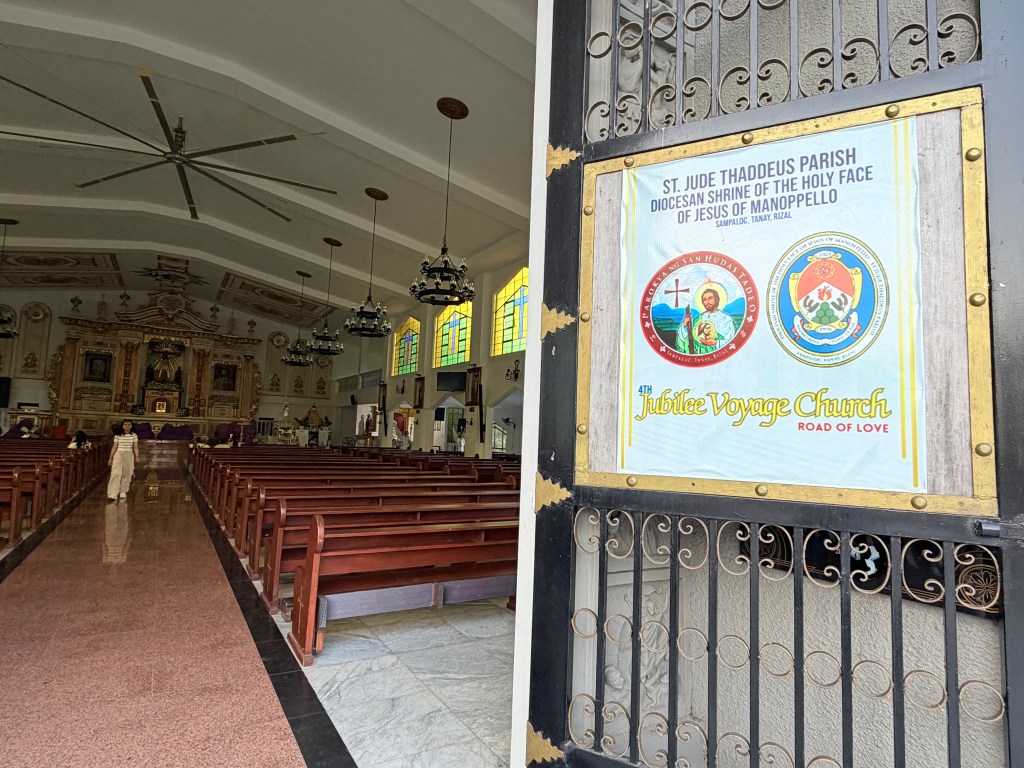
Reflecting on Jesus falling again and meeting the women of Jerusalem brought forward a sense of vulnerability that felt deeply human. These were moments of weakness, of compassion, of continuing despite exhaustion. They did not feel distant or symbolic. They felt recognizable, almost familiar.
In the stillness of that mountain church, with light filtering softly through the windows, there was a sense that Christ was not removed from our experience. He was present within it. Not as an ideal of perfection, but as a companion in persistence. This shifted the meaning of faith from striving to continuing, from achieving to remaining.
Darkness in the Mountains: Faith Beyond Visibility
As we made our way to La Capilla de la Boda Diocesana de Amor Divino, the day began to close in around us. The sky darkened, the roads grew quieter, and the sense of distance became more pronounced. By the time we arrived, the chapel was already closed, standing silently in the middle of the mountain.
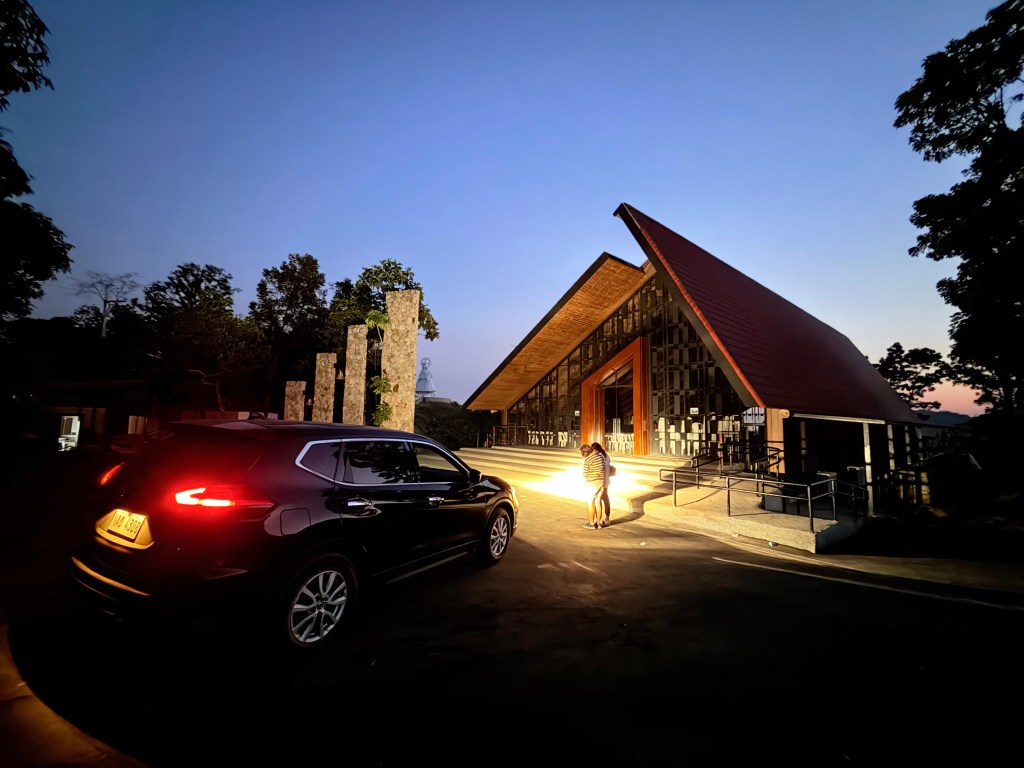
For a brief moment, we considered moving on. Yet something in us chose to stay. Using the headlights of our car, we created just enough light to continue praying the ninth and tenth stations. The setting was minimal, almost stark, and yet it carried a depth that was difficult to describe.
In that darkness, faith was no longer supported by architecture, lighting, or accessibility. It did not rely on open doors or prepared spaces. It was something we carried within ourselves. The absence of visibility did not interrupt the journey. It clarified it. Prayer, in that moment, felt more direct, more grounded, and more real.
Completion, Fellowship, and the Unseen Stations
Recognizing the distance and the time, we eventually made the decision to return to Manila, where we continued at the St. Pio of Pietrelcina Chapel and later completed the final stations at St. John Paul II Parish. When we arrived, the Vigil Mass had already begun, so we paused, shared dinner, and invited Dory, our friend, who lives nearby, to join us. What began as a structured plan gradually opened into something more relational, more fluid, and perhaps more complete.
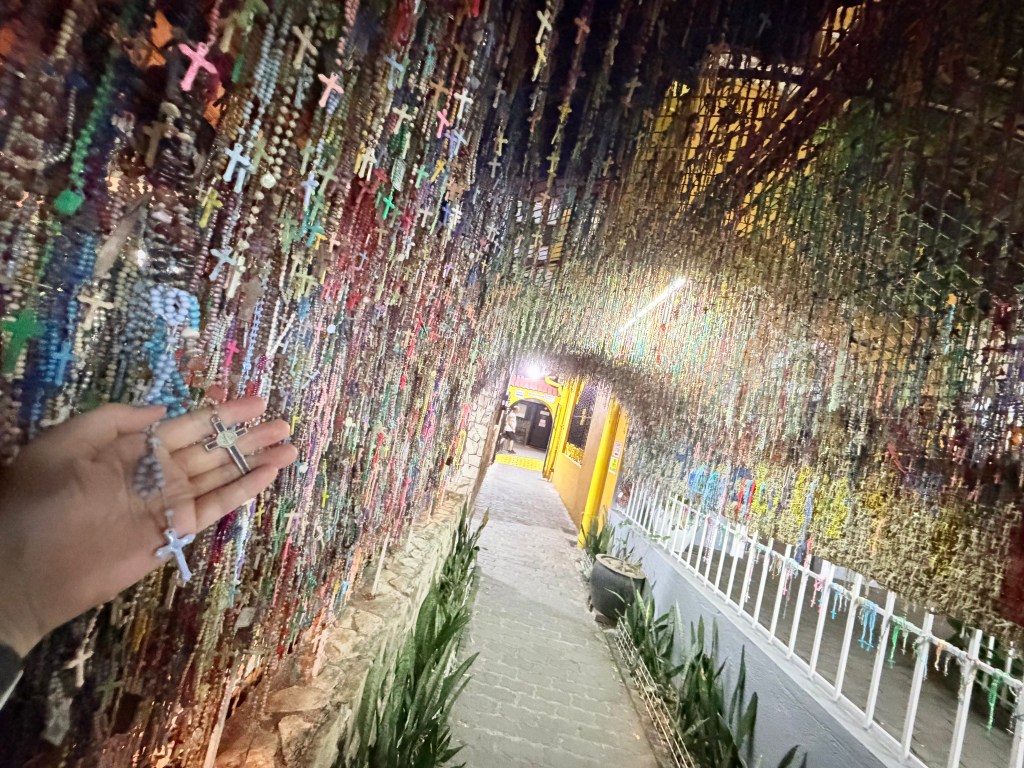
By the time we returned home, it was already late, yet the day had not fully settled. Ezra and Dory came over, and we found ourselves sitting together over coffee and tea, sharing stories, laughter, and reflections. There was no urgency to end the day. Instead, there was a gentle desire to remain in it just a little longer, to let it unfold naturally into rest.
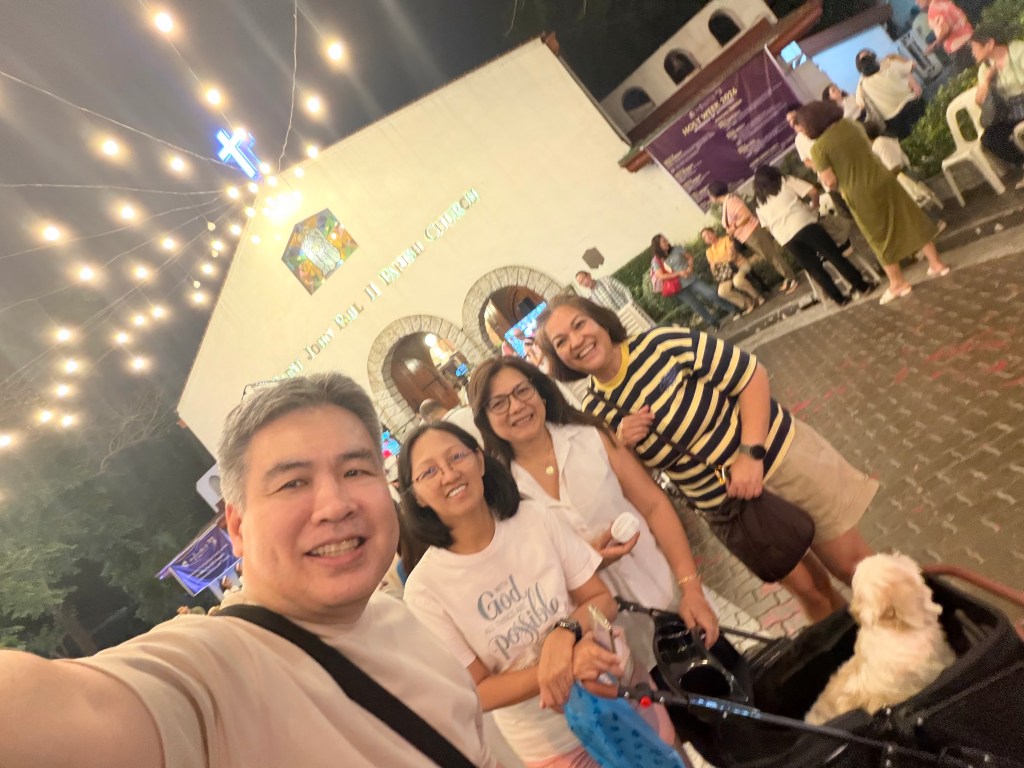
At some point, we joked that this, too, was another station. Not one of the fourteen, but something just as meaningful. A station of fellowship, of gratitude, of being together after having walked a long and demanding path. When we look back, it becomes clear that the pilgrimage was never confined to the churches alone. It included the nail in the tire, the mountain roads, the unexpected meal, the darkness, and the midnight gathering.
From morning until nearly eleven at night, the day stretched beyond its original frame and became something fuller, something lived rather than simply completed. And perhaps that is what Visita Iglesia continues to teach us each year. That faith is not contained within designated places or moments. It moves with us, through every interruption, every adjustment, and every shared experience. In that sense, the stations do not end. They continue, gently, in the life we return to.
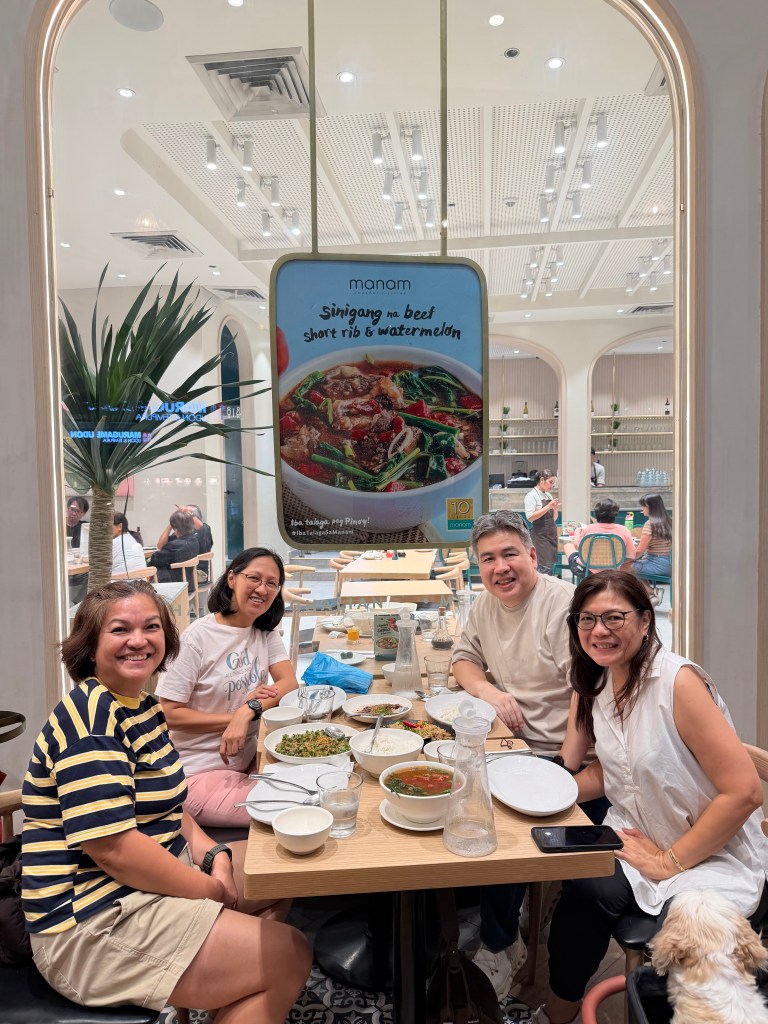
Image: Photos captured by the author.
 Tom’s Blog