
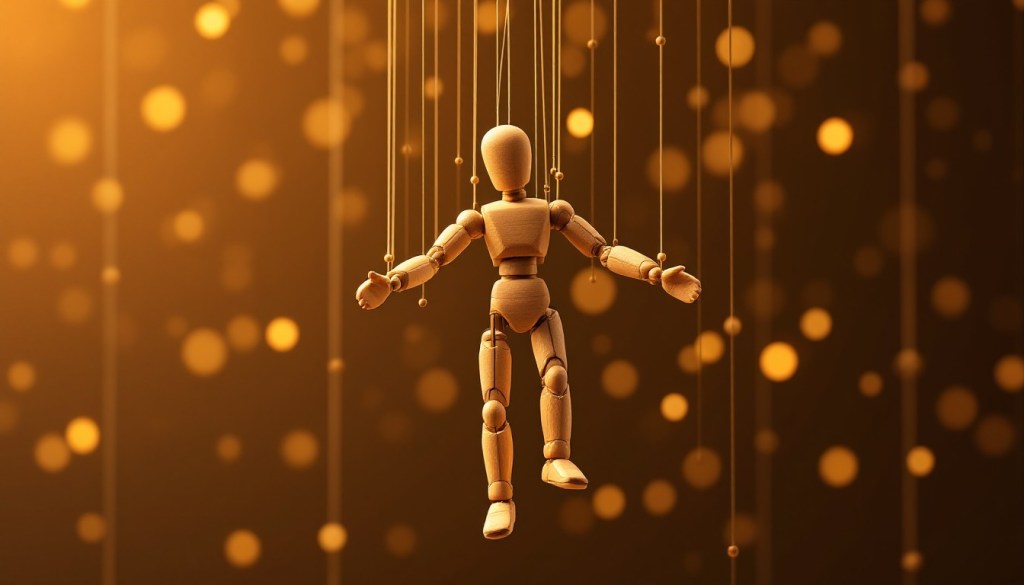
There are moments in everyday life when freedom feels almost self-evident. We wake up, check our phones, choose what to read, what to watch, what to say. The gestures are small and continuous, and nothing seems to stand in our way. No one is visibly restricting us, and the absence of friction becomes proof that we are acting freely. This sense of ease settles into the background, shaping how we understand ourselves without demanding reflection.
Because of this, freedom is rarely examined directly. We assume that our preferences are our own, that our decisions arise from within, and that our direction is something we determine. It becomes a felt condition rather than a question. The smoother our actions unfold, the more natural this assumption becomes, and the less we feel the need to interrogate it.
Yet a subtle doubt begins to appear when we pause. If our actions unfold so smoothly, if choices present themselves so naturally, where do these conditions come from? Are we simply moving through an open space, or are we acting within a space that has already been shaped? The question does not deny freedom, but it complicates it by suggesting that what feels like autonomy may already be structured before we become aware of it.
Law Is Not Enough
This is where the work of Lawrence Lessig becomes especially relevant. In Code and Other Laws of Cyberspace, he proposed that behavior is regulated not only by law, but by four distinct forces: law, market, social norms, and architecture, which he also described as code. His insight reframes the idea of control by expanding it beyond formal authority into the broader conditions that shape behavior.
The power of this framework lies in its simplicity. Governments are not the only sources of constraint. Prices influence what we can afford, norms influence what we consider acceptable, and architecture determines what is possible. A space can be designed in such a way that certain actions never even arise as options. In this sense, architecture does not merely limit behavior, it preconfigures it.
His well-known phrase, “Code is law,” captures this dynamic with precision. The environment in which we act, especially digital environments, can regulate behavior just as effectively as legal systems, sometimes more subtly and more persistently. What was once an observation about cyberspace has now become a general condition. The systems we interact with daily are no longer separate from life but woven into its ordinary structure, shaping action before it is even consciously chosen.
Layers of Regulation
Lessig’s framework becomes even more revealing when we consider how these forces operate across different layers of experience. It is useful to distinguish between the objective, the inter-subjective, and the subjective. These layers do not exist in isolation, but they provide a way to understand how regulation moves through different dimensions of life.
The objective layer includes systems, infrastructures, and institutions. These define the outer conditions of action, setting the boundaries within which behavior can occur. The inter-subjective layer consists of norms, shared meanings, and cultural expectations, shaping what feels appropriate or desirable within a given context. The subjective layer includes perception, desire, and identity, where we experience ourselves as agents making choices.
What is striking in the present moment is how tightly these layers are intertwined. Systems influence norms, norms shape identity, and identity feeds back into systems. Regulation is no longer experienced as something imposed from the outside. It becomes internalized, translated into habits, preferences, and ways of thinking. The architecture of the system is no longer external to us, but becomes part of how we experience ourselves.
The Burden of Freedom
If Lessig helps us understand how behavior is structured externally, Erich Fromm provides a lens for understanding the internal experience of freedom. In Escape from Freedom, he argues that modern individuals, having been released from traditional authorities, face a new kind of psychological challenge. Freedom, rather than being purely liberating, introduces uncertainty and responsibility.
Without stable structures, individuals are confronted with the necessity of choice. The range of possible actions expands, but so does the weight of deciding among them. This condition can produce anxiety, as individuals must navigate their lives without the certainty once provided by external authority. Freedom becomes something that must be carried, not simply enjoyed.
Fromm observes that many people respond to this condition by seeking new forms of structure. They align with authority, conform to norms, or embed themselves in systems that provide direction. This is not merely a retreat from freedom, but a response to its difficulty. When placed alongside Lessig’s framework, this reveals a deeper pattern in which external structures and internal desires converge. Systems provide guidance, and individuals often welcome that guidance as a way to stabilize their experience.
When Control Becomes Design
In earlier periods, control was visible and explicit. Laws prohibited actions, authorities enforced rules, and boundaries were clearly marked. It was possible to identify the source of constraint and, at least in principle, to resist it. Control was something that appeared as an external force acting upon the individual.
In the contemporary environment, control has shifted into design. Interfaces guide attention, defaults shape decisions, and systems present options in ways that feel intuitive. Rather than restricting behavior directly, the environment organizes the field of possible actions. What we encounter feels natural, but that naturalness is itself constructed.
This transformation changes how control is experienced. When constraints are embedded in the structure of the system, they no longer appear as constraints. They appear as the normal flow of action. Freedom, in this context, is not eliminated but reframed. It becomes something we experience within a designed environment, rather than something that exists independently of it.
AI and the Personalization of Constraint
The emergence of AI introduces a further development in this trajectory. Unlike earlier systems, which were relatively fixed, AI systems are adaptive. They learn from behavior, adjust to preferences, and continuously reshape the environment in response to the individual. This creates a form of regulation that is dynamic rather than static.
Instead of presenting a uniform set of possibilities, AI systems curate options in ways that align with individual behavior. They anticipate needs, filter information, and present content that feels relevant. Constraint does not disappear, but it becomes personalized. The system does not impose limits in an obvious way, but organizes experience so that certain paths are more visible and more likely to be taken.
This creates a complex relationship between agency and structure. When the environment reflects our preferences, it reinforces the sense that we are acting freely. At the same time, those preferences are being shaped and stabilized by the system itself. Agency becomes something that emerges from the interaction between the individual and the system, rather than something that belongs entirely to one or the other.
The Freedom We Seek
At this point, the question shifts from whether we are free to what kind of freedom we are actually seeking. Fromm’s insight suggests that individuals often seek relief from the burden of freedom, while Lessig’s framework shows that behavior is always structured by multiple forces. Together, they point toward a more nuanced understanding of freedom as something that is both desired and negotiated.
We may not be seeking absolute autonomy. Instead, we may be seeking a form of freedom that is manageable, one that allows for choice without overwhelming uncertainty. Such a condition includes guidance and structure, narrowing possibilities into something that can be navigated without constant deliberation. In this sense, systems that shape behavior while preserving the feeling of choice may be experienced as supportive rather than restrictive.
This does not mean that such systems are neutral. It means that their effectiveness lies in aligning with human needs and tendencies. A system that reduces complexity while maintaining the experience of agency can feel like an extension of the self, even as it shapes the conditions under which the self operates.
Living Within Designed Freedom
What remains is not a simple resolution, but a shift in perspective. Freedom cannot be understood as the absence of structure, because structure is always present in some form. Systems, norms, and environments are not external to our experience of freedom but are part of the conditions that make action possible. The question is not whether we can escape these conditions, but how we understand and engage with them.
Awareness does not remove the structures that shape us, but it changes our relationship to them. It allows us to see how design influences experience, how preferences are formed, and how choices are framed. This awareness does not restore a pure form of freedom, but it introduces a different kind of agency, one that includes reflection as part of action.
To live freely in this context may not mean resisting all forms of influence, but recognizing how influence operates and how we participate in it. If freedom today is designed, then the task is not to stand outside design, but to see it clearly enough that we can inhabit it with intention.
Image: StockCake
 Tom’s Blog