
We often begin with an assumption that feels almost too obvious to question. Intelligence resides in the brain. Thinking happens in the head. The body supports this process, but it is not considered the source of it. This way of understanding ourselves has become deeply embedded in modern life, especially in an age shaped by digital systems and computational metaphors. Intelligence appears as something that can be abstracted, measured, and perhaps even replicated elsewhere.
This assumption is convenient because it simplifies the human being. If intelligence is located in one place, then it can be studied in isolation. It can be enhanced, optimized, or even transferred. The rest of the body becomes secondary, a vessel that carries the true center of thought. In this framework, it is easy to imagine that intelligence might eventually exist independently of the human organism, as if it were a kind of software.
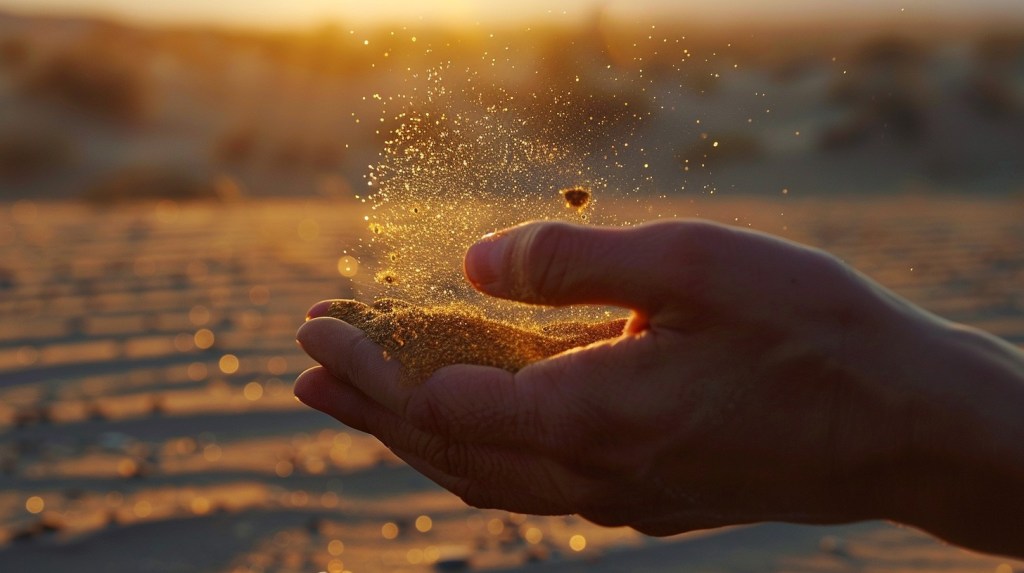
Yet when we turn to our own experience, this picture begins to loosen. Consider something as ordinary as sand. When we think of sand, we do not recall a definition or a visual outline alone. We recall a texture, the warmth of sunlight, the sensation of grains slipping through our fingers, perhaps even childhood memories of digging, of encountering insects, or of discovering something unexpected beneath the surface. There may be discomfort, curiosity, even a faint smell that lingers in memory.
What we call understanding is not a detached mental representation. It is a lived accumulation. The concept of sand is inseparable from the body that has encountered it. This suggests that intelligence is not located in a single organ, but arises from the whole being. The brain does not think alone. It thinks as part of a body that has touched, moved, felt, and remembered.
The Memory of the Body
If we follow this line of reflection, it becomes clear that our concepts are formed through repeated encounters rather than abstract construction. As children, we do not begin with ideas. We begin with contact. We touch, taste, fall, feel pain, and experience comfort. These experiences are not organized into theories at first. They are lived, often without reflection, yet they gradually form patterns that shape how we understand the world.
Over time, these encounters do not remain separate. They settle into us. They become the silent ground upon which later thought is built. When we eventually learn language, we do not attach words to empty categories. We attach them to experiences that already have meaning. Words become a way of pointing to something that has already been lived.
This grounding remains even when we move into more abstract domains. Trust is not first a concept to be defined. It is the experience of being held, of being answered, of being let down, of waiting. Love is not simply a word that describes a state. It is formed through presence, absence, tone, gesture, and memory. Even grace, which is often spoken of in theological language, is encountered through lived moments of forgiveness, acceptance, and unexpected kindness.
In this way, intelligence is not something that floats above experience. It grows from it. The body remembers in ways that are deeper than explicit thought, and this memory continues to shape how we perceive and interpret the world. What we call thinking is inseparable from this history. It is not a detached activity, but a continuation of lived experience.
Balance Without Purity
When we shift our attention from experience to the body itself, another assumption begins to dissolve. We often imagine that health is a state of purity, a condition in which nothing foreign is present. Illness, in this view, occurs when something harmful enters from the outside and disrupts this clean state. It is a simple and appealing picture, but it does not reflect the reality of living systems.
The human body is not pure. It is an ecosystem. Countless microorganisms live within us at all times, and many of them are essential to our survival. They participate in digestion, regulate immune responses, and contribute to the overall stability of the body. What we call health is not the absence of these elements, but the balance among them.
When we become ill, it is often not because something entirely new has appeared, but because this balance has been disturbed. Something that was once integrated becomes excessive, or something necessary becomes insufficient. The system shifts, and what was once stable becomes unstable. Illness is not simply invasion. It is imbalance.
This challenges the idea that purity is the goal of life. There is no pristine state to which we can return. Life is always already mixed, composed of diverse elements that coexist in a dynamic relation. The stability we experience is not the result of isolation, but of balance. This insight has implications that extend far beyond biology.
Intelligence and the Conditions of Learning
What is true of the body can also be seen in the way we learn. Intelligence does not arise from a pure or isolated condition, but from the interaction between the body, the environment, and accumulated experience. This becomes especially visible when we consider how education is changing in a digital age.
There is a growing tendency to emphasize efficiency. Digital tools allow us to write, read, and communicate with remarkable speed. It is tempting to believe that learning can be fully transferred into these systems, that physical processes can be replaced by more efficient digital ones. Children can learn to type before they learn to write, and information can be accessed instantly.
Yet this perspective overlooks the role of the body in shaping understanding. When a child writes with a pen, the act involves more than recording symbols. It requires coordination, pressure, spatial awareness, and sustained attention. The body participates in the formation of thought, and this participation leaves a lasting imprint.
As adults, we may rely on digital tools with ease, but this ease is not independent. It is built upon earlier embodied experiences. The efficiency we enjoy is supported by a foundation that was once slower and more physical. Without that grounding, the use of digital tools may become shallow, fast but less rooted.
This does not mean that technology is harmful or unnecessary. It means that efficiency depends on something deeper. Learning cannot be fully separated from the conditions that make it possible, and those conditions are fundamentally embodied.
Life as Totality
If we extend this understanding further, we begin to see that life itself cannot be reduced to a single condition or quality. We often attempt to define life in terms of what we prefer, a good life, a happy life, a meaningful life. These definitions are understandable, but they tend to exclude much of what life actually contains.
In lived experience, life includes both what we seek and what we resist. There are moments of ease and moments of difficulty, times of excitement and times of boredom, periods of clarity and periods of confusion. These are not interruptions or deviations. They are part of the structure of life itself.
If we were to remove everything uncomfortable, what would remain might be stable, but it would lack depth. It would no longer feel like a full life. Discomfort, in its various forms, contributes to contrast, awareness, and growth. It reveals limits and invites reflection.
Life, then, is not a purified state. It is a totality that includes diverse experiences. This diversity is not a flaw to be corrected, but a condition to be understood. The richness of life comes from this interplay, from the way different elements coexist and unfold over time.
A Small Self in a Greater Whole
This perspective also changes how we understand ourselves. Each of us experiences life as a whole, with our own memories, relationships, and sense of identity. Within our own perspective, this feels complete. Our life is our world, and it carries its own meaning.
At the same time, this wholeness is also a fragment. Our lives are brief in relation to the history of the world, and our perspective is limited in relation to the vastness of reality. The universe extends far beyond what we can perceive or comprehend, and life continues beyond our individual existence.
This creates a balance that is not always easy to hold. On one hand, life is deeply important. It is irreplaceable and meaningful. On the other hand, it is also small within a much larger continuum. Life and death, which feel absolute from within our experience, become moments within a broader unfolding when seen from a wider perspective.
Recognizing this does not diminish the value of life. It situates it. It allows us to see that we are both indispensable and limited, both central to our own experience and not the center of everything. This balance invites a different way of seeing.
Seeing Beyond Ourselves
We naturally experience the world through our own perspective, and this perspective often becomes the measure of reality. What we see feels like what is. What we think feels like what matters. This is not a mistake, but it is a limitation.
Our perception is always shaped by our body, our history, and our position. We cannot fully step outside of these conditions, but we can become aware of them. We can recognize that our view is partial, and that reality exceeds what we perceive.
This awareness opens the possibility of seeing beyond ourselves, not by abandoning our perspective, but by loosening its centrality. We begin to consider other viewpoints, other forms of experience, and the possibility that there is a larger whole in which our own perspective participates.
In some traditions, this is expressed as seeing through the eyes of God. This does not mean possessing complete knowledge, but moving toward a way of seeing that is not confined to the self. It is a shift toward humility, openness, and a deeper participation in reality.
To live in this way is not to escape life, but to enter more fully into it. It is to recognize that intelligence, health, learning, and life itself are not matters of purity or isolation, but of balance, relation, and totality. In this recognition, something becomes clearer, not as a final conclusion, but as a way of being that remains open, grounded, and attentive.
Image: StockCake
 Tom’s Blog