
When we were children, we did not yet know who we were supposed to be. That absence of self-definition was not a weakness. It was a form of freedom. We spoke without rehearsing, ran without calculating, and approached people, animals, even unfamiliar spaces without evaluating our image. The world felt wide, but the self felt light.
That lightness was not wisdom. It was safety. We lived inside a structure we did not construct. Parents absorbed complexity on our behalf. They negotiated risk, filtered danger, and carried responsibilities we did not yet understand. We were spontaneous because someone else carried the invisible weight of protection.
To a small child, parents often feel almost godlike. They seem to know everything and fix everything. When we were afraid of the dark, their presence dissolved fear. Their authority defined the boundaries of our universe. Yet that protection, though real, was never absolute. It depended on human beings who were themselves fragile and finite. We could not see that fragility then. Our innocence rested upon not perceiving it.
The lightness of childhood was therefore unconscious trust. We did not choose it. We inhabited it. As adults, we sometimes long for that simplicity. But we cannot return to it. The question is not how to reverse development. The question is whether another form of lightness is possible, one that does not rely on ignorance.
The Weight of Becoming Someone
As we grow, self-consciousness thickens. We begin to see ourselves through the eyes of others. Comparison enters. A classmate excels. A sibling receives praise. A colleague advances. The world becomes measurable, and so do we. With measurement comes ambition. We begin to ask what we will become and how we will be recognized.
The desire to become someone is not shallow by definition. It fuels education, creativity, service, and perseverance. It builds institutions and relationships. Yet striving also adds weight. Each success becomes part of identity. Each failure becomes a private narrative. We gather credentials, roles, and expectations. Gradually, we construct armor.
Armor protects, but it is heavy. By midlife, many pause to take inventory. What have I achieved. What have I built. What have I failed to do. Some feel gratitude. Others feel lack. Blessings themselves become conditional, measured against imagined alternatives or against the progress of others.
The burden often lies less in circumstances and more in interpretation. Comparison narrows perception. Even success can feel unstable because the standard continues to shift. The armor that once enabled growth begins to constrain freedom. We carry identities that are difficult to remove. The spontaneity of childhood seems distant, not because the world changed completely, but because the self became layered.
When Protectors Fall
There comes a moment that reshapes the structure of life. Our parents age. They weaken. Eventually, many of us stand at their bedside as they depart this world. In that moment, something irreversible happens within us.
The ones who once felt omnipotent are revealed in their full humanity. We see their fears, limitations, sacrifices, and endurance. They were never divine, though they once appeared that way to us. They were fragile people who carried more than we understood. When they die, the final visible layer of childhood protection dissolves.
Looking at a lifeless body, we sense that something essential has withdrawn. The physical form remains, but the animating presence is gone. Mortality ceases to be abstract. It becomes immediate. And inevitably, we recognize that someday our own bodies will also fall silent.
If identity has been anchored in achievement alone, death appears as erasure. Everything carefully constructed seems vulnerable to dissolution. In that confrontation, a deeper question emerges. If parents cannot shield us from mortality, if institutions cannot guarantee permanence, what sustains existence itself.
The loss of provisional protectors can either lead to despair or open a deeper trust. It depends on whether we believe that protection was merely human or whether something more fundamental has always been holding us.
Blessing as Light, Not Compensation
To speak of blessing in a world marked by suffering requires precision. The world is not paradise. There are wars, illnesses, injustices, mental anguish, and grief. Bodies fail. Minds fracture. Any reflection that ignores these realities becomes superficial.
Blessing cannot mean exemption from hardship. It cannot mean that pain is secretly pleasant. Perhaps blessing is closer to what we call light. Yet even here we must clarify. Light does not refer merely to physical brightness or eyesight. It does not privilege those who see with their eyes over those who do not. It refers to illumination in a deeper sense, the capacity to perceive meaning, belonging, or presence.
A person who is blind can experience gratitude, depth, and calm as fully as anyone else. In some cases, perhaps even more clearly. Vision in this sense does not depend on the eyes. It depends on awareness. The metaphor of light points toward clarity of being, not toward sensory ability.
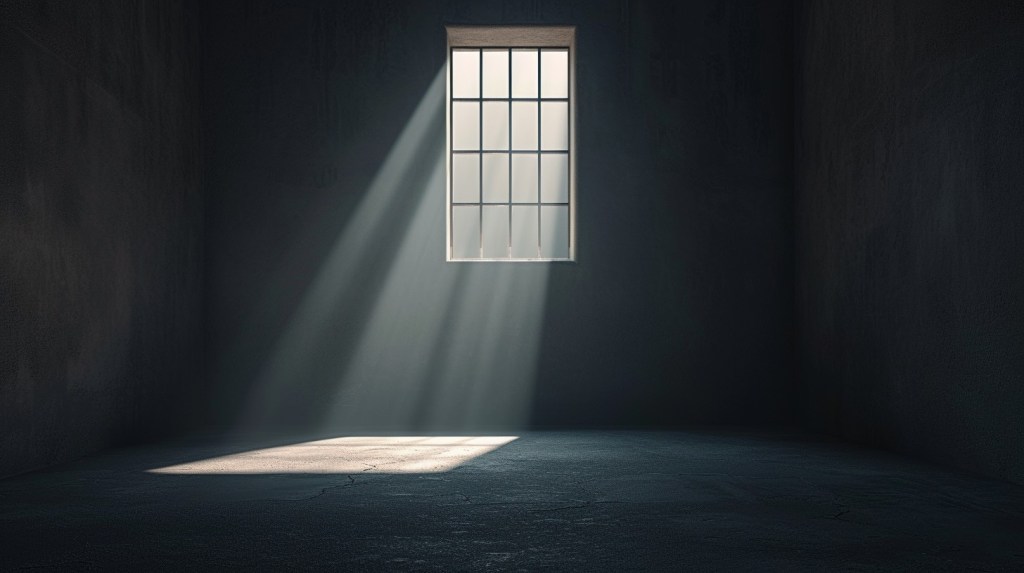
Light, understood in this way, does not eliminate suffering. It reveals the larger field in which suffering exists. Darkness is not an independent substance equal to light. It is the obstruction or narrowing of awareness. When shutters close, a room grows dim, yet the sun has not vanished. The barrier lies within the room.
If blessing is like illumination, then counting blessings is not manufacturing positivity. It is opening perception. Ego often functions as obstruction. When we are absorbed in proving ourselves, defending ourselves, or comparing ourselves, awareness narrows. Everything is interpreted in relation to gain or loss. That narrowing casts shadow.
Surrender is therefore not defeat. It is stepping aside. When ego loosens, light already present becomes perceptible. Even in suffering, calm can exist. This calm does not deny pain. It acknowledges pain while trusting that pain is not ultimate reality. Beneath turbulence, there can be steadiness.
Understanding blessing as illumination rather than compensation allows us to face suffering without denial. Light does not compete with darkness as rival forces. It discloses what was always there.
The Return to Light Through Surrender
In later life, something subtle may begin to shift. Competition softens. The urgency to prove oneself weakens. Roles and achievements lose some of their sharpness. Some resist this transition and cling more tightly to identity. Others soften into it.
If softening occurs, a second form of lightness emerges. It resembles childhood spontaneity, yet it is different in origin. The child is light because protection is unconscious. The elder may be light because protection is trusted consciously.
This is surrender not as resignation, but as reconciliation. One begins to see that existence itself has been gift. Surviving illness, enduring disappointment, waking each morning, these are not achievements to display. They are givens to receive.
Death, viewed from this posture, becomes less an enemy to conquer and more a threshold to approach with reverence. The body will eventually be placed down, as armor once worn for necessary struggles. If there is an ultimate protector, it is not one who prevented storms, but one who held us through them. It is not an external shield guaranteeing comfort, but a ground of being that persists when all shields fall.
To return to light at death, if such language holds meaning, is not to be erased but to be received. It is not annihilation but completion.
Living Before the Final Surrender
The essential question is not only what happens at death. It is how we live before that moment arrives. If light is fundamental and blessing is perception rather than transaction, daily life becomes the field of practice. Small surrenders prepare us for the final one.
Releasing comparison when it arises, releasing resentment when it hardens, releasing the need to justify existence, these are recalibrations. Work continues. Responsibility remains. Creativity deepens. Yet they no longer serve anxious self-justification.
Light becomes recognizable in ordinary moments, in conversation, in fatigue, in silence. This way of living does not deny suffering. It acknowledges burden while trusting that burden is not the deepest layer of reality.
Childhood offered lightness through innocence. Adulthood layered weight through becoming. Maturity offers lightness through surrender. If we learn to open awareness now, the final transition will not feel unfamiliar. Blessings will not need to be forced into visibility. They will already be known as illumination that was always present.
And perhaps what we once called light was never distant. It was simply waiting for us to step aside.
Image: StockCake
 Tom’s Blog