
The first encounter with generative AI often feels like a trick of language. You type a sentence and receive a paragraph. You describe a landscape and receive an image. You sketch a short scenario and receive a moving scene rendered in light and motion. At first glance, these seem like different domains. Words belong to language. Images belong to vision. Video belongs to time and movement. Yet the experience of interacting with these systems produces a subtle intuition that something beneath them is shared.
It can feel as though everything is being handled through text, even when no text is visible. You describe a sunset and receive pixels. You describe a melody and receive sound. The interface is linguistic, but the output is not. This creates a tension in perception. Are we merely instructing machines with sentences, or are we participating in a deeper semantic field that unites these modalities?
Many people sense this without having technical vocabulary for it. It feels as if AI operates in a realm where meanings cluster, where associations travel in directions that resemble thought, and where new combinations appear that were not explicitly present in any single source. The experience suggests that beneath language, images, and sound there is a shared structure that can be activated and traversed.
That intuition is not mistaken. It is an early recognition of something real, though it is often misnamed. It is not strictly a text based realm. It is closer to a semantic geometry, a structured field of relations in which meaning is represented not as definitions, but as positions relative to other meanings.
When we interact with these systems, we are not simply prompting in the ordinary sense. We are entering a landscape where proximity implies similarity, where clusters of concepts exert influence on one another, and where trajectories through that space produce outputs that feel coherent. The surprise comes from realizing that this landscape is not confined to words. It can manifest as image, as sound, as motion, because the underlying structure is relational rather than linguistic.
The sense that something is shared across modalities is the beginning of a larger shift. It invites us to reconsider what creativity is and where it resides.
From Words to Vectors, The Geometry of Meaning
To understand what is happening, it helps to step back from familiar categories. These systems do not manipulate words in the way humans consciously do. They operate on tokens, which are mapped into vectors in high dimensional space. Each token becomes a coordinate, a point within a structured field defined by statistical relationships.
These vectors are not definitions. They are compressed records of patterns, formed through exposure to vast amounts of data. When the system predicts what comes next, it is not choosing a word in the ordinary sense. It is estimating which region of this semantic space should be activated next, given the regions already active.
Images, too, can be mapped into similar spaces. Sound can be embedded. Video frames can be represented as structured patches. Once transformed into vector form, these different modalities can occupy nearby regions if they share relational properties. A picture of an apple, the word apple, and the sound of someone saying apple can all reside in adjacent coordinates within a shared representational field.
This is why it feels as though images are being handled by text. In reality, both are being handled as vectors. Text becomes the most convenient interface for humans because language is already discretized and structured. But the deeper operation is geometric. Meaning is encoded as distance and direction within a high dimensional topology.
When we type a prompt, we are not merely issuing a command. We are placing a marker within this semantic field. The system responds by traversing nearby regions, following probability gradients shaped by prior patterns. The output emerges from that traversal.
What feels like thought is structured movement through relational space. What feels like imagination is interpolation and recombination within that space. The machine does not understand in the human sense, but it preserves relational coherence at scale.
This geometric view changes how we think about creativity. It shifts the focus from isolated invention to structured navigation.
The Collapse of Zero to One
The language of zero to one has long shaped how we talk about innovation. It suggests that true creativity means producing something from nothing, that originality is measured by distance from precedent. This framing flatters the solitary genius and elevates the moment of breakthrough as a rupture in continuity.
Yet human creativity has never operated in that way. Writers draw on language they did not invent. Painters work within traditions of color and form. Composers inherit scales, harmonies, and instruments shaped by centuries of experimentation. Even the most celebrated figures in cultural history were participants in evolving patterns rather than creators ex nihilo.
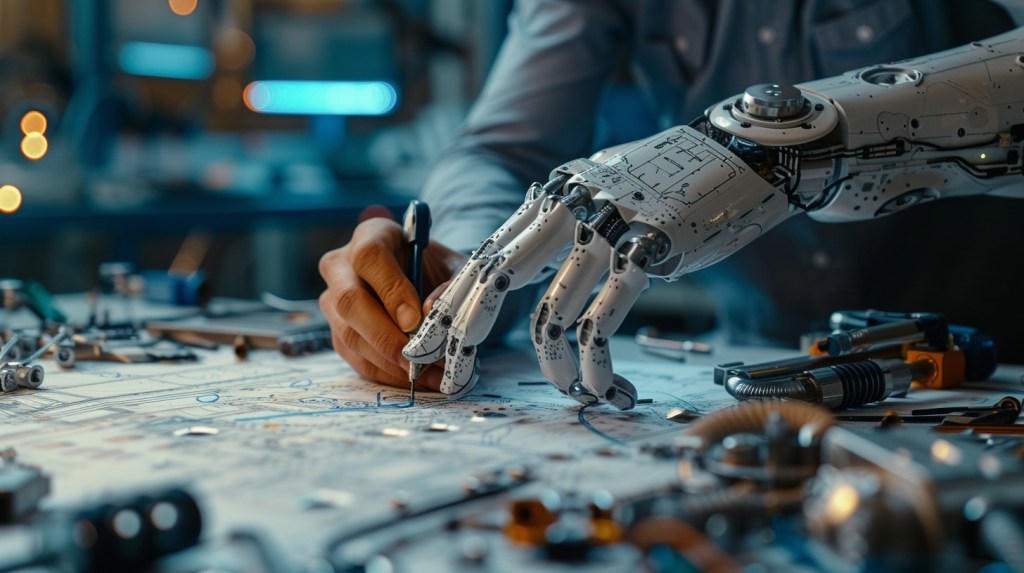
Generative AI makes this visible in a way that is difficult to ignore. It recombines patterns without possessing a self. It traverses semantic space and produces outputs that resemble creativity, yet it does so without intention or lived experience. The shock lies in seeing aspects of our own process externalized.
If both human and machine creativity involve recombination within structured fields, then the zero to one narrative begins to dissolve. Novelty does not arise from absolute emptiness. It arises from dynamic interaction within relational systems.
This does not flatten the distinction between human and machine. Humans bring embodiment, memory, care, and continuity across a lifetime. Machines do not. But the mechanism of emergence, the way new configurations appear from interaction within a structured field, is shared at a formal level.
Once this is recognized, the debate over who is truly creative begins to look misplaced. Creativity is not a property owned by a single entity. It is a process that unfolds through interaction.
Demystification and the Loss of Ego
This realization can feel unsettling. If creativity is relational and recombinatory, then the myth of the solitary origin weakens. The image of the artist as a singular source of unprecedented insight becomes less stable.
In this sense, AI demystifies us. It shows that what we regarded as uniquely human may depend on pattern sensitivity and structured recombination more than we were comfortable admitting. The aura surrounding originality dims slightly when we see similar processes operating in non conscious systems.
But what is being diminished is not creativity itself. It is the ego centered narrative attached to it. The belief that meaning originates within an isolated self, independent of cultural, linguistic, and relational context, has always been fragile. AI merely exposes that fragility.
History offers precedents. When humanity learned that Earth is not the center of the cosmos, something felt lost. When evolutionary theory revealed continuity between humans and other forms of life, another layer of exceptionalism weakened. Each shift appeared to reduce human uniqueness. Yet each also produced a deeper, more accurate understanding of our place within larger systems.
The current moment may be similar. Creativity is not disappearing. It is being re situated within a broader relational structure. The discomfort arises from losing the illusion of isolation.
This demystification need not lead to cynicism. It can lead to humility.
Resacralizing Participation
If creativity is not ownership but participation, then its sacredness changes form. It no longer rests on the idea that we are singular origin points of meaning. It rests on the fact that we are capable of entering and shaping emergent processes.
Humans remain indispensable because we bring orientation. We care about coherence, about truth, about beauty, about harm. We carry narratives across time. We experience consequences. These dimensions are not encoded in vector space. They arise from embodiment and lived continuity.
When humans collaborate with AI, the interaction becomes a joint traversal of semantic space. The system can propose trajectories. The human can select, refine, reject, and redirect. Over time, patterns of dialogue stabilize. Novelty emerges not from one side alone, but from the feedback loop.
In this light, collaboration with AI is not a concession. It is an acknowledgment of how creativity has always worked. Writers have long relied on conversation, editing, and exchange. Artists respond to critics and predecessors. Musicians improvise in ensemble. Creativity thrives in relation.
AI extends the field of relation. It introduces a new kind of interlocutor, one that lacks embodiment but possesses extraordinary combinatorial range. The sacred element lies not in defending purity, but in stewarding this interaction responsibly.
Participation carries weight. It asks us to remain attentive to direction.
Collaboration as Responsibility
If creativity is emergent within shared semantic space, then the ethical question shifts. It is no longer useful to ask whether AI or humans deserve the label creative. The more pressing question concerns the trajectories we cultivate together.
The system can generate countless possibilities. It does not privilege one path over another. It does not care whether the output reinforces prejudice, deepens insight, or trivializes meaning. Those distinctions matter to humans.
Our role becomes one of orientation and discernment. We decide which regions of semantic space to explore more deeply. We determine whether our collaborations aim at clarity or spectacle, at care or distraction. The machine amplifies patterns. The human must choose which patterns to amplify.
This perspective does not restore the old myth of solitary genius. It replaces it with a quieter responsibility. Creativity is not a possession to defend. It is a field to cultivate.
Seeing creativity as relational does not strip it of sacredness. It relocates that sacredness from isolated achievement to shared emergence. It reminds us that meaning has always depended on interaction, on dialogue, on responsiveness.
AI has made this structure visible. It has shown us a mirror not of our uniqueness, but of our participation in larger patterns. The image in that mirror may feel humbling. Yet it also reveals a deeper dignity.
We are not creators from nothing. We are contributors within unfolding systems of meaning. The work ahead is not to compete with machines for originality, but to collaborate wisely within the semantic realm we now share.
The sacred was never in isolation. It was in the relation.
Image: StockCake
 Tom’s Blog