
My mother-in-law suffered a stroke and fractured her hip in December last year. She was hospitalized on December 22, 2025. From that day onward, her life became a sequence of tests, procedures, scans, and interventions. I understand why. Modern medicine is built on a noble mission: to do everything possible, for as long as possible. To resist death. To delay it. To push back against the limits of the body.
Surgery was performed to insert a metal plate into her hip. Later, she developed severe pneumonia. Tubes were suggested, then inserted. One by one, devices surrounded her. Each carried a justification. Each came with a rationale rooted in survival.
Yet when I stood beside her hospital bed, I could not shake a different feeling. She looked as if she were tied down. Machines filled the room. Their mechanical sounds never stopped. Alarms, pumps, ventilators, monitors. Even at rest, the room was never quiet.
Eventually, the move to the ICU was suggested, almost instructed. With it came a further escalation of intervention. More monitoring. More tubes. More machinery. Her suffering did not seem to diminish. It was extended. Amplified. Prolonged by good intentions.
She was 89 years old.
At some point, a question began to form, slowly and uncomfortably. What was all of this for? Healing, or simply continuation? Care, or an unintentional form of torture? I do not ask this as an accusation. I have no desire to condemn modern medicine. It saves lives every day. It saved people I love. I respect it deeply.
But respect does not silence doubt.
When a body has lived nearly nine decades, when fragility has become the natural state rather than a temporary condition, what does it mean to “do everything”? And who decides when everything has become too much?
I found myself wondering what a natural death might look like in a modern world. Not a dramatic death. Not a heroic struggle. Just a death shaped by aging itself, or by illness accepted rather than endlessly resisted. A death that does not treat finitude as a failure.
These thoughts did not come easily. They came with guilt. With fear. With the worry that asking such questions might itself be a form of betrayal.
Eventually, after speaking with one doctor whose concern felt human rather than procedural, hospice care was mentioned. Not as a defeat, but as an option. A different orientation. A shift from intervention to accompaniment.
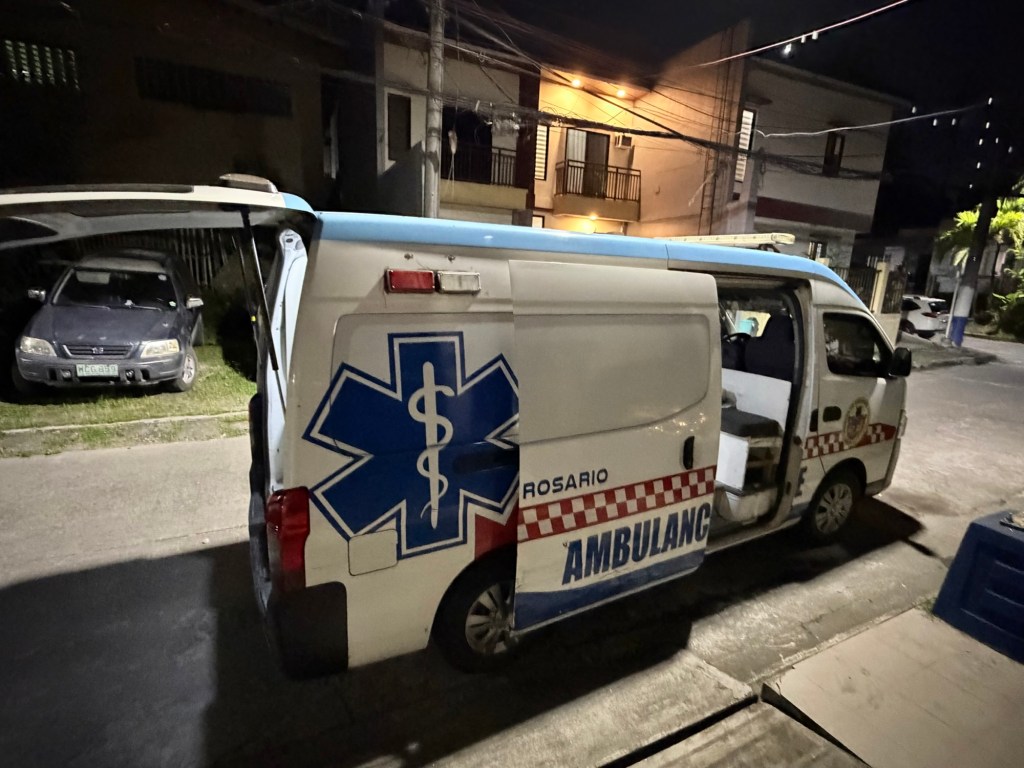
We decided to bring her home.
With minimal life support, a ventilator and two oxygen tanks, she returned to a familiar place. The house was quiet in a way the hospital never was. No alarms. No constant mechanical noise. Only breathing, footsteps, voices, prayer.
All of her children gathered around her. Relatives came to visit. She was mostly unconscious, yet unmistakably alive. We could see it in the pulse monitor, in the oximeter, and in the subtle movements of her feet. Life was still there, but it was no longer being forced forward. It was simply being allowed to be.
She stayed with us for two days.
When the oxygen gradually ran out and there were no more tubes insisting that the body continue, she slowly weakened. There was no sudden collapse. No drama. Just a gentle diminishing. And then, on the afternoon of January 20, 2026, she passed away.
This departure is irreversible. That truth lands with a particular finality. We will never hear her voice again, except in memory. We will never see her smile again, except in memory. Death makes no apologies.
Yet I do not believe she vanished. I believe she transcended. Not in a poetic sense, but in a deeply practical one. She is no longer bound by time, by machines, by bodily limits. No longer confined to hospital rooms or treatment plans. Not on earth, but in heaven.
Those two days at home were precious. If I am honest, I believe there was a peace there that never existed in the hospital. Even in near unconsciousness, she was surrounded by her children. By familiar voices. By touch. By prayer. Relationship replaced machinery as the dominant presence.
In those final days, something important happened. Her dignity returned. Not because her condition improved, but because her humanity was no longer competing with technology for space. She was no longer a site of intervention. She was a person being accompanied.
For that, I feel profoundly grateful.
Modern society is skilled at extending life. We are far less skilled at accompanying death. We outsource it to institutions, sterilize it with procedures, and treat its arrival as a failure rather than a completion. Hospice care reminded me that another posture is possible. One that does not reject medicine, but knows when to step aside.
In the quiet moment when her time touched God’s eternity, I felt something settle within me. Not clarity, exactly, but acceptance. A sense that His will was being done, as it is in heaven. Not through control, but through release.
Thank you, Nanay. Rest now in peace. Eighty-nine years in this world have come to their end. There is no longer any need to count the days.
What remains is gratitude. And silence.
Image: A photo captured by the author
 Tom’s Blog