
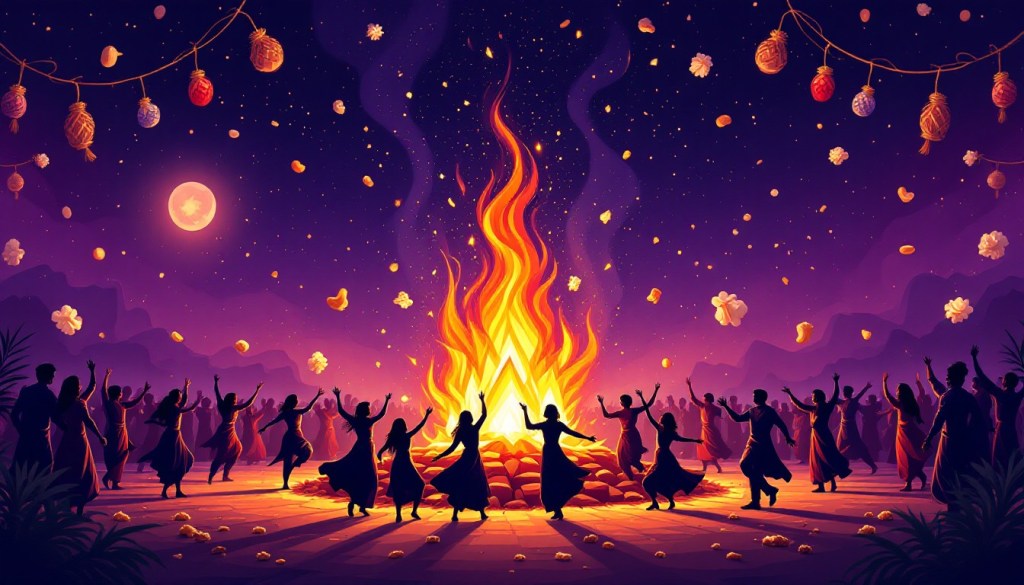
There are days that feel different before we even name them. The air seems slightly altered, the pace of conversation shifts, and expectations loosen. Christmas, birthdays, seasonal festivals, anniversaries, and communal gatherings all carry this quality. They interrupt the flow of ordinary time. Even before activities begin, we sense that something is set apart.
This sense of difference does not require explanation. Children feel it instinctively. Adults recognize it even when they try to downplay it. Festivity announces itself through preparation, anticipation, and suspension of routine. Work pauses or changes shape. Meals take longer. Conversations wander. Time thickens.
Historically, this interruption was not optional. Long before calendars, institutions, or formal religions, human communities marked seasons, harvests, transitions of life, and moments of danger or gratitude through shared gatherings. These events were not entertainment. They were mechanisms through which a group remembered itself.
In tribal societies, festivity was inseparable from survival. Shared rituals reinforced trust, clarified belonging, and synchronized emotion. The community gathered not to escape daily life, but to re-anchor it. The rhythm of work and rest, danger and safety, scarcity and abundance was given form through repetition.
What is striking is that these moments were not necessarily novel. Songs were repeated. Gestures were familiar. Stories were retold. The power of festivity lay not in innovation but in recognition. People did not gather to hear something new. They gathered to remember something shared.
This is where an intuitive distinction begins to emerge. Some moments belong to everyday life, while others are set apart. Some actions are ordinary, while others carry weight beyond their immediate purpose. Even without theology or philosophy, human beings learned to feel the difference.
That difference is the quiet background of what later traditions would call the sacred and the profane. Before doctrine, there was experience. Before belief, there was rhythm. Festivity was the first language through which human communities learned to speak about meaning.
The Sacred and the Social Body
When sociology began to take religion seriously as a social phenomenon, one of its most important insights was deceptively simple. Sacredness is not defined by its object, but by its function. What matters is not what is worshipped, but how a community relates to it.
For Émile Durkheim, the sacred names what is set apart from ordinary use. It does not belong to the everyday flow of practical life. Sacred objects, times, and gestures are protected, repeated, and surrounded by rules not because they are magical, but because they hold collective meaning.
Ritual, in this view, is not primarily about belief. It is about alignment. When people gather, move, speak, and remain silent together, they experience themselves as part of something larger. Emotion intensifies. Individual boundaries soften. A social body becomes briefly visible.
Durkheim described this as collective effervescence, a moment when shared energy rises and circulates. Anyone who has stood in a crowd singing a familiar song, observing a minute of silence, or sharing a meal during a festival recognizes this feeling. It is not mystical, but it is real.
Importantly, the content of ritual does not need to be profound. In fact, it often cannot be. Rituals work because they are predictable. Repetition allows participation without strain. Familiarity reduces risk. Meaning emerges not from novelty, but from continuity.
This explains why religious liturgies change slowly, if at all. It also explains why rituals endure even when belief weakens. People may doubt doctrines, but they still gather for weddings, funerals, and holidays. The social need remains even when metaphysical certainty fades.
In this sense, sacredness is not moral superiority. It is separation. Sacred moments are different not because they are better, but because they are not instrumental. They do not exist to achieve an external goal. They exist to mark belonging and orientation.
This distinction will become crucial later. When sacred form is asked to serve purely practical ends, tension appears. But before we reach that point, it is important to recognize that ritual itself is not a deception. It is one of the oldest and most reliable ways humans have learned to live together.
Borrowed Fire
Modernity did not eliminate the need for ritual. It redistributed it. As traditional religious calendars lost their organizing power, new forms of collective life inherited the same problem. How do large groups of strangers feel connected? How does shared purpose survive scale?
Corporations, universities, industries, and professional communities all discovered the answer intuitively. They created events. Town halls, all-hands meetings, kickoffs, annual conferences, trade shows, and global summits began to punctuate ordinary work.
These gatherings are recognizably ritualistic. There is a stage. There is lighting. There is music. There are shared narratives, repeated phrases, and symbolic gestures. Applause is cued. Silence is managed. Emotion is guided.
This is not accidental. It is the modern adaptation of an ancient form. Festivity still works. When people gather physically or synchronously, attention shifts. The everyday dissolves briefly. A sense of shared presence emerges.
There is nothing inherently cynical about this. Humans are social beings. We do better when we feel connected. A well designed corporate event can relieve isolation, restore morale, and remind people that they are not alone inside their tasks.
The problem begins not with use, but with overreach. These institutions remain instrumental by nature. Their goals are explicit and measurable. Performance, alignment, efficiency, growth. The ritual form is borrowed, but the purpose remains practical.
This creates an imbalance. Sacred form traditionally protects itself from instrumentalization. Corporate festivity does the opposite. It uses the form precisely because it is effective. Meaning becomes a tool rather than an orientation.
At first, this tension is barely noticeable. People enjoy the break from routine. They appreciate the effort. But over time, a subtle ambivalence appears. The applause feels slightly forced. The slogans feel familiar in the wrong way. The emotional return diminishes.
What is happening is not disillusionment. It is recognition. People sense that something ancient is being asked to do a job it was not designed to do.
The Unease Beneath the Applause
Participation in modern festivity requires effort. This is often misunderstood. It is not simply social anxiety or resistance to change. It is emotional labor.
To attend a large event, one must adjust posture, tone, expression, and attention. One must be present in a specific way. This is not necessarily bad, but it is costly. It requires psychological energy.
After long periods of isolation, especially during the pandemic, this cost became visible. People recalibrated. Quiet, autonomy, and control over attention gained value. Returning to large scale rituals felt heavier than before.
Introverted individuals experience this particularly sharply. For them, festivity is not rejuvenating by default. It demands preparation and recovery. When the meaning offered by the event feels thin, the cost feels unjustified.
This is where guilt often appears. Not guilt in the moral sense, but discomfort. A sense that something important is being spent cheaply. That emotional energy meant for rare moments is being consumed routinely.
The shallowness of content in corporate events amplifies this feeling. Keynote speeches often repeat familiar ideas. Values are reaffirmed. Vision is restated. This repetition is often criticized as empty, but structurally it is inevitable.
Ritual cannot carry too much novelty. Novelty disrupts synchronization. The goal is not insight, but alignment. In that sense, corporate events function exactly as rituals should.
The problem is not repetition. It is expectation. When rituals are framed as moments of inspiration, transformation, or deep meaning, disappointment follows. Sacred form raises hopes that profane content cannot meet.
Over time, this mismatch produces fatigue. People comply outwardly while withdrawing inwardly. The applause continues, but it no longer lifts.
When Confusion Hardens Into Devotion
There is a point where this tension becomes dangerous. It occurs when profane institutions begin to demand sacred loyalty.
Cults do not begin with absurd beliefs. They begin with misplaced devotion. When leaders occupy symbolic positions that shield them from critique, when questioning is framed as betrayal, when rituals bind emotion while suppressing doubt, the structure is in place.
This logic is not confined to fringe religious movements. Religious organizations become cultic when material success replaces transcendence. Corporations drift toward cultic behavior when identity, belief, or sacrifice is demanded beyond reasonable scope.
The core problem is category confusion. Finite institutions are treated as infinite. Authority is mistaken for transcendence. Ritual becomes control rather than orientation.
When sacred language is used to justify obedience, something fundamental breaks. The human capacity for devotion is powerful, but it is not neutral. When directed toward what can be owned, managed, or replaced, it distorts both the object and the person.
This is why the discomfort people feel is not irrational. It is a protective response. The psyche resists surrendering what it knows should not be surrendered.
Not all corporate culture is cultic. Most is mundane and limited. But when organizations ask for emotional loyalty without moral accountability, the warning signs appear. Exhaustion, cynicism, and quiet withdrawal follow.
Sacredness does not tolerate manipulation for long. When it is misused, it withdraws. What remains is performance.
Nations, Flags, and Holy Ground
The same structural problem appears at the level of the nation state.
The modern nation state is a practical invention. It organizes law, infrastructure, defense, and welfare across large populations. It is necessary. It is also ordinary.
Danger arises when the nation is narrated as sacred. When flags, borders, or histories are treated as holy, criticism becomes blasphemy. Loyalty replaces responsibility. Violence acquires moral justification.
Here the insights of Hannah Arendt become essential. She observed that totalitarian systems do not merely enforce ideology. They sacralize it. Ideology becomes a total worldview rather than a tool.
Once an ideology claims absolute truth, reality must conform. Evidence becomes irrelevant. Dissent becomes evil. Political disagreement turns into moral impurity.
Nationalism, when framed as sacred destiny, follows this path. The state moves from being a shared structure to an object of devotion. Citizens are asked not merely to obey laws, but to believe.
This is not a rejection of belonging or responsibility. Communities need shared narratives. But when the finite is elevated into the infinite, cruelty becomes possible in the name of purity.
States must remain profane to remain humane. They must be accountable, revisable, and limited. Sacredness belongs elsewhere.
Keeping Sacredness Rare
The answer is not to abolish ritual or festivity. Humans cannot live without them. The answer is restraint.
Sacredness loses power when it is overused. When everything is special, nothing is. Festivity should be rare enough to matter, and honest enough to sustain itself.
Institutions would benefit from acknowledging their limits. Corporate events do not need to inspire belief. They can simply create presence. Togetherness without theater. Participation without pressure.
Religious communities, too, must guard against instrumental success replacing transcendence. Political systems must resist the temptation to sacralize identity or ideology.
The unease people feel is not cynicism. It is memory. A memory of a distinction that still matters, even when unnamed.
Festivity remains one of the most human things we do. But it demands respect. When we remember what it is for, it can still gather us without confusing us.
Image: StockCake
 Tom’s Blog