
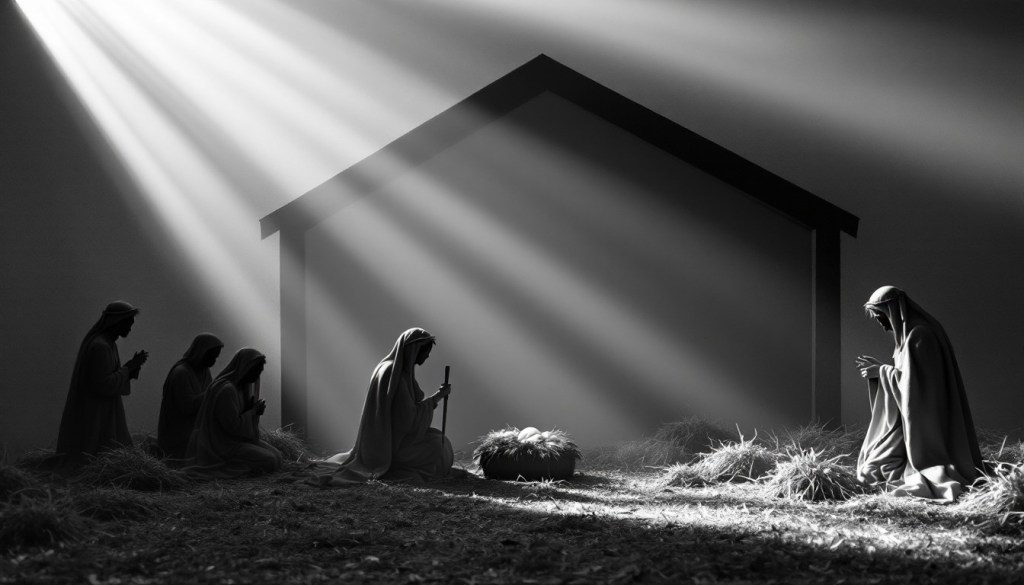
Christmas arrives each year wrapped in familiarity. Soft lights, familiar melodies, warm gatherings, and a sense of pause from ordinary time. Even those who do not consider themselves religious often feel that something gentle and humane hovers around the season. It is a moment when generosity feels easier and tenderness feels socially permitted.
Yet buried inside the biblical narrative of Christmas is a detail that refuses this gentleness. It appears early, almost immediately, and it does not belong comfortably among angels and shepherds. In Gospel of Matthew 2, a king hears that a child has been born who threatens his authority. Fear takes hold. Orders are given. Children are killed. Mothers weep.
This is not a marginal footnote. It stands near the center of the story. And for many readers, especially thoughtful ones, it produces a quiet shock. How can a story meant to announce good news begin with such brutality? How can the birth of hope coincide with the death of innocents?
For some, the discomfort is managed by omission. The scene is skipped in sermons and pageants. For others, it is softened with theological language about divine plans and mysterious purposes. But these approaches rarely satisfy for long. Especially when one imagines not symbols or abstractions, but actual parents holding the bodies of their children.
If one takes the story seriously, it demands a different kind of attention. Not the attention that rushes toward resolution, but the attention willing to remain with disturbance. The question is not merely why this happened, but why this story is told at all. Why does the Christian tradition insist on carrying this darkness into the heart of its most joyful celebration?
Power, Fear, and the Logic of the World as It Is
The figure of the king in the Christmas story is often portrayed as monstrous, even caricatured. Yet when examined more closely, his behavior follows a pattern that is tragically familiar. Power, when it senses its own fragility, rarely responds with humility. It responds with force.
The threat in this story is not military. It is symbolic. A child represents a future that cannot be controlled. For a ruler whose authority depends on permanence and certainty, this is intolerable. Violence becomes a way of restoring the illusion of control.
Seen in this light, the massacre described in Matthew 2:16–18 is not a divine act or a cosmic necessity. It is a human one. The Gospel does not attribute it to God. It does not frame it as sacrifice or destiny. It presents it as the predictable outcome of fear combined with authority.
This distinction matters. Too often, religious explanations blur the line between divine intention and human action. But the biblical text is more restrained. Responsibility remains human. The world into which the child is born is already dangerous. The violence does not erupt because salvation appears. It erupts because power cannot tolerate the possibility of change.
This framing does not soften the horror. It sharpens it. The story insists that the problem is not an exceptional evil, but a recognizable one. The same logic that kills children in Bethlehem continues wherever fear governs unchecked power.
The Christmas narrative does not explain this away. It exposes it.
Abraham, Isaac, and the Unlearning of Sacred Violence
Long before the birth of Christ, Scripture wrestles with the question of sacrifice. One of the most troubling stories appears in Book of Genesis 22, where a father is asked to offer his son. For generations, readers have struggled with this account, often focusing on obedience and faith. Yet such readings quickly reach moral limits.
What is often overlooked is where the story actually turns. The decisive moment is not the raised knife. It is the interruption. The act is stopped. The child is spared. The assumption that the divine demands human blood is broken.
In its ancient context, this interruption is radical. Child sacrifice was not unheard of in the surrounding cultures. The story does not introduce a shocking command so much as it dismantles a familiar expectation. What kind of god asks for this? And then, what kind of god refuses it?
This refusal is not incidental. It marks a turning point in how violence is understood within the biblical imagination. Sacrifice is not eliminated as a concept, but it is transformed. Blood is no longer a currency that appeases the divine.
When later Christian theology draws a parallel between this story and the death of Christ, the difference is crucial. Isaac is not taken. Jesus is. But the meaning is reversed. God does not demand a human victim. God becomes the victim.
This shift matters deeply. It prevents the story from being read as divine endorsement of violence. Instead, it presents a long process of unlearning. The biblical narrative does not begin with clarity. It arrives there slowly, painfully, through contradiction and refusal.
Rachel’s Tears and the Legitimacy of Lament
After recounting the massacre, Matthew reaches back into Israel’s memory and quotes Book of Jeremiah 31:15. Rachel weeps for her children, and she is not comforted. This detail is often rushed past, but it carries immense weight. Scripture does not silence her. It records her sorrow without correction.
Lament in the biblical tradition is not a problem to be solved. It is a form of truth telling. It gives voice to pain without demanding explanation. In doing so, it resists the temptation to justify what should not be justified.
This is why the connection to Jesus’ cry on the cross matters. When he voices abandonment, he does not invent a new language. He enters an existing one, quoting Psalm 22. The cry is not the negation of faith, but its raw expression.
Importantly, lament is not the opposite of hope. It is its condition. Hope that cannot endure grief becomes denial. Grief that is allowed to speak can eventually carry trust, but only without coercion.
The movement from lament to trust in the biblical texts does not erase what came before. It includes it. Rachel’s tears are not forgotten because history continues. They remain part of the story’s moral memory.
In this sense, Christianity does something unusual. It refuses to protect God from accusation. The Bible contains voices that argue, protest, and weep before God. Faith is not presented as emotional compliance, but as relationship sustained even when understanding fails.
Incarnation as Exposure, Not Control
At the center of the Christmas story is a claim that remains unsettling precisely because it resists religious instinct. God does not enter the world as force. God enters as flesh.
This choice redefines power. To take on a body is to accept vulnerability. Bodies can be harmed. They can be rejected. They can be killed. If the goal were control, incarnation would be unnecessary and irrational.
But love requires proximity. Love that remains distant becomes abstraction. By entering history bodily, God accepts the full risk of relationship with a violent world.
This is why the birth of Christ, as narrated in Matthew 1–2, is inseparable from danger. From the beginning, the story insists that incarnation is exposure. God does not hover above suffering. God steps into it.
This does not mean suffering is redeemed by explanation. It means it is no longer faced alone. The Christian claim is not that violence becomes meaningful, but that God refuses absence within it.
Such a claim does not offer comfort in the conventional sense. It offers solidarity. It insists that divine presence is not located in immunity, but in accompaniment.
Christmas as Dangerous Joy
Modern celebrations of Christmas often emphasize warmth, nostalgia, and reassurance. These are not inherently wrong. Joy is not an enemy of faith. But when joy becomes detached from reality, it becomes fragile.
The joy of Christmas, as presented in the biblical narrative, is not safe. It exists alongside fear, grief, and uncertainty. It is the joy of something new entering a hostile world and refusing to retreat.
This kind of joy does not deny suffering. It stands within it without surrendering to despair. It is a form of courage rather than comfort.
To celebrate Christmas in this light is not to diminish its beauty. It is to deepen it. The presence of sorrow does not cancel joy. It sharpens it. Joy becomes an act of defiance against a world that insists violence has the final word.
This is why the cross is never far from the manger in Christian imagination. Not as a threat, but as a reminder. Love that enters history will be tested by history.
Staying Awake to the World God Entered
If Christmas carries a quiet demand, it is not cheerfulness. It is attentiveness. The story invites readers to remain awake to the world as it is, not as it is idealized.
Staying awake means refusing both despair and distraction. It means allowing grief to be seen without letting it harden into cynicism. It means celebrating without forgetting who cannot.
The Christmas story does not offer closure. It offers posture. A posture of presence, vulnerability, and stubborn hope.
God enters the world without armor. That choice remains the center of the story. It does not solve the problem of suffering. It refuses to abandon those who endure it.
Christmas, then, is not an escape from reality. It is a commitment to remain within it, awake, honest, and unprotected.
And perhaps that is why the story endures. Not because it makes the world easy to understand, but because it makes love visible where it seems least reasonable.
Image: Stockcake
 Tom’s Blog