
The late nineteenth century was a moment when painters began to feel the weight of a long tradition that no longer spoke to their lives. For centuries, European art had been governed by the Académie des Beaux-Arts, which set the rules for taste and technique. It valued realism, precision, and subjects drawn from mythology, history, and the noble ideals of classical civilization. These standards shaped the ambitions of young artists and the expectations of patrons. To be accepted meant to follow the accepted forms, and deviation from these forms was treated as a lack of discipline rather than a sign of innovation.
Within this system, the painter’s role resembled that of a craft worker who fulfilled the wishes of others. Even towering figures like Michelangelo and Leonardo were shaped by the demands of their patrons. Their genius shone through, but the social structure around them left little room for self-expression as we understand it today. The individual voice was not considered valuable for its own sake. What mattered was the ability to bring technical mastery to subjects that had already been sanctioned by tradition.
The rise of figures like Cézanne, Henri Rousseau, Seurat, and others marked the beginning of a new view. They wanted to paint in ways that did not resemble polished photographs. They sought to express what they perceived rather than what the academy told them to see. Their approach to color, form, and subject matter challenged the notion that art existed to imitate the world. They wanted art to reveal something inner rather than something merely optical. This idea was revolutionary because it implied that the painter’s experience, emotion, and perspective had equal or greater value than the established standards of realism.
The Salon des Indépendants emerged out of this tension. The traditional salon system used juries and gatekeepers who decided which works were worthy of exhibition. Many of the works that would later shape the entire direction of modern art were initially rejected. The Indépendants created a new space with a simple rule that had never been seen in European art. No jury and no prizes. Anyone could exhibit. This statement opened a door that had been closed for centuries. Expression was no longer a privilege reserved for those who met elite expectations. It became something that any artist could pursue in public.
This shift removed art from the narrow control of the academy and placed it into the broader field of personal intention. What mattered was no longer the objective skill of reproducing a scene. What mattered was the ability to express something honest, immediate, or individual. The painter no longer competed with the camera. The painter began to explore all the areas where technical realism could not reach. This was the beginning of modern art in the true sense. It redefined what art could be and why it existed.
The Democratization and Its Unexpected Consequences
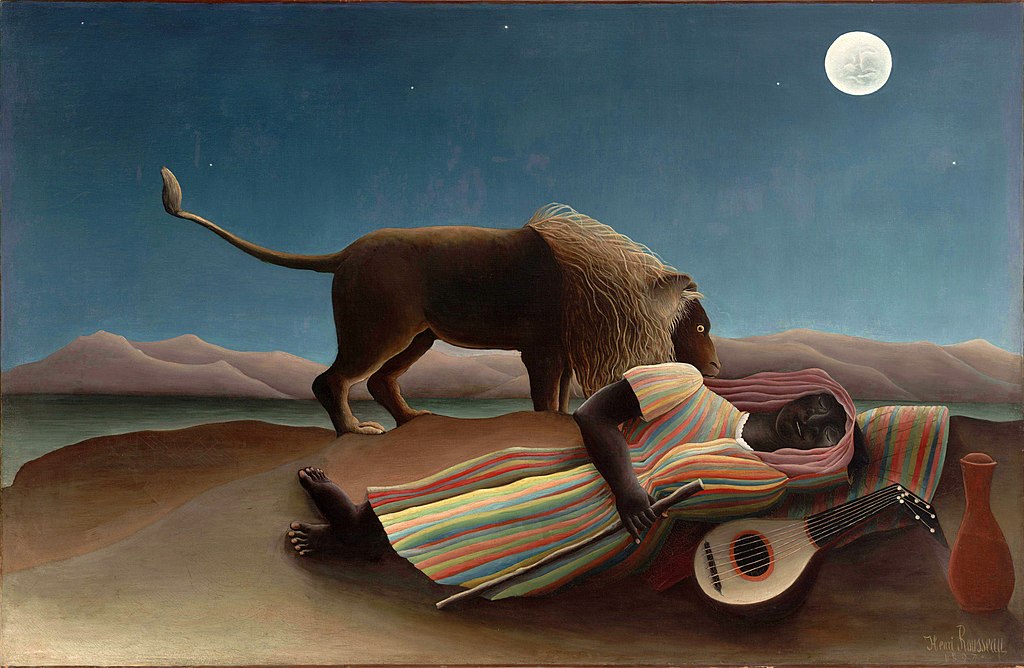
The opening of the Salon des Indépendants created a new sense of possibility. Artists who had been dismissed as amateurs, outsiders, or eccentrics found a place to show their work. Some of these painters became central figures in art history. Henri Rousseau is a good example of this change. A customs officer with no formal training, he created scenes of jungles and dreamlike spaces that fascinated other artists. The academy saw his work as crude. The Indépendants saw it as genuine. Expression trumped skill.
This freedom turned art into a field where intention mattered more than technique. A painting was important not because it resembled a photograph but because it carried the vision of a person who wanted to say something. Some works seemed naive, others strange, and others radically new. The viewer’s task shifted from evaluating technical mastery to understanding the inner world of the artist. This created the first widespread idea that art was a personal act. Anyone who had something to express could pick up a brush and participate.
However, this democratization carried a hidden consequence. Once art defined itself by intentions rather than skill, meaning became harder to interpret. Expression depends on context, and context depends on knowledge. Modern art quickly developed a language of references, movements, and theories. To understand a work by Cézanne or a piece from the Fauves or Cubists, one needed to know what they were reacting against. The viewer needed familiarity with the debates of the time.
The result was somewhat ironic. A movement that started with the intention to open art to everyone gradually produced an environment where only those with specialized knowledge could appreciate what was happening. Critics, theorists, and intellectuals became more important than ever. Artworks needed explanations. Museums required long labels. The public needed guidebooks. The world of art became exclusive again, not because of technical barriers but because of conceptual ones.
The academy had been replaced by a new kind of elite. The modern art world valued expression but also depended on discourse. To appreciate modern art fully, one needed familiarity with its history and concepts. This change did not diminish the importance of the original revolution. It simply showed that every form of freedom produces new structures of interpretation. Expression was released from one authority, but it created another.
The Digital Platform as the Second Independent Movement
More than a century after the Salon des Indépendants, a different kind of independence emerged. This time, the change was not driven by the rejection of an academy. It was driven by the rise of digital platforms. These platforms allowed anyone with a phone or laptop to create images, write stories, share music, or publish ideas. There was no need for galleries, exhibitions, agents, or curators. The new rule was similar to the original Indépendants. Anyone could participate, and no one could stop them.
This change allowed creativity to flourish on an unprecedented scale. A teenager anywhere in the world could upload a drawing and reach people who might appreciate it. A writer could publish a reflection and gain an audience overnight. Photographers, musicians, designers, and ordinary people could build communities around their creations. The sense of independence expanded beyond art into every area of human expression.
Yet this new freedom brought another challenge. When expression becomes limitless and free, it becomes abundant. When it becomes abundant, it becomes harder to notice. The problem shifts from exclusion to saturation. The academy of gatekeepers no longer controls access, but the algorithms of digital platforms influence visibility. Instead of a jury deciding what is worthy, the flow of information creates an ocean in which everything floats side by side.
The identity of the artist also changes in this environment. A person may use a real name, a handle, an avatar, or many identities across different platforms. Self-expression becomes dispersed. It is not tied to a single physical body or a single social role. The individuality that modern art celebrated turns into a fluid pattern of online presence. The meaning of independence becomes broader, but also more ambiguous.
Digital platforms can amplify a work instantly, but they can also reduce it to a fleeting moment. A single viral post may be remembered for a day and forgotten the next. The speed of circulation changes the weight of expression. What was once a deliberate act, displayed in a salon and contemplated by viewers, becomes part of a fast moving conversation. This shift does not remove the value of expression, but it alters the environment in which expression takes place.
Banksy and the Paradox of Modern Anonymity
The figure of Banksy represents one of the most interesting expressions of independence in the digital age. He is often called an anonymous artist, someone whose identity no one knows. Yet he is one of the most famous artists alive. His works appear on walls and buildings in various cities. Photos and videos of these works circulate online almost immediately. The anonymity becomes part of the attraction. People enjoy the mystery as much as the art.
This creates a paradox. In earlier periods, anonymity meant obscurity. An anonymous painter had no recognition and no voice. For Banksy, anonymity produces the opposite effect. It functions as a signature, a way to express intention without revealing personal details. It adds a sense of rebellion, humor, and critique. It serves as a mask that protects the individual while magnifying the impact of the work. Modern anonymity is not the absence of identity. It is a chosen identity.
The content of Banksy’s work often addresses issues such as poverty, war, consumerism, and political hypocrisy. The images are simple, direct, and sometimes playful. They carry clear messages about the contradictions of contemporary society. At first glance, this seems aligned with the street art tradition, where artists use public walls to speak to the people living in that space. The intention is to intervene in the everyday environment.
However, the actual audience of Banksy’s works is global. The moment a new piece appears, someone photographs it, uploads it, and sends it across the world. The physical wall becomes a small part of a much larger network. The image lives more in digital space than on the street. The meaning of street art changes when visibility depends on screens rather than passersby. The wall becomes a stage for a global audience rather than a local one.
This creates another contradiction. Banksy’s works criticize inequality and consumer culture, yet they are often sold for enormous amounts of money. The stencil that questions capitalism becomes an object of luxury. The mural that mourns victims of violence becomes a collectible image. The artist does not participate in these sales, but the market around him turns protest into a commodity. This is not entirely new, but digital amplification intensifies the effect.
The presence of Banksy reveals how modern independence can coexist with global recognition and commercial interest. The anonymity that should protect the purity of expression becomes a powerful brand. The critique of society becomes part of a marketplace. The street becomes a digital screen. The modern independent artist is celebrated, circulated, analyzed, and sold within the very structure he aims to critique.
This paradox matters because it shows the limits of expression in a world where every gesture can be absorbed by the systems it tries to resist. Banksy’s success reveals the strength of independent creativity, but it also reveals the tendency of modern culture to turn independence into spectacle.
The Collapse of the Myth of Self-Expression
The rise of artificial intelligence introduces a new disruption that resonates with the earlier disruption photography brought to painting. When photography appeared, it challenged the long standing belief that the value of art lay in the skillful imitation of reality. A camera could capture details more accurately than any painter. This pushed painters to find new purposes for their work. Some turned toward expression, others toward abstraction. The focus shifted from representation to interpretation.
Artificial intelligence challenges a different belief. Instead of undermining realism, it undermines the idea of self-expression. For more than a century, personal expression has been treated as the foundation of artistic value. A painting, a poem, or a piece of music was seen as an extension of the inner world of the creator. The authenticity of the work was tied to the authenticity of the person behind it.
When AI can generate images, texts, or melodies in the style of any artist, the connection between expression and the individual becomes unstable. A machine can imitate emotion, style, and tone. It can create compositions that resemble the works of established painters. It can write narratives that sound like particular authors. It can mimic the patterns of creativity without the presence of a conscious creator.
This does not diminish human creativity. Instead, it exposes the assumptions behind creativity. Expression is not as unique as we once believed. Style can be analyzed, learned, and reproduced. The inner voice may contain patterns that can be recognized by algorithms. The romantic idea that art emerges from a mysterious, private interior becomes more difficult to sustain.
Many people respond to this shift with anxiety. They wonder what remains for the individual if machines can generate expressive works in seconds. The question is not whether AI can replace human creativity. The question is what creativity becomes when expression is no longer tied solely to technical skill or personal style. The myth of expression as something sacred and unrepeatable begins to fade.
This change forces artists to look beyond expression as the primary value. It requires a deeper understanding of what gives human creativity its meaning. It invites a return to the lived dimension of experience that machines cannot replicate. The collapse of the myth is not an ending but a transition.
What Independence Means When AI Can Paint and Write
The new challenge for independent creators is not the lack of opportunity. The digital world has removed most barriers to participation. It has also removed the false scarcity that made certain forms of expression seem rare. Instead, the challenge is to articulate what makes a human creation distinct when machines can produce similar forms.
One way to understand this distinction is to consider the difference between output and presence. A machine produces output. A human produces presence. Output can be impressive, but presence carries the weight of memory, history, pain, joy, vulnerability, and commitment. These qualities are not visible in the surface features of an artwork, but they shape the intention and responsibility behind it.
Independence in this context means more than the ability to create without gatekeepers. It means the ability to ground creativity in lived experience. The works that emerge from a life reflect the choices, relationships, and meanings that cannot be simulated by algorithms. They carry the stamp of consciousness, not just the fingerprint of style.
Self-expression alone is no longer enough. What matters is the depth of the human story behind the expression. This includes the contradictions of life, the consequences of action, and the relationships that give shape to identity. Artistic independence becomes an ethical position, not merely a stylistic one. It reflects how a person inhabits the world and how that presence shapes their expression.
This shift may feel abstract, but it influences how creators work in practical ways. A painting does not need to be technically superior to stand out. It needs to be grounded in a life that gives it weight. A poem does not need to be complex. It needs to resonate with the experiences that shaped its writer. The artist’s role becomes less about performing individuality and more about embodying sincerity.
AI does not eliminate the value of human creation. It reveals the deeper reasons why humans create in the first place. It clarifies what machines cannot imitate. It shifts attention from the product to the person.
Toward a Third Salon des Indépendants
The first Salon des Indépendants challenged the authority of the academy. The second wave of independence, supported by digital platforms, challenged the exclusivity of galleries and institutions. A third wave is beginning to emerge. This wave is defined by the relationship between human creativity and artificial intelligence.
This third wave is not about rejecting AI. It is about understanding what independence means in a world where machines can generate expressive forms. The focus shifts from artistic innovation to existential authenticity. Independent art becomes a way of expressing what it means to be a conscious being in a world filled with synthetic content.
This movement may not have a physical exhibition like the original Indépendants. It may appear in the form of communities that value sincerity, reflection, and embodied understanding. It may involve creators who resist the pressure to produce content rapidly and instead focus on depth. It may involve new ways of sharing work that emphasize connection rather than visibility.
A third Salon des Indépendants would not be defined by the rejection of tradition. It would be defined by the search for meaning in a time when meaning is easily simulated. It would seek to protect the human dimension of creativity, not through exclusion, but through attentiveness to what cannot be replicated. It would value independence as a way of being, not simply as a category of art.
This new movement will likely remain fluid. It may not have formal rules or declarations. Its guiding principle will be the recognition that creativity is not merely a product but a reflection of consciousness. In this sense, it continues the legacy of the first Indépendants, but it carries that legacy into a world where expression is no longer scarce.
Art That Machines Cannot Replace
The changes in the art world reflect the changing conditions of human life. The movement from realism to expression, from exclusivity to digital openness, and from self-expression to the search for authenticity are not isolated events. They form a sequence that reveals how people continue to define themselves through creation.
AI introduces a new challenge, but it also provides clarity. It shows that expression alone is not the foundation of art. Expression can be reproduced. What cannot be reproduced is the life from which expression emerges. The meaning of art lies not in the technique or the style but in the presence of the person who creates it.
This realization brings us back to the beginning, but with a deeper understanding. The Salon des Indépendants opened the door for personal expression. The digital platforms expanded that expression across the world. The rise of AI now invites people to find the essence within that expression. Creativity returns to the human heart, not as a romantic ideal but as a lived truth.
The third wave of independence will not be defined by rebellion alone. It will be defined by clarity of presence. It will ask creators to bring their whole lives into their work. It will encourage expressions that reflect sincerity rather than novelty. It will recognize that the value of art is not threatened by machines because art is not merely a pattern or a product. It is a reflection of the experience of being alive.
This is the direction where independence may travel in the years ahead. The world will continue to change, and new forms of creation will appear. Yet the core of creativity will remain tied to the unique paths people walk. Machines can imitate many things, but they cannot live a life. The works that arise from human lives will continue to matter. They carry a presence that cannot be automated.
Image: The Sleeping Gypsy (French: La Bohémienne endormie) 1897 oil on canvas painting by the French Naïve artist Henri Rousseau
 Tom’s Blog
