
Modern life surrounds us with instructions. Every field offers a framework, a sequence, a set of approved steps. Movement is no exception. Yoga classes begin with precise postures and controlled breathing. Fitness programs promise results through fixed routines. Martial arts teach forms that must be copied with discipline. Even walking is sometimes analyzed through elaborate theories of gait and alignment.
There is nothing inherently wrong with these systems. Many of them carry deep wisdom and long histories. They represent attempts to understand the body and give it direction. Yet they also introduce a subtle kind of confinement. When the body is taught to follow a pattern before it is taught to listen, its natural intelligence often falls silent. The person ends up striving to meet an external shape rather than discovering an inner rhythm.
I noticed this most clearly during moments when I tried to imitate movements I admired. The more carefully I followed a form, the more my body tightened. Breathing became shallow. My attention moved from inward sensation to outward evaluation. Even healthy practices created tension because I was trying to perform them correctly rather than experience them genuinely.
Over time, this creates a kind of quiet stiffness. The body becomes obedient but less alive. We lose something soft and immediate, something that existed long before we learned the meaning of posture or technique. That loss is rarely recognized, yet it influences how we move through everything, not only exercise.
Why Freedom Feels Uncomfortable
When the body is asked to move freely, many people feel uneasy. The moment the structure disappears, something deeper surfaces. This hesitation has been observed beyond movement itself. Erich Fromm, in his book Escape from Freedom, explored how individuals often retreat into external systems because freedom carries its own weight. Freedom demands presence and self trust. It asks us to stand without the usual supports and to rely on our own inner direction. The absence of structure places responsibility within the individual, and that responsibility can feel unfamiliar or even frightening.
This psychological pattern appears strongly in physical practices. Most of us were trained to move according to rules. In school, in sports, in classes, we were rewarded for following instructions. Over time, the nervous system learns that safety comes from conformity. It becomes natural to look for authority, to wait for an example, to ask what the correct form is supposed to be.
So when someone is invited to move without imitation, something strange happens. The person hesitates. The body freezes for a moment. There is an uncomfortable sense of exposure. Without patterns to rely on, the movement becomes personal. It reveals our real habits and our real limitations. This is an experience many people avoid, not because it is harmful, but because it is unfamiliar.
The discomfort is not a sign of weakness. It is a sign that we have lived for too long inside systems that promised order but quietly reduced our inner freedom. The moment we step outside those systems, the body is unsure how to behave. It takes time to trust itself again. That trust is the beginning of something important.
The Hidden Stress of Correctness
Correctness sounds harmless, yet it can create an invisible pressure. When movement becomes something to get right, it stops being something to enjoy. The body becomes the subject of evaluation. The mind watches from a distance, comparing and adjusting. Instead of feeling the ground or sensing breath, we focus on alignment and symmetry. The moment we enter this mindset, tension appears.
This tension is rarely dramatic. It lives in the small rigidities around the shoulders, the tightness around the abdomen, the slight holding of the jaw. These signs spread quietly. They influence our posture throughout the day. They restrict natural fluidity. They create a sense that movement must always be managed and corrected.
Correctness also creates comparison. When positions are defined as right or wrong, people begin to judge each other and themselves. Even the simplest movement becomes an opportunity to feel inadequate. The person who achieves the correct form becomes a model, and the rest become followers. Health becomes something to compete for rather than something to inhabit.
Over time, this creates emotional stress. Movement becomes heavy. Exercise becomes a task rather than a natural pleasure. Even walking can feel stiff when the mind is busy checking every detail. This is one of the ways that modern training unintentionally makes people less free. It assigns value to achievement instead of sensation, and the body responds by closing rather than opening.
The Child’s Body as the Forgotten Teacher
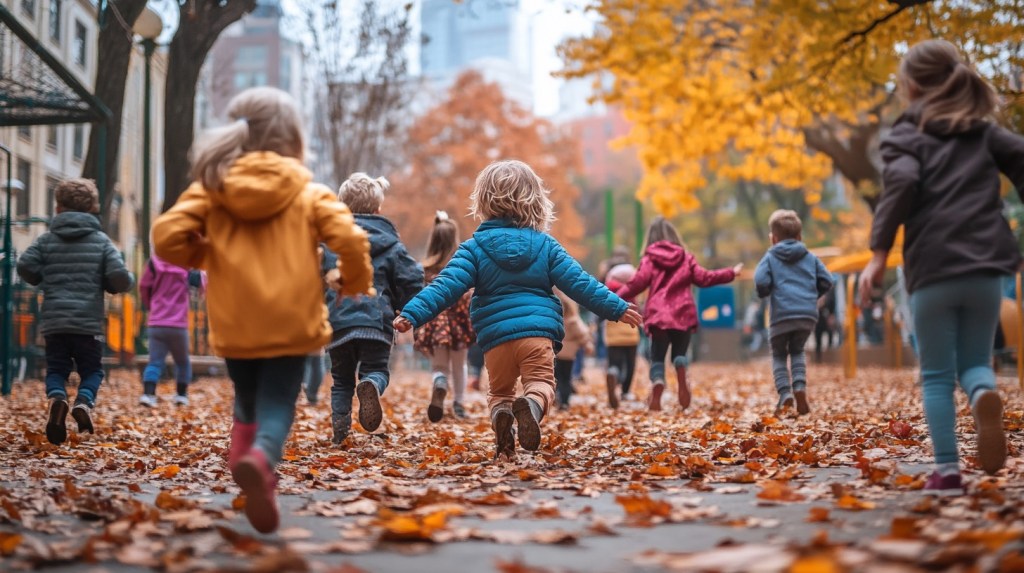
A child moves without hesitation. Before concepts, before categories, before evaluation, a child explores the world through motion. The body acts as a direct instrument of curiosity. There are no instructions to follow. The legs bend because bending feels interesting. The arms reach because something sparkles in the distance. The spine curves because the child wants to look at something upside down.
This kind of movement is not symmetrical. It is not polished. It does not imitate. It simply arises from a natural sense of presence. Watching a child reveals something we often forget. Movement does not need to be taught. It emerges from within. Forms and patterns can refine it, but they do not create it. The original intelligence of the body predates all systems.
Children do not move to strengthen their core or optimize their alignment. They move because movement is joy. Their sense of balance improves not through repetitive drills but through falling, adjusting, and trying again. Each gesture provides information. Each tumble becomes part of the learning process. Their bodies adapt through play, not through pressure.
When adulthood arrives, this direct relationship between body and world fades. Consciousness becomes more conceptual. We begin to classify what we see. We learn to judge our performance. We learn to hide awkwardness. The spontaneous wave of childhood movement is replaced by an effort to appear correct. Something essential is lost along the way.
When the Body Returns to Innocence
During moments when I allowed myself to move without planning, something surprising happened. The body softened. The breath deepened. The mind became quiet. I began to sense small impulses that usually go unnoticed. A gentle sway, a soft shift in weight, a desire to stretch slightly to one side. These tiny movements slowly linked together and became a kind of wordless conversation between sensation and expression.
There was no thought of doing things properly. There was no expectation of progress. The movements did not need to resemble anyone else. They belonged entirely to the moment. This created a kind of relief that felt physical and emotional at the same time. The body was not working. It was simply being.
Such movement has a calming effect on the nervous system. It activates the part of the body responsible for healing and restoration. There is no spike in pressure. No strain around the abdomen. No sudden force. Everything unfolds naturally, like leaves responding to wind. This kind of movement is not only safe for recovery but deeply supportive of it.
The experience feels like a return to innocence. It reminds us of the time before our movements were shaped by instruction, before we learned to compare, before we carried the weight of expectations. It is not a return to childhood in a literal sense. It is a return to the childlike quality of openness, curiosity, and trust.
Patterns as Tools, Not Masters
There is value in structure. Forms carry history. Traditions carry insight. Techniques can offer clarity and discipline. The problem arises when patterns become absolute. When people follow them without question, they stop observing their own needs. They may push through pain because the form is considered correct. They may ignore discomfort because the system expects uniformity.
Patterns should serve the body, not dominate it. They should be used as references rather than rules. A posture can inspire exploration without requiring precision. A sequence can guide movement without restricting creativity. The person gains freedom when they use patterns as starting points rather than destinations.
It helps to take a step back and observe the systems we participate in. Some patterns nourish us, others restrict us. Some teach us valuable skills, others create unnecessary pressure. This awareness allows us to choose what supports life rather than what burdens it. We can accept wisdom from traditions while also recognizing that no tradition fully contains the individuality of each body.
When patterns are seen as tools, spontaneity becomes possible again. The person can move in and out of structure as needed. They can shift between discipline and freedom. They can explore without feeling judged and return to form only when it feels supportive, not obligatory.
The Philosophy of Inside Out Training
Inside out training begins with sensation. It asks the person to feel before acting, to listen before shaping. The body becomes the teacher. The movement arises from what feels natural rather than what looks correct. Instead of imposing form, the person discovers form through experience.
This philosophy removes hierarchy. There is no superior practitioner because there is no external ideal to measure against. No one is advanced or behind. Everyone is simply responding to their own body on their own timeline. This creates a kind of democratic space where presence matters more than performance.
It also reduces pressure. Instead of pushing toward goals, the person moves toward comfort, ease, and curiosity. Progress becomes a byproduct rather than an obsession. Strength emerges gently rather than forcefully. Flexibility appears as the body relaxes rather than as the mind insists.
Inside out training also carries emotional benefits. It teaches patience and awareness. It cultivates a relationship with the body based on trust rather than control. It invites people to turn inward rather than outward, which can be grounding during times of stress or recovery. It nurtures softness instead of rigidity.
Returning to the Unconditioned World
There is a unique beauty in the state before categories. A newborn does not see the world through concepts. Sensations are raw and continuous. Movement is an immediate response to life, not a planned activity. Everything is unfamiliar, which makes everything fascinating.
As adults, our perception becomes shaped by knowledge and expectation. We begin to divide experience into useful and useless, correct and incorrect, efficient and inefficient. These categories help us function, but they also limit what we notice. They create a narrow field of attention where the world becomes predictable and the body becomes mechanical.
To return to an unconditioned way of moving is to return to a more open way of seeing. It is not about neglecting knowledge but about relaxing the hold of concepts long enough to experience something fresh. When the body moves without patterns, even simple actions feel renewed. A step becomes interesting. A twist feels expressive. A breath becomes meaningful again.
This return is not a regression. It is a recovery of something essential that was never meant to disappear. It is the rediscovery of a more direct relationship with life, one that belongs not only to childhood but also to maturity. It is an invitation to live with less judgment and more curiosity.
Movement as Freedom and Freedom as Healing
Freedom is not the absence of structure. It is the ability to choose how much structure is helpful and how much spontaneity restores balance. When movement becomes free, the body expresses itself without fear. It shakes off unnecessary tension. It breathes more fully. It moves with clarity and gentleness.
This freedom is healing because it reconnects us to the natural rhythm of our being. Stress often tightens the body. Expectations weigh on our shoulders. Performance creates pressure in the abdomen and chest. Spontaneous movement softens these reactions. It allows the person to experience life without the usual layers of control.
There is also a quiet emotional healing that comes from movement without patterns. It reconnects us to joy. It reminds us that life is not supposed to be harsh. The body remembers that play is not a luxury but a necessity. The simple act of swaying, stretching, or stepping freely reconnects us to a part of ourselves that often goes dormant.
This freedom also reveals that health is not only physical. It is a quality of presence. It is the ability to be gentle with oneself. It is the willingness to move without fear of failure. It is the courage to return to natural expression even after years of structure and comparison.
A Practice of Returning
Spontaneous movement is not a one time discovery. It is something we return to again and again. Life naturally pulls us into patterns. Responsibilities create routines. Systems offer guidance. These are not problems as long as we do not forget the inner freedom that supports them.
When the body feels stiff, we can return. When we feel pressure, we can return. When we sense comparison creeping in, we can return. Returning does not require a technique. It requires a moment of listening. It begins with a small movement, a gentle shift in weight, a slow breath, a soft awareness.
This practice becomes a lifelong companion. It adjusts as we age. It adapts as we recover from injuries or illnesses. It changes with mood and environment. There is no mastery. There is only presence. And presence offers a kind of health that is deeper than performance and more lasting than achievement.
The body does not ask for perfection. It asks for honesty. When we give it permission to move naturally, we restore something original. We rediscover joy. We return to freedom. We return to ourselves.
Image: Stockcake
 Tom’s Blog