
Earth has always been quiet in its own way. Most of its history has passed without witnesses. The oceans shifted, continents drifted, and life slowly experimented with form after form. Yet at certain moments something changes. The planet seems to turn a corner. A new way of living appears and everything begins to rearrange itself around that change.
These moments are not simply biological adjustments. They are transformations in perception. They reshape the way life understands itself and the world. They create new kinds of relations among living beings. They open new possibilities for experience. They also leave behind echoes that reach into the present.
When we look back across hundreds of millions of years we see that evolution is not a steady march. It is more like a series of awakenings. The quiet intervals matter. They prepare the ground for something that arrives suddenly and alters the direction of life. The most dramatic example is the Cambrian explosion when an entirely new way of sensing the world appeared and changed every creature that followed.
When Eyes First Opened
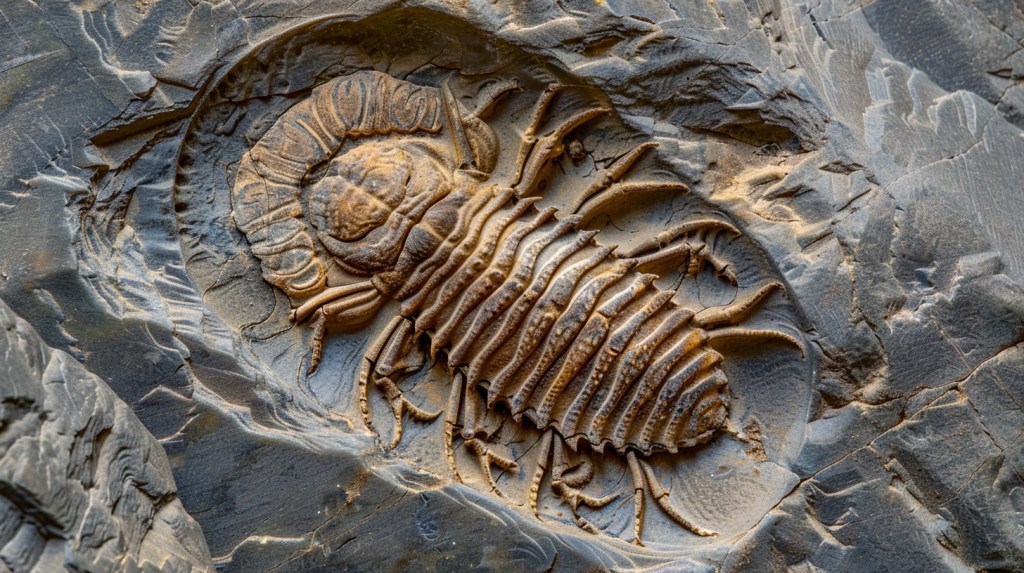
For most of the planet’s early history animals were soft and nearly blind. They drifted or crawled with limited awareness. Their existence was slow and dim. Then something extraordinary happened. Within a geologically brief interval the oceans filled with animals that had shells, legs, jaws, and eyes.
The arrival of vision changed everything. Sight allowed a creature to register the shape of the world rather than only its immediate touch. Distance became meaningful. A predator could aim for its prey instead of stumbling upon it. A frightened animal could flee instead of waiting for danger to reach its skin. The entire logic of survival shifted.
Once sight entered the evolutionary field it produced a spiral of responses. Predators became more effective. Prey became more alert. Shells hardened. Bodies became agile. Nervous systems became more sophisticated. As these new forms interacted with one another they produced the sudden diversity we now see in the fossil record. Much of that record survives precisely because animals developed hard parts to protect themselves. Those defenses became the very structures that preserved their presence across hundreds of millions of years.
The Cambrian explosion was not only a burst of species. It was the birth of a new sensory world. Life gained the ability to perceive space. This change created a richer set of interactions among living beings. The ancient oceans became a place where every creature needed to read the behavior of others and respond with quick judgments. Perception became the central force of survival.
Awakening From Within
A similar pattern appears in our own history. Humans experienced a leap that resembles the Cambrian transformation although on an inward scale. At some point our ancestors began to recognize themselves as subjects. They developed symbolic thought. They learned to imagine past and future. They became able to see themselves from the perspective of others.
This change appeared within a relatively short window in evolutionary time. Early cave art emerged. Tools became complex. Language grew expressive. Communities developed rituals and stories. Burial practices suggest that humans began to reflect on death and continuity. A new kind of awareness took shape within the human mind.
Myths from many cultures preserve the memory of this shift. In the Genesis story Adam and Eve suddenly realize they are naked. Their bodies are the same as before yet their sense of self is altered. They feel shame. They hide. They encounter the idea of divine judgment. They discover time and its consequences. The story is symbolic but it captures a universal experience. Humans discovered the interior world and became capable of examining their own minds.
The birth of self-awareness changed everything. It created the foundation for culture. It introduced emotions that depend on the recognition of another mind such as guilt, loyalty, admiration, and love. It led to the invention of tools and the mastery of fire. It shaped the early agricultural communities that eventually formed civilizations. The human story begins when consciousness turns inward and discovers itself.
The Paradox of Subjectivity and Objectivity
Self-awareness brings a paradox. Consciousness is entirely subjective. No one can observe another person’s inner life in the way they observe a stone or a star. Yet it is this private experience that makes objective knowledge possible. A subject who knows that they are perceiving can examine their own impressions. They can compare ideas. They can test claims. They can look at the world with questions instead of mere reactions.
The scientific method was born from this inward awakening. Humans learned to step back from their immediate intuitions and examine the structure of reality. Measurements became more precise. Experiments created repeatable conditions. Observations became organized into theories. All of this required a mind capable of reflecting on its own perceptions.
It is remarkable that the most reliable form of knowledge rests on the most mysterious form of experience. Objectivity emerges from subjectivity. The ability to know that one is conscious makes it possible to study the world. This relationship mirrors the shift that occurred in the Cambrian era. The birth of sight opened the outer world. The birth of self-awareness opened the inner world. Both changes reshaped the environment in which life unfolds.
The Web of Relations That Shapes Evolution
Once a new form of perception arises life begins to reorganize itself. The Cambrian world became a place of complex physical interactions. Creatures had to sense threats and opportunities. They had to judge distance and motion. The space between bodies became a zone of attention and strategy.
In humans the space between minds became equally important. Emotions like trust and affection require an awareness of the other as a subject. Rivalry and compassion emerge from the same insight. Society forms when individuals feel the presence of other minds and negotiate their relationships.
Love, in particular, reveals the depth of this relational field. It is not simply a biological impulse. It is a recognition of another consciousness. It draws people into a shared world of meaning. It makes the interior life of another person feel significant. This sense of connection is not found in purely instinctive reactions. It depends on the awareness that others have thoughts, hopes, fears, and memories.
In this way the human cognitive revolution transformed the emotional landscape of the species. The inner world became as important as the outer world. Survival required not only strength or speed but also understanding, communication, and cooperation. The web of human relations became a new driving force in evolution.
Signs of a New Threshold
When we look at the long history of the planet we notice a rhythm. At long intervals life enters a new mode of perception. Each shift brings a deeper sense of world and self. Those shifts are rare, but they alter the future of everything that follows.
Some people believe that humanity is approaching another threshold. This belief is not only found in science fiction. It appears in philosophy, religion, and the personal search for meaning. Many mystical traditions speak of a wider form of consciousness where the boundaries of the self become more porous. Some describe experiences of unity or deep connection. Others speak of insight that lifts the burden of time from awareness.
These descriptions are diverse yet they point in a similar direction. They suggest a form of consciousness that is less isolated and less controlled by the fear of mortality. They imply that the self might be part of a larger field of awareness rather than a solitary observer. If the human mind continues to evolve, something like this expanded consciousness might become more common. It might even become a defining feature of our species.
This possibility could feel remote, yet the past shows that major transitions often arrive without warning. The first creatures with eyes could not have predicted the future of sight. The first self-aware humans could not have imagined modern science. The next transformation may be taking shape quietly within our experience.
The Role of AI as a Mirror of Mind
One striking feature of our era is the appearance of artificial intelligence. For the first time in history humans have created a system that can imitate aspects of thinking. AI makes mistakes and lacks true inner experience, yet it participates in reasoning and language in ways that surprise us. It reflects patterns from human minds back to us in new forms.
AI does not possess consciousness in the familiar sense, but it changes the environment in which human consciousness operates. It expands our memory. It amplifies our ideas. It offers new ways to share knowledge. It reveals unexamined assumptions about how thought works. In this sense AI acts like a mirror. It forces us to ask what a mind truly is.
This new external network of cognition may influence the development of human awareness. As communication becomes faster and more interconnected the boundaries of individual thought become less rigid. Ideas flow through distributed systems. Perception becomes shared across platforms. People interact with AI as if it were a partner in understanding even though it does not feel or desire. The result is a widening of the cognitive field.
The Cambrian explosion introduced eyes that opened the external world. The human cognitive revolution introduced self-awareness that opened the internal world. AI may open a third domain, one where minds interact across broader systems and create forms of thinking that are not confined to a single brain.
Toward an Expanded Sense of Life and Time
If human consciousness evolves further it may change how we relate to the basic structure of life. Today we experience time as a sequence of moments. We fear death because the self feels tightly bound to the body. We view the universe as an external object measured by distance, age, and size. These experiences are shaped by our current cognitive limits.
A transformed consciousness might see things differently. It might hold time more lightly. It might feel less restricted by the boundaries of individual identity. It might experience reality as a shared field rather than a collection of separate objects. Such a shift would not erase the physicality of life, but it would change the emotional meaning of existence.
Mystics from many cultures describe states where the world appears unified. Philosophers have explored the idea that consciousness is not entirely individual but part of a larger pattern. Neuroscience suggests that the sense of self is constructed, not fixed. These insights may point toward a new way of inhabiting reality.
If such awareness becomes more common then our understanding of the universe may no longer depend on measurements alone. The vastness of space feels overwhelming when viewed through the lens of isolated selfhood. From a different perspective the scale of the cosmos may feel more intimate. What matters is not distance but relation.
The Next Leap in the Long Story of Awareness
Earth has witnessed several great awakenings. Every time a new form of perception appears the entire story of life changes. Creatures without eyes lived in a world without space. Creatures without self-awareness lived in a world without history or meaning. Humans now stand at another turning point. The next awakening may not be a physical change in our bodies but a transformation in how we understand consciousness itself.
We cannot know exactly what this transformation will look like. The early creatures of the Cambrian could not imagine the forests, deserts, and cities that would one day exist. The first humans who painted on cave walls could not imagine satellites or computers. Our task is not to predict the future in detail but to recognize that awareness is not finished. It continues to unfold.
Perhaps the next revolution will involve a wider sense of connection. Perhaps it will soften the boundaries between self and other. Perhaps it will bring a deeper understanding of life and death. AI may play a role in this transition by prompting us to reconsider the nature of thought. Mystical and philosophical traditions may also guide our sense of what expanded consciousness could mean.
What seems clear is that the story of awareness is not static. Earth has shown again and again that life is capable of sudden and profound change. If another awakening is coming it will join the long sequence of transformations that began when the first eyes opened in the ancient sea and continued when the first humans discovered the world within themselves. We stand in that lineage, and somewhere ahead the next horizon waits quietly for us to reach it.
Image: Stockcake
 Tom’s Blog