
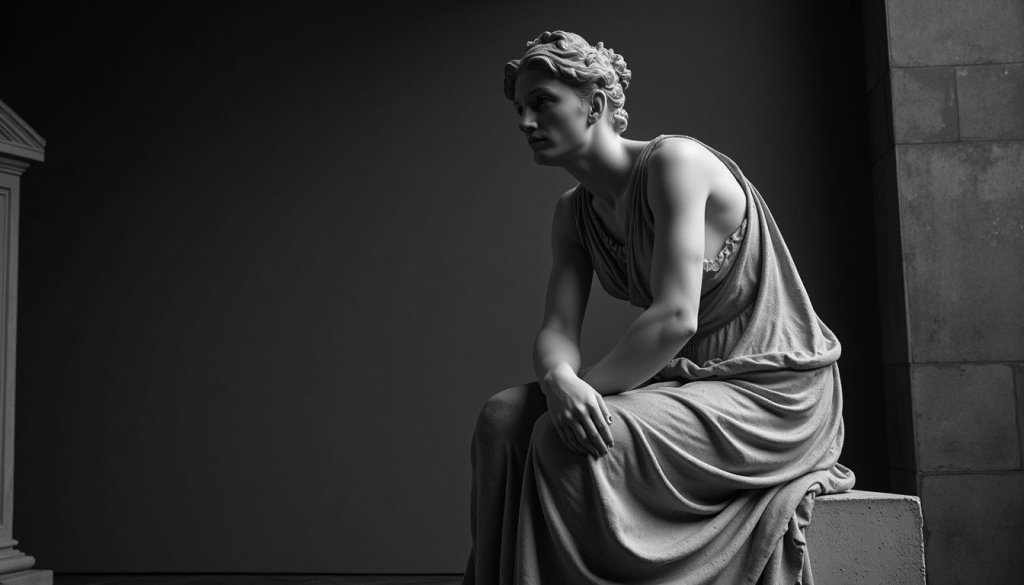
There is a strange quietness in the world today. The dramatic narratives that once shaped public imagination have faded. For a long time, people assumed that history moved through intense conflicts. The dialectical rhythm between power and resistance, or between progress and reaction, gave everyone a sense of direction. In another era, religious visions of an approaching end gave people an emotional structure for fear and hope. These grand scripts no longer carry the same influence. The new century has arrived without the feeling of a decisive turning point.
Many people sense that the old stories lost their force as the twentieth century gave way to the twenty first. Those who lived through the final decades of the previous century remember the anxiety of the nuclear standoff, the fascination with technological futures, and the dramatic expectations tied to the millennium. When the world continued after all those predictions, something changed in the collective imagination. The apocalyptic pressure dissolved. Society entered a calmer period where fear was diffused rather than concentrated.
This new environment encouraged a mood of homeostasis. People grew comfortable with the idea that stability is more valuable than rapid transformation. Clarity became less important than continuity. Many societies gained access to efficient communication networks, instant entertainment, and convenient digital services. The daily experience of life became surprisingly smooth for many who live in technologically advanced environments.
Yet beneath this stability lies a quiet unease. It is not the fear of sudden catastrophe, nor the intensity of revolutionary passion. It is a lighter but persistent anxiety that slips into ordinary conversations and private thoughts. The world no longer demands heroic action, but it rarely offers deep reassurance. This gentle but constant tension marks the background of contemporary life.
The Rise and Retreat of the Liberal Existential Vision
During the mid twentieth century, a different spirit shaped intellectual and political life. People believed that committed thinkers could help reshape society. Public intellectuals were admired. Social engagement was seen as a moral duty. Jean Paul Sartre embodied this spirit better than almost anyone else. His writings encouraged ordinary people to take responsibility for their actions and choices. He believed that every person contributes to the structure of the world.
At that time, the liberal imagination was energetic. People believed that social change was not only possible but necessary. Political movements across the world emerged from the conviction that personal freedom required public action. Sartre and others argued that freedom must reveal itself in concrete commitments. Their philosophy echoed Kierkegaard in its seriousness, but they redirected that seriousness toward society rather than inward spiritual life.
As time passed, the mood shifted. The enthusiasm for broad social transformation slowly weakened. Liberals faced criticism from both conservative groups and emerging intellectual movements. The West entered a period of cultural tiredness. Many people began to prefer calm procedures over dramatic change. Even those who once believed strongly in transformation began to focus on stability and small improvements.
The decline of liberal activism also reflected deeper changes in global society. Economic systems became more complex. Governments grew more technocratic. Citizens felt that their individual actions had limited effect on large institutions. As a result, the existential impulse to reshape the world lost its urgency. Commitment became more personal and less public. Sartre’s heroic figure gradually faded from the cultural stage.
Structuralism and the Disappearance of the Subject
While Sartre advocated for personal freedom and responsibility, another school of thought developed that challenged his basic assumptions. Structuralism emerged from anthropology, linguistics, and related fields. Claude Lévi-Strauss became one of its central thinkers. He argued that cultures operate through underlying symbolic structures that shape human behavior more deeply than individual intention.
This new way of thinking weakened the idea that individuals create meaning. Instead, people became understood as carriers of patterns. Choices seemed less personal and more like reflections of cultural codes. Sartre’s vision of free subjects lost ground to the idea that structures produce the conditions of thought and action.
Structuralism shifted attention from dramatic personal decisions to quiet, underlying systems. Language, myth, kinship, social organization, and ritual formed stable patterns that shaped human life. This view suggested that the search for authenticity might miss the deeper forces that guide meaning. It also challenged the belief that individuals could easily reshape history through moral commitment.
As structuralism grew, the public imagination began to change. People became more aware of how society shapes them without their permission. Institutions felt more permanent. Social patterns looked less flexible. The belief in personal agency weakened. The existential subject became only one small part of a larger web of structures. The heroic figure of existential freedom slowly dissolved.
Postmodern Perspectives and the Collapse of Grand Narratives
Postmodern thinkers built upon structuralism and moved even further away from the modern belief in stable truths. They suggested that meaning depends on interpretation. The idea of a single authoritative narrative lost credibility. Authors no longer appeared as sovereign creators. Texts became open to multiple readings. Histories became understood as selected accounts rather than neutral records.
This shift opened space for multicultural perspectives. Previously, Western civilization was often treated as the reference point for other cultures. After the postmodern turn, no single culture held that authority. Each tradition carried its own perspective. Knowledge became plural. Truth became something shaped by context rather than by universal principles.
Postmodernism also challenged the meaning of authorship. Many works from traditional societies had no identifiable creators. This anonymity became a new lens for understanding culture. Religious icons, folklore artifacts, and craft traditions were seen as collective expressions rather than individual achievements. This view resonated with the anonymity found in many non Western traditions, where artistic expression does not depend on personal identity.
As these ideas spread, grand narratives lost their dominance. Progress, enlightenment, and national destiny became weaker as cultural symbols. People began to accept that no single story could explain the world. This brought a sense of freedom, but it also removed a deep source of emotional guidance. Without strong narratives, meaning became something people had to form on their own.
The Shape of Contemporary Anxiety
Despite the comfort and convenience of modern life, anxiety remains a significant part of contemporary experience. The sources of this anxiety are different from those in the past. It is not the fear of an approaching end or the pressure of historical destiny. Instead, it is a more diffuse unease that floats beneath the surface.
One reason for this change is the digital environment. Information arrives continuously. Every device becomes a window into global events, entertainment, and personal communication. This constant flow creates a new layer of pressure. People feel connected to everything and yet responsible for nothing. The emotional space that history once filled becomes cluttered with rapid updates and endless content.
Another reason is the dependence on complex systems. The stability of daily life rests on networks, infrastructure, supply chains, and global institutions. These systems function quietly, and most people rarely think about them. However, the awareness of their fragility produces a subtle fear. Disruption feels possible even in moments of calm.
This anxiety also reflects the disappearance of clear social roles. In the past, people had a sense of their place within larger structures. Now many feel that they must create their own identity from many possibilities. Freedom brings uncertainty. Comfort brings heaviness. The result is a soft but persistent sense of disorientation that shapes our time.
A Hybrid Anxiety of the Twenty First Century
The anxieties of today are not entirely new. They draw on several older forms of tension but combine them in new ways. Existential anxiety still remains, although it no longer centers on dramatic personal choices. Apocalyptic anxiety lingers in the background, yet without the expectation of a clear ending. Social change anxiety continues as well, though the confidence once placed in large movements has weakened.
These layers come together into a single hybrid anxiety. It is a mixture of spiritual restlessness, systemic fragility, and cultural fatigue. Older philosophical frameworks do not fully explain it. Kierkegaard emphasized inward faith. Nietzsche focused on the creation of values. Sartre centered his thought on social commitment. These perspectives offer insight, yet none of them fully capture the texture of contemporary experience.
Structuralism and postmodernism also contribute important understanding. They reveal the limits of individual agency and the influence of cultural patterns. However, they seldom address the emotional reality of living in a world saturated with information and supported by invisible systems. They explain why meaning becomes fragmented but offer little guidance on how to live within that fragmentation.
This hybrid anxiety requires a new orientation. People need a way of thinking that speaks to their sense of fragility, their comfort, and their quiet unease. The old narratives of progress and salvation no longer carry enough force. New perspectives must arise from the conditions of this age rather than from the conflicts of the past.
Toward a New Philosophy of Homeostatic Living
One possible direction for contemporary thought is a renewed focus on homeostatic living. Instead of seeking radical change, this approach values balance and continuity. It recognizes that modern societies rely on delicate networks that need care rather than disruption. This perspective is not conservative in the traditional sense. It does not idealize the past. Instead, it emphasizes responsibility for the present.
This philosophy pays attention to maintenance and repair. It suggests that meaning can grow from careful involvement in everyday practices. Rather than dramatic action, it values steady attention. Many aspects of life thrive when treated with patience. Human relationships, communities, and institutions develop strength when they are tended rather than reinvented.
In this view, personal authenticity becomes less about heroic expression and more about quiet sincerity. The inward clarity that Kierkegaard described finds a new form in daily habits and small commitments. People discover meaning in the simple acts that sustain life. They learn to trust the ordinary moments that connect one day to the next.
This does not mean retreating from public life. It means understanding that meaningful social change begins with a stable foundation. A homeostatic philosophy encourages people to cultivate conditions that allow others to flourish. It promotes responsibility without urgency. It supports improvement without demanding perfection. It accepts limits and works within them.
Shared Vulnerability as a Cultural Truth
A deeper insight emerges when we look at the world through the lens of vulnerability. People across the globe share similar risks. Biological fragility, environmental shifts, technological failures, and economic shocks affect many lives. The recognition of shared vulnerability can lead to a new sense of solidarity.
This shared vulnerability does not follow the pattern of older ideological conflicts. It does not divide people into opposing groups. Instead, it reminds us that all individuals rely on similar forms of support. The fragility of modern systems reveals the basic interdependence of human life. This awareness softens the boundaries between communities and nations.
Shared vulnerability also offers a new emotional foundation. It encourages compassion rather than competition. It helps people see that strength does not come from domination but from cooperation. When vulnerability becomes visible, people can choose to care for one another. They can also develop a more honest understanding of their own limits.
This perspective differs from both modern and postmodern frameworks. It does not pursue progress as an unquestioned goal. It also does not dissolve all meanings into endless interpretations. Instead, it invites people to recognize their place within a delicate world. It brings clarity without harshness. It restores sincerity without relying on old metaphysical structures.
AI and the Mirror of the Self
Artificial intelligence adds another dimension to contemporary life. It operates quietly in the background, yet its influence continues to grow. AI shapes communication, entertainment, work, and personal routines. It creates a sense of both convenience and unease. People can access information quickly, but they also wonder what remains uniquely human.
AI functions as a mirror. It reflects human patterns of language and reasoning. When people interact with machines that can produce text, analyze data, or imitate creativity, they face new questions. What does it mean to be a person in a world where machines can think in similar ways. What distinguishes human judgment from algorithmic processing. These questions are no longer abstract.
AI also forms a new layer of infrastructure. Many daily activities rely on automated systems that operate with little human oversight. This dependence creates another form of vulnerability. When systems fail or behave unexpectedly, people feel exposed. The reliability of AI becomes intertwined with emotional security.
A new philosophy must take AI seriously. It should help people develop a healthy relationship with machines. This involves accepting that AI can handle many tasks efficiently while recognizing that responsibility still belongs to humans. Thoughtfulness, compassion, and moral judgment cannot be automated. AI can support human work, but it cannot replace the human capacity for care.
A Philosophy for the Age of Quiet Anxiety
The conditions of this century invite a new way of thinking. People need a perspective that speaks to their quiet anxieties and their complex comforts. Such a philosophy would combine inward clarity with outward steadiness. It would draw from existential seriousness but avoid dramatic gestures. It would recognize structural forces but still honor personal responsibility.
This philosophy begins with acceptance. It accepts that the world will not follow a predictable script. It accepts that systems are fragile. It accepts that individuals live within networks they cannot fully understand. Instead of resisting these realities, it builds a gentle flexibility that allows people to live with uncertainty.
It also encourages attention to small things. Meaning grows from stable routines, thoughtful relationships, and calm responsiveness. The quiet moments of daily life become places where depth appears. People learn to notice what supports them and what helps them remain grounded. They find value in presence rather than performance.
Finally, this philosophy embraces responsibility without pressure. It understands that people cannot solve every problem but can still contribute to the well being of their communities. It values sincerity over intensity. It supports gradual improvement rather than sweeping change. It invites a peaceful form of seriousness that does not depend on drama.
In this sense, the future of thought may lie in a careful combination of existential inwardness, homeostatic wisdom, and a renewed appreciation for shared vulnerability. It may also include a thoughtful partnership with technology that clarifies rather than obscures human potential. Such a perspective offers a way to live with quiet dignity in an age without clear scripts. It helps people meet their hybrid anxieties with calm steadiness. It gives shape to a meaningful life in a world that does not demand heroic action but still invites genuine presence.
Image: Stockcake
 Tom’s Blog