
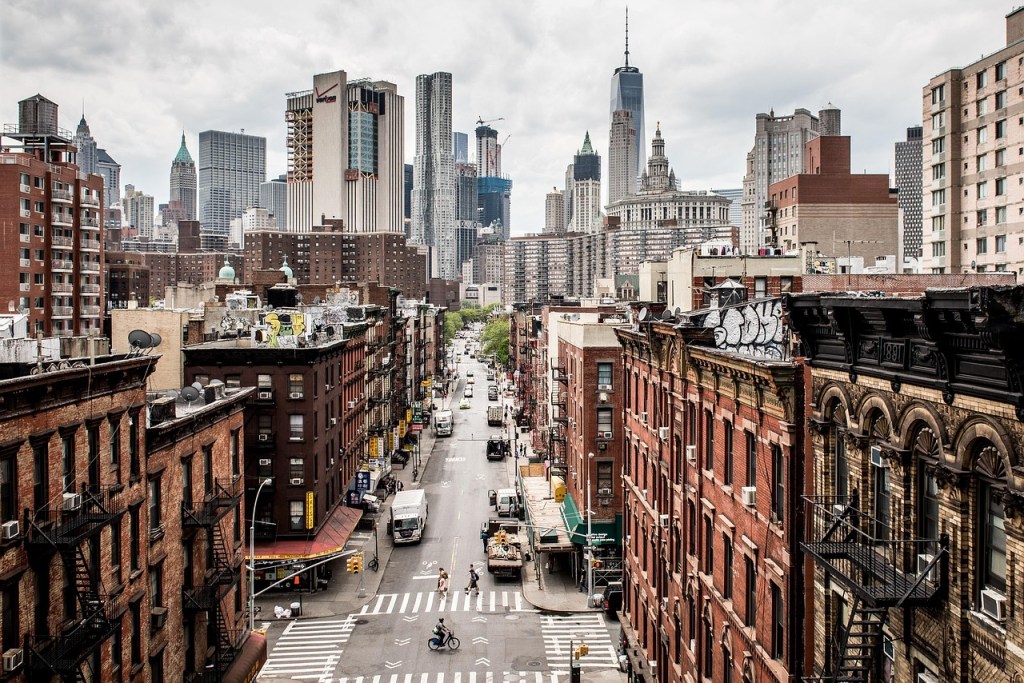
Every age has its turning points, moments when a single event reflects a deeper shift in human consciousness. The election of Zohran Mamdani as the new mayor of New York City feels like one of them. For some, it is a celebration of progress, a new chapter of inclusion and compassion in a city that has always been a symbol of diversity. For others, it is a warning, a sign that the balance between idealism and order is breaking. The world watched the result not only as an American story but as a mirror of what humanity is becoming.
New York has long carried the myth of the melting pot. Its streets are layered with countless languages, foods, faiths, and dreams. It has been a city of arrival and reinvention, a place where people from every continent have tried to build a shared life. Yet that ideal has never been simple. Diversity has always been both promise and pressure. It expands imagination but also strains trust. It offers color and creativity but tests the social fabric that holds people together.
Mamdani’s victory condensed that duality into one image. A Muslim, immigrant-background, democratic socialist candidate now leads one of the most capitalist and cosmopolitan cities in the world. The symbolism is overwhelming. His rise embodies the longing for justice in a time of inequality. But it also awakens anxiety in those who fear the loss of safety, tradition, and familiar identity. It is not merely a political contest. It is a question about what kind of city, and what kind of civilization, we want to live in.
The Ideal of Coexistence
There was a time when the idea of diversity felt simple and good. People believed that if we opened our hearts and borders, humanity would naturally harmonize. The image of the “salad bowl” replaced the melting pot, suggesting that each group could keep its flavor while enriching the whole. Teachers told children that difference was beautiful. Politicians spoke of inclusion as the measure of moral progress.
In that sense, New York was once seen as a prophecy of the future. Its density, chaos, and creativity seemed proof that coexistence was possible. London, Paris, and Toronto followed similar paths, embracing multiculturalism as civic identity. Australia promoted it as a national value. Even Japan, long cautious, began to discuss immigration with new openness as its population aged. Diversity became the new frontier of progress, a sign that humanity could grow beyond the tribalism that shaped most of history.
Yet the deeper we entered this experiment, the more fragile it revealed itself to be. Coexistence is not just a moral choice; it is a daily negotiation between worlds. Language, religion, custom, and class interact in ways that defy easy harmony. People can live side by side yet remain worlds apart. True inclusion requires more than policy or tolerance. It needs imagination, patience, and shared purpose. Without that, difference turns from beauty to burden.
The Reality of Fragmentation
Reality rarely matches idealism. The cities that once promised unity now face cracks too visible to ignore. In New York, London, and Paris, housing prices have soared, inequality has deepened, and the poor, many of them immigrants, are pushed to the edges. Drug addiction, homelessness, and mental illness fill the streets that once symbolized opportunity. The same forces that built diversity now strain it. When people feel unsafe or excluded, they seek simple answers. Fear grows faster than empathy.
In Canada, cities like Vancouver and Toronto show both the brilliance and the exhaustion of multicultural life. They are rich in languages and cuisines, but beneath the surface lies a deep fatigue. The fentanyl epidemic has hollowed communities and blurred the line between compassion and chaos. In some neighborhoods, kindness and despair walk hand in hand. The ideal of inclusion meets the reality of addiction, inequality, and loss of direction.
Europe faces its own challenges. In France and Germany, the belief in integration has collided with resentment and political backlash. Immigration has enriched economies but also revived populism. Crime and unemployment feed stereotypes that damage trust. The promise of unity now coexists with the fear of fragmentation. The more diverse cities become, the harder it is to maintain a single sense of “us.”
This tension is not the failure of diversity itself but of balance. Societies often swing between compassion and control, generosity and caution. Without structural justice, inclusion feels unfair. Without shared values, freedom becomes noise. When difference multiplies faster than understanding, even good intentions lose their meaning.
The New Ideologies of the City
Mamdani’s political vision draws from the socialist tradition, reshaped for an age of urban exhaustion. His promise of free public transport, affordable housing, and care for the marginalized reflects a longing for fairness. Many young people find hope in this. They see him as a moral voice in a system too long controlled by wealth and indifference. The language of compassion returns, dressed in the rhetoric of justice.
Yet not everyone feels inspired. For many, socialism is not a dream but a memory of stagnation. They remember how grand promises of equality once led to bureaucratic decay and economic paralysis. They fear that the new leftism might repeat old mistakes in the name of kindness. In their view, capitalism, however imperfect, kept the city alive. It rewarded effort, attracted innovation, and made New York the beating heart of the modern world. If that energy is tamed too tightly, they warn, the city might lose the very dynamism that allowed it to care in the first place.
The clash is not only economic but spiritual. It reflects two kinds of faith. One believes that justice begins with redistribution. The other believes that freedom and competition sustain progress. Between them lies the question of the human heart: can we be generous without becoming dependent, or free without becoming selfish? Cities now serve as laboratories where these questions play out in real time. Each new policy is not just governance but a moral experiment in how people live together.
The Mirror of the Middle East
The deeper fear beneath these ideological debates is not about policy but identity. As you observed, the tension between groups in New York now resembles, symbolically, the long conflict between Israel and Palestine. It is not that the issues are identical, but that they share the same emotional structure. Both are struggles over belonging, history, and sacred space. Both reveal how easily difference can turn sacred into weaponized.
Social media amplifies this conflict into every household. In a single city block, one can hear the echoes of distant wars. The polarization over religion, ethnicity, and political loyalty now divides friends, workplaces, and classrooms. The battle for moral legitimacy has replaced the old battle for territory. Cities that once promised to unite the world are becoming miniature worlds of global division.
The tragedy is that each side sees itself as humane. The defenders of inclusion believe they are fighting for compassion. The skeptics believe they are protecting civilization from chaos. Both are sincere, and both are incomplete. Humanity often swings between excesses of heart and excesses of control. We love too much or fear too much, and rarely learn how to balance the two. The new city reflects this human flaw in amplified form.
Learning from Contrast
In contrast, Japan stands like an observer at the edge of this storm. It is still relatively homogeneous, with only a small percentage of foreign residents. Yet even here, the presence of immigrants is quietly transforming daily life. Convenience stores, factories, and restaurants depend on workers from other countries. Schools begin to adapt to multilingual classrooms. Local governments, once unprepared, now search for ways to integrate newcomers respectfully.
Japan’s cautious approach reveals both wisdom and limitation. On one hand, it avoids the social collisions that have shaken Western cities. On the other, it risks isolation and demographic collapse. The balance between purity and openness is difficult to hold. Many Japanese feel sympathy for immigrants yet also worry about losing their cultural cohesion. The nation watches what happens abroad, New York, London, Paris, Sydney, as if reading the future. Every debate elsewhere becomes a mirror of what Japan might one day face.
The challenge for Japan is psychological as much as political. A homogeneous society must learn not only to include others but to redefine itself. It cannot rely forever on uniformity to maintain harmony. The next generation will have to discover how to be Japanese in a world where identity is porous. Perhaps that awareness, born of caution rather than crisis, offers a lesson to others: that inclusion must be built slowly, not imposed by idealism or fear.
The Fragile Success of Inclusion
Australia presents yet another version of the same story. Its cities, especially Sydney and Melbourne, are proud of their multicultural life. People from Asia, Europe, and the Middle East live together more easily than in many Western countries. The tone is friendly, pragmatic, less ideological than Europe or the United States. But beneath that calm surface lies the same tension: housing costs, job competition, and the struggle to build shared belonging.
Australia’s immigration model, designed to fill labor shortages, sometimes turns people into economic instruments rather than community members. Regional programs attract workers to towns that later cannot provide long-term opportunity. Meanwhile, urban centers face congestion and soaring property prices. Inclusion begins to look like arithmetic, a matter of numbers rather than relationships. Yet despite these flaws, Australia has maintained a certain civility that others admire. Perhaps its distance from the world’s conflicts gives it space to experiment with coexistence quietly.
Still, no city or nation escapes the deeper question: how much difference can a society sustain before it loses the sense of itself? Inclusion, when detached from responsibility, becomes sentiment. Responsibility, when detached from inclusion, becomes oppression. Every city now walks this narrow line.
The City as a Mirror of Humanity
What makes cities so powerful is that they condense the human condition into a single space. A city is not just a collection of buildings but a living argument about how people should live together. In ancient times, cities were sacred projects meant to reflect the order of the cosmos. Today, they are secular universes where all beliefs, languages, and desires intersect. The modern city has replaced the temple as the stage for humanity’s moral drama.
New York embodies this better than anywhere else. Its subway hums with every accent on earth. Its skyline was built by hands from every continent. Yet this very density makes harmony fragile. When difference becomes too loud, people retreat into smaller tribes. When fear rises, walls reappear. The city that once represented openness begins to replicate the divisions of the world it tried to transcend.
Still, cities remain humanity’s best hope. They force encounter, and encounter is the seed of understanding. Even when they fail, they reveal the limits of our imagination and invite renewal. The task is not to erase difference but to learn a deeper way of being together, one that combines compassion with discipline, inclusion with responsibility. That is the real project of civilization.
The Future of the Human City
The future may unfold along two paths. In the first, cities find balance. Inclusion becomes structured, diversity becomes rooted in shared purpose, and economic systems are redesigned to serve human dignity. Public spaces become truly common again. People rediscover civic pride, not through nationalism but through mutual respect. This would be the city of harmony, a place where belonging grows through responsibility rather than sentiment.
In the second path, fear prevails. Economic inequality deepens, groups retreat into hostility, and identity becomes a weapon. The rhetoric of justice turns into resentment, and the dream of diversity collapses into polarization. In that world, cities fragment. The poor fight among themselves while the wealthy isolate behind digital and physical walls. Compassion becomes nostalgia.
Which path we choose will depend not only on policy but on the maturity of our spirit. Cities are reflections of inner life. If people remain ruled by fear and pride, no law can make them coexist. But if we learn to hold difference without hostility, cities may yet become what they were meant to be: places where humanity learns to live with itself.
Between Hope and Fear
We stand at a crossroads between inspiration and fear. The election in New York has made that visible. It shows both the beauty and the danger of believing in humanity. People are inspired because they want to believe that justice and compassion can prevail. They are scared because history has shown how easily ideals can collapse into disorder. The tension is painful, but it is also the sign of being alive in a transitional age.
Perhaps the real task is not to escape this tension but to hold it wisely. Hope without realism becomes delusion. Realism without hope becomes despair. Between them lies the path of responsibility, where empathy meets structure. The city is where this balance must be learned, because the city is the closest thing we have to the world in miniature.
New York’s story is not finished. It may become a model of humane governance or a cautionary tale of overreach. London, Paris, Sydney, Vancouver, and Tokyo will keep watching, each drawing its own lessons. What unites them all is the same question: can we love humanity enough to face its contradictions without turning away?
If we can, then the city will endure as a place of both fear and beauty, chaos and creation. It will remind us that coexistence is not a destination but a practice, renewed every day. The city is humanity’s most difficult and most sacred invention. It teaches us that living together is not easy, but it is the only way to remain human.
Image by Jo Wiggijo
 Tom’s Blog