
There was a time when cybersecurity felt mechanical. It was a world of signatures, malicious attachments, and strange URLs that could be blocked, isolated, or deleted. Threats were tangible. You could point to a piece of code, a phishing email, or a command-and-control server and say, “This is the enemy.” Security was an act of defense in the digital frontier, where the borders between safe and unsafe were visible.
That clarity is fading. As artificial intelligence becomes both tool and threat, the battlefield has shifted from the realm of data to the realm of perception. The new contest is not over access rights or encryption keys, but over belief itself. Deepfakes, misinformation, and synthetic voices do not infect machines. They infect understanding. They do not crash systems. They corrode the shared sense of what is true.
In this world, we hear phrases like AI for security and security for AI. They describe a technological arms race, but behind them lies something deeper: a contest between two intelligences that mirror each other. One creates illusions so convincing that the eye cannot tell. The other builds detectors that promise to restore trust. Yet both operate in the same arena of simulated truth. It is no longer about identifying what is malicious but deciding what is meaningful. Cybersecurity is becoming a form of epistemology, a defense not only of networks but of reality itself.
The Deepness of the Fake
The word deepfake carries a strange poetry. “Deep” once meant wisdom or insight, a movement toward understanding. Now it refers to something that looks real but is not, a simulation layered through neural networks that mimic perception. The irony is that what we call “deep” in this context is not a journey toward truth but toward a more persuasive illusion.
When a fake becomes “deep,” does it approach truth or invert it? It depends on what we mean by truth. If truth is measured by surface resemblance, then yes, a deepfake is getting closer. It imitates gestures, textures, and voices so well that it becomes indistinguishable from what it copies. But if truth is measured by origin, by connection to an actual event or person, then each additional layer of realism pushes it further away. The depth of the fake becomes a depth of disconnection.
Philosophers once spoke of a copy as a shadow of the real. In the age of deepfakes, the shadow shines. The fake no longer depends on the original. It becomes self-sufficient, a floating form with no reference point. A French philosopher, Jean Baudrillard called this a simulacrum, a copy without an original, a mirror that reflects itself. What is deep about deepfakes is not their complexity, but their power to detach meaning from existence. They are deep because they no longer need reality to appear true.
The Watermark as Modern Halo
To keep us grounded, tools like Sora 2 now add watermarks to their creations. It is a small mark that says, “This image, this video, is generated by AI.” It functions as a digital halo, a sign that separates the sacred from the synthetic. It reassures the viewer that while the creation looks real, it belongs to a different category of being.
Yet this reassurance is fragile. If the watermark is the only way we know something is artificial, then the entire structure of truth rests on a symbol that can be erased. Once removed, the line between real and synthetic vanishes. The watermark that was meant to protect us from confusion becomes a single point of failure.
Even more troubling is the inverse possibility. What happens when someone adds the watermark to a real video? A genuine event can be dismissed as fake simply because it carries the wrong signature. The truth itself becomes vulnerable to framing. The problem is no longer deception but plausible doubt. In such a world, verification becomes a game of authority. We believe not because something is true, but because someone with enough power tells us what to trust.
The watermark, then, is not proof. It is comfort. It gives the illusion of control in a landscape where meaning can be rewritten by anyone with the right tools. We used to believe that seeing was believing. Now we must ask: who placed the watermark that tells us what to believe?
The Human Watermark
The idea of an unreliable watermark is not confined to technology. It mirrors the human condition. Think of the moment when you realize that someone you loved is not who you believed them to be. You trusted their words, their gestures, the image of who they were in your mind. Then one day, something shatters that image. You feel betrayed not only by them but by your own perception.
You begin to question what was real. Was the love genuine before the revelation? Were the smiles and the moments of joy illusions? Or were they true in their own time, even if the story later changed? The dilemma feels the same as with AI-generated media. The watermark of authenticity, once clear, becomes uncertain. You cannot tell which version of the person was real. Perhaps both were, or neither.
Our minds are already generative engines. We reconstruct people and memories from fragments, filling in what we do not know with imagination. We smooth inconsistencies. We complete emotional images with predictive empathy. When the illusion breaks, it is not that we were deceived, but that we forgot how much we were already participating in the construction. In that sense, every relationship contains its own deepfake.
The pain of disappointment is the emotional version of discovering a forged watermark. It reveals how fragile trust is, and how much of what we call “truth” depends on our willingness to believe in a consistent story.
When Watermarks Become Mirrors
Once we see this pattern, the digital and the personal begin to reflect each other. The AI watermark and the emotional watermark are two sides of the same coin. Both serve as fragile assurances that what we see corresponds to what is real. Both can be erased or misapplied. And in both cases, the damage is not only technical or emotional but existential.
In the digital world, the falsification of a watermark leads to misinformation and manipulation. In the human world, the loss of trust leads to the erosion of meaning. Both result in disorientation. We start to doubt not only what is presented to us but the very possibility of knowing anything for sure.
This collapse of confidence reveals a deeper truth: authenticity is no longer an intrinsic quality. It depends on context, on verification, on systems of shared belief. Yet the more we rely on external markers to tell us what is real, the more vulnerable we become when those markers fail. The watermark, whether digital or emotional, becomes a mirror that reflects our dependence on signs.
In a strange way, the crisis of deepfakes is not new. It is simply the technological manifestation of an ancient human uncertainty. We have always struggled to tell appearance from essence. What AI has done is amplify that uncertainty to a planetary scale.
From Detection to Discernment
The logical response to deepfakes is to build better detectors. AI systems that can identify subtle inconsistencies in lighting, voice modulation, or pixel texture. But detection, while necessary, will never be enough. For every detection model, there will be another generation model that learns to evade it. The contest between creation and detection is not a race toward truth but a spiral of imitation.
What we need is not only detection but discernment. Detection tells us what is fake. Discernment helps us understand what is true. It is the difference between analyzing a signal and interpreting a meaning. No matter how advanced AI becomes, meaning remains a human act. It depends on context, empathy, and ethical intention.
In this sense, cybersecurity must evolve into something like cognitive security. The task is not only to protect data but to protect the integrity of interpretation. We need tools that help humans see not only what is generated but how and why it was made. The future of trust will depend on transparency of process rather than perfection of imitation.
There will always be an AI capable of deceiving the senses. The question is whether we can cultivate a society capable of recognizing the difference between deception and expression. Truth will not be preserved by code alone but by the maturity of consciousness that engages with it.
The Future of Authenticity
Authenticity, in the age of AI, can no longer mean purity of origin. Almost everything we see and hear is mediated, enhanced, or reconstructed. Even our memories are edited by emotion and time. To insist on untouched reality is to chase a ghost. What we can aspire to instead is transparency, a clarity about how things are made and why they are presented as they are.
An AI-generated video that clearly declares its nature may be more honest than a manipulated news clip that hides behind its claim to reality. The watermark of the future may not be a logo or a pattern of pixels but a form of ethical authorship. It will say, “I made this,” not to assert ownership but to reveal intention.
This shift redefines truth as something relational. Truth becomes not an object to be verified, but a relationship to be maintained. It exists wherever creator and observer meet in honesty. It is less about what is real and more about how we relate to the real.
If Sora 2 creates a breathtaking video of a storm that never happened, it is not lying by nature. It becomes a lie only when it pretends to be evidence. When used transparently, such creation can reveal the expressive power of intelligence, both human and artificial. The danger lies not in the technology but in the absence of care that accompanies its use.
The Ethics of Seeing
We often say that the eye cannot tell what is real anymore. But perhaps it never could. The act of seeing has always been interpretive. What AI exposes is not a loss of perception but a loss of humility. We are learning again that truth is not a passive state but an active practice. It requires attention, empathy, and responsibility.
The watermark, whether on a video or in a relationship, will always be unreliable. It can only remind us that belief itself must be earned again and again. This does not make the world hopeless. It makes it more human. Because to live without guarantees is to live with awareness.
The struggle against deepfakes and misinformation is not a war of machines but a mirror held up to ourselves. It asks whether we still care about what is true, or only about what feels real. The more we answer that question honestly, the stronger our defenses become.
The Care That Sustains Truth
The future of authenticity will depend on care. Care for creation, care for context, care for meaning. AI will continue to generate worlds that dazzle the eye and confuse the mind, but the quiet work of discernment belongs to us. We can design systems that verify signatures, but we must also nurture hearts that recognize honesty.
The unreliable watermark will remain. It will flicker, disappear, and reappear in forms we cannot predict. Yet perhaps its unreliability is a gift. It keeps us from surrendering to certainty. It reminds us that truth, like love, cannot be automated. It must be renewed with each encounter, through presence and attention.
In that sense, AI does not end truth. It reveals its fragility and, therefore, its value. The watermark may fail, but our awareness need not. To see clearly in this age is not to detect the fake but to remain faithful to the search for what is real. Truth endures not because it is indestructible, but because we choose to care for it.
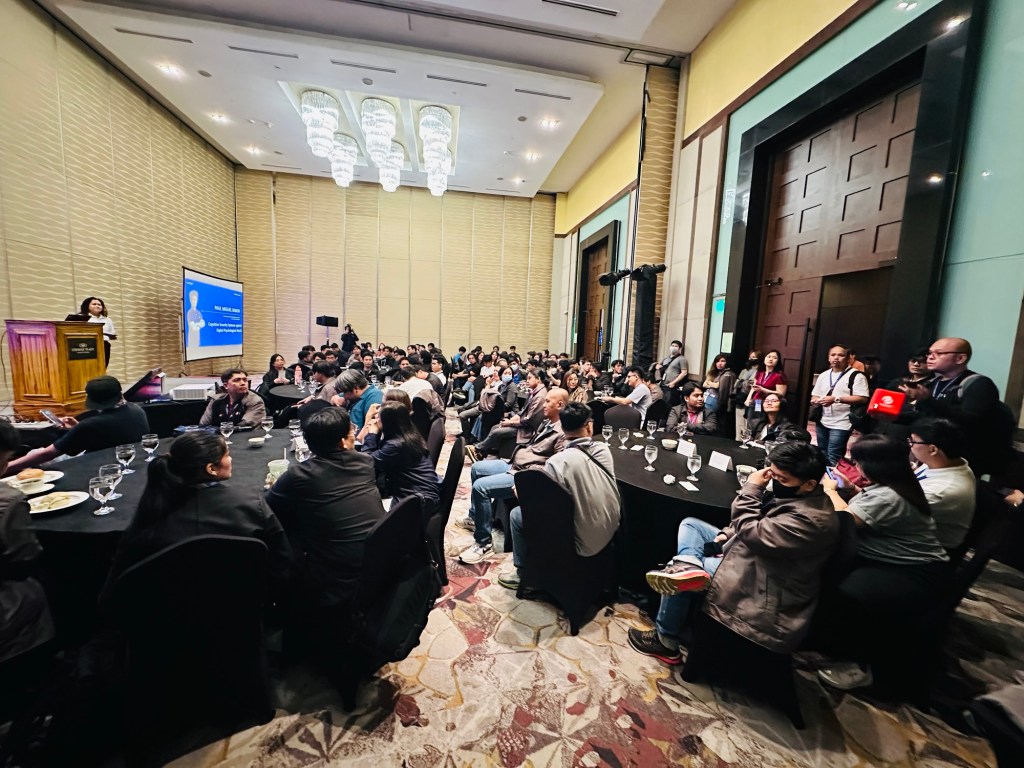
Image: A photo captured by the author
 Tom’s Blog