
We often assume that we all live in one common world. The trees I see are the same trees you see. The city we walk through, the light that falls across our faces, the sound of rain or traffic, all appear to belong to a single shared reality. Yet within that sameness lies an invisible difference. No two people ever see the same world in quite the same way.
What we call “seeing” is not a simple act of reception but of interpretation. Our eyes do not merely take in light; our minds decide what matters. Out of the countless details that reach our senses, only a small portion is allowed to enter awareness. The rest is quietly erased, forgotten before it can even be known. This filtering gives our experience its coherence, allowing us to live without drowning in chaos. Without it, the world would feel too crowded to endure.
Neuroscientists often describe perception as a form of selection. To see is to choose. But this selection is mostly unconscious. We do not decide which colors to ignore, which sounds to blur, or which faces to remember. Our attention narrows the world to a livable scale. The danger is that we forget how much we are not seeing. We take our narrow band of experience as the whole spectrum of reality.
This becomes clearer when we encounter those who perceive differently. Recent studies about autistic individuals reveal that they often experience the world with less filtering. Details that others ignore can overwhelm or fascinate them. A flicker of light, a pattern in fabric, the hum of an air conditioner, such things can occupy their full attention. For them, reality is a field of vivid particulars rather than a neatly ordered whole. It is not that their perception is wrong, but that it reveals how selective ours is. The difference shows how fragile our sense of normal vision truly is.
To imagine what another person truly sees is almost impossible. Even language, which bridges minds, cannot fully transfer perception. I can describe a color, a feeling, a taste, but my words only point toward an experience you recreate in your own way. Between your seeing and mine there is always a veil of subjectivity. We share the world, yet we inhabit different versions of it, like mirrors reflecting the same light from different angles.
The Architecture of Perception
The structure of perception is built not on completeness but on omission. The brain is designed to simplify. Every second, our senses gather millions of bits of data, yet consciousness can handle only a fraction. To survive, we must ignore. The result is a world that feels stable and meaningful, even though it is constructed from a tiny portion of what exists.
This filtering is not deception but necessity. Evolution favored minds that could focus on what was useful rather than everything that was real. The rustle in the grass that might be a predator, the face that might be friendly or hostile; these demanded attention. The sky’s precise shade or the texture of the soil did not. Our ancestors lived by choosing relevance over truth. In that sense, the architecture of perception is pragmatic, built for action rather than contemplation.
Yet within this efficiency lies the seed of illusion. We believe that we see reality as it is, but we are always seeing reality as it appears through our filters. We mistake our model of the world for the world itself. When two people disagree about what they “saw,” they may both be right within their own perceptual frames. The difference lies not in their eyes but in the invisible algorithms of their attention.
Empathy, too, depends on this architecture. To empathize is to imagine another’s perception, to construct a version of their world inside our own. But imagination cannot replace experience. We can understand, but not inhabit. No amount of empathy can let us see through another’s eyes. We can only approach, never arrive.
This limitation is both humbling and beautiful. It reminds us that every person lives within a private reality shaped by history, temperament, and culture. To meet another human being is to glimpse a different world. Conversation is the crossing of two invisible landscapes. Even in intimacy, we remain travelers, always approaching the other shore but never fully stepping onto it.
The Shifting Eyes of History
Our perception is not only biological; it is also historical. Each era sees the world through a different lens. What was once visible to ancient people may now seem impossible, and what feels natural to us might one day appear strange. The eyes of history are always changing.
In premodern times, the world was filled with spirits, gods, and unseen forces. People did not believe in the supernatural as we believe in distant theories. They experienced it as a direct part of daily life. A storm was not just weather but the mood of the heavens. A disease was not random but moral or spiritual consequence. The world itself was alive, dense with intention.
From our modern perspective, such views seem naïve or superstitious. But that judgment overlooks the depth of their perception. For them, the sacred was not a separate realm but the essence of reality. Their “filters” allowed the divine to appear as self-evident. What we call superstition was, for them, immediate experience. They inhabited an enchanted world, one that breathed meaning into every event.
Modernity changed this. The rise of science and reason brought extraordinary power but also a new kind of blindness. The world became measurable but mute. Gods faded into metaphor. The sacred retreated into the private sphere. What had been full of presence became empty of spirit. We gained clarity but lost communion. And yet, even this was only another form of seeing.
Now, in the postmodern age, the lens shifts again. Certainty dissolves. We no longer trust any single narrative to define the real. Meaning becomes plural, provisional, context-bound. In this world, even modern rationality looks like an old myth. Perhaps the postmodern mind cannot experience faith as the premodern mind did, just as the modern mind could not see mystery as truth. Every era lives within its own visibility, and what is visible for one is invisible for another.
The Many Worlds of Life
If human history contains many ways of seeing, nature contains infinitely more. Every living creature inhabits its own version of reality. The German biologist Jakob von Uexküll called this the Umwelt; the subjective world that each organism experiences according to its senses and needs. For us, a meadow is a landscape. For a bee, it is a field of ultraviolet patterns. For a mole, it is a network of vibrations in the dark. Each perceives only what its life requires.
An ant’s world, for instance, is a universe of scent and touch. Its eyes are poor, its attention microscopic. It does not see the human walking above it or the building that shelters its colony. It lives within a scale of meaning that excludes ours entirely. Likewise, a tree experiences the world through sunlight, gravity, and water, communicating through chemical signals we only recently began to detect. To a tree, the movement of time is slower than any human can feel.
When we look at animals or plants, we are seeing them from outside their Umwelt. We perceive their forms but not their worlds. Even our pets, who share our homes and affections, live in perceptual realms we can only guess at. The smell of the earth after rain, the hum of electricity, the pulse of ultrasound; all of these are invisible dimensions of the same reality. Nature is not one world but countless worlds overlapping, touching, yet never fully merging.
Recognizing this multiplurality can soften our arrogance. It reminds us that humanity is not the measure of reality but one expression among many. Each form of life is a way the universe becomes conscious of itself, however briefly. To imagine the world as it appears to a bird or a whale is to realize how thin our own horizon is. What we call “the world” is only a small window in an immeasurable house.
The Invisible Civilizations
If perception varies so drastically even within one planet, it is not hard to imagine that it may vary infinitely across the cosmos. The Fermi Paradox asks why, in a universe so vast and old, we have found no trace of other intelligent life. But perhaps the question itself carries an assumption: that we would recognize intelligence if we saw it.
What if alien consciousness does not communicate in sound or light, but in dimensions we cannot detect? What if their sense of time spans millennia, or their awareness flows through magnetic fields rather than speech? Just as ants cannot perceive the meaning of our cities, we may be blind to civilizations whose presence lies outside our perceptual range. The silence of the stars may not mean emptiness. It may mean difference.
This idea is both eerie and comforting. It suggests that the universe might be full of life, yet most of it invisible to us, not by distance but by kind. We may already be surrounded by intelligence that we cannot comprehend, just as ants live beneath our feet unaware of our existence. Perhaps the loneliness we feel when we gaze into space is not absence but incomprehension.
Even within our own experience, there are hints of this. We sense forces that science measures but cannot humanly feel: gravity, dark matter, quantum entanglement. We may describe them in equations, but we do not perceive them as realities. If higher forms of awareness exist, they might look upon us as we look upon particles, visible yet not truly known.
This thought invites humility. The universe may not be built for our understanding. We might be part of a larger system whose logic is beyond our reach. Like an insect that cannot know why the light grows dark, we live within patterns we do not control. The limits of our perception are also the limits of our comprehension.
Seeing as Humility
To see is to filter, to interpret, and to imagine. Yet what we cannot see defines us even more deeply. Awareness of this limitation does not need to lead to despair. It can lead to reverence. The unseen is not a void but a mystery that sustains us.
Philosophers and mystics have long understood this. The Zen teacher Dōgen once wrote that to study the self is to forget the self, and to forget the self is to be illuminated by all things. Perhaps to see the world rightly is to forget that we see it through ourselves. The moment we drop the claim of total vision, the world begins to shine in its incompleteness. Mystery is not the enemy of knowledge but its horizon.
Humility in perception means recognizing that clarity and blindness coexist. Every insight hides another shadow. Every discovery reveals new ignorance. The more we learn about the cosmos, the more we realize how narrow our window is. Yet in that narrowness lies beauty. We do not need to see everything to be in relationship with everything. The light that reaches us is enough to love.
In our time, when information is abundant and certainty is scarce, it may be wiser to cultivate wonder than mastery. To see deeply within our limits is a greater act than to imagine escaping them. The unseen world is not somewhere else. It is here, interwoven with what we call reality, waiting for our attention to soften enough to notice it.
The Quiet Horizon
At night, when the sky opens and stars spread like scattered memory, we feel the distance between what we know and what exists. The galaxies above are ancient, indifferent, and yet somehow intimate. Their silence speaks not of absence but of scale. To live is to see a fraction of infinity and to mistake it for the whole.
Perhaps the universe is not empty but simply unseen. Perhaps consciousness is a tide that rises in countless forms, each perceiving a different aspect of the same ocean. We are one wave among many, aware for a moment, then fading back into the vastness. To recognize this is not to diminish ourselves but to understand our place in the order of things.
The worlds we cannot see are not beyond us in distance but within us in depth. Each act of perception is a doorway to countless unseen realities. The task is not to master them, but to bow before them, to live attentively in the small light we are given. What we call seeing is only the beginning of vision.
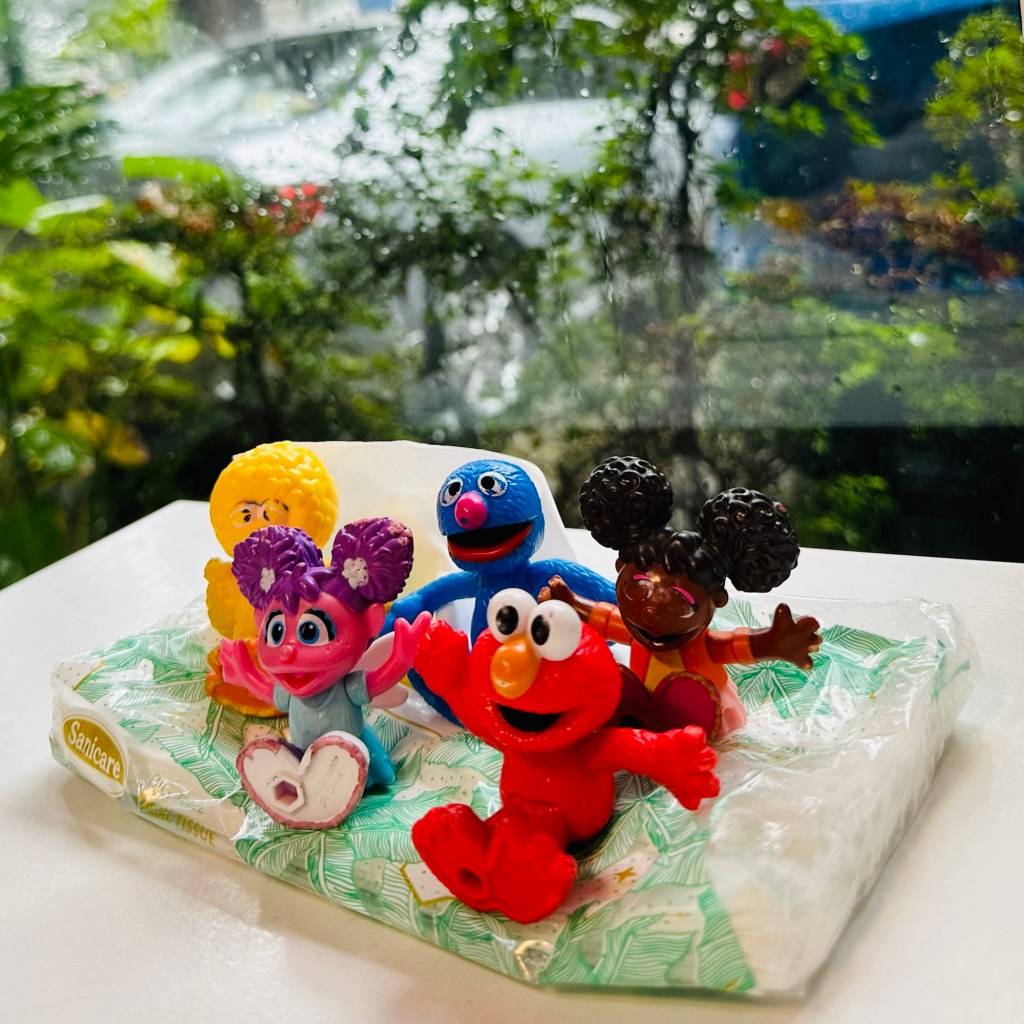
Image: A photo captured by the author
 Tom’s Blog