
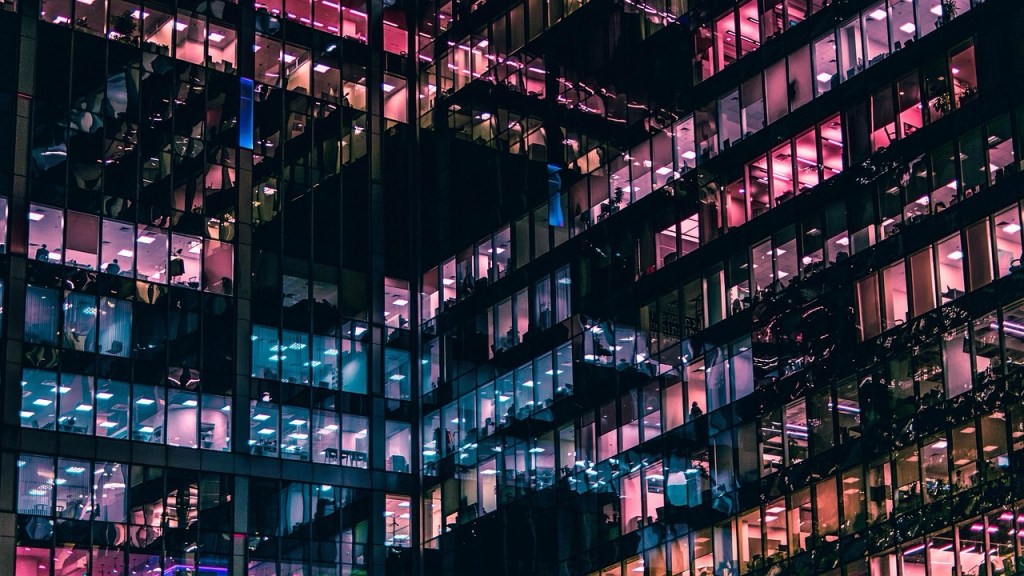
In the last decade, one phrase has carried heavy weight in the conversation about modern labor: 996. It refers to working from nine in the morning until nine at night, six days a week. Once used to describe grueling conditions in China’s tech industry, it has become a shorthand for a culture of overwork that many assumed would eventually fade. After all, technology was supposed to make life easier. Automation promised to eliminate meaningless tasks. Artificial intelligence was expected to save us from endless hours.
Yet the paradox of our moment is that 996 is making a comeback. Long hours are resurfacing not only in Asia but also in Silicon Valley, in European startups, and in research labs around the world. Companies in the AI race are intensifying schedules, pressing teams to move faster than ever. In theory, the machines should be reducing labor. In practice, humans are still staying late at their desks, chasing deadlines, and logging into systems at midnight.
Why is this happening? If AI is indeed powerful enough to automate large parts of human work, why are people busier than ever? The answer lies not in the disappearance of labor but in its transformation. What AI has swept away are mostly shallow or repetitive tasks. What remains, and what expands, are the tasks that demand judgment, coordination, experimentation, and meaning. The shape of busyness has changed, and with it the nature of life at work.
From Bullshit Jobs to Real Busyness
The anthropologist David Graeber once coined the term “bullshit jobs” to describe work that even the worker secretly believed was pointless. Filing reports no one read, shuffling paper in offices, or answering calls with scripted responses all belonged to this category. In such jobs, people clung to the idea of work–life balance as salvation. Balance meant forgetting about the office at the end of the day, reclaiming life outside the sterile walls of employment.
AI has swept away much of that layer of work. Reports can be generated automatically, customer service scripts can be handled by chatbots, and large amounts of routine coding can be produced by machine learning models. The promise of automation has indeed arrived for many low-value tasks. Yet instead of freeing everyone, this has made space for other kinds of work to expand.
Integration across systems, compliance with new regulations, coordination between global teams, and experimentation with new applications all create endless streams of tasks. Engineers no longer spend days typing boilerplate code, but they now spend nights trying to stabilize massive infrastructures or optimize GPU clusters. Data workers are no longer entering figures into spreadsheets, but they are curating, auditing, and cleaning mountains of information that power the models. Researchers are no longer waiting years for incremental results, but they are running dozens of experiments in parallel, each requiring interpretation and validation.
The shape of busyness is no longer empty repetition. It has become meaningful but relentless. What was once boredom is now intensity.
The Artist and the Athlete as Models
The new world of work looks less like the office clerk’s routine and more like the artist’s studio or the athlete’s training ground. For an artist, there is no strict boundary between life and work. Ideas appear at odd hours, the project is never truly set aside, and the sense of identity is tied to creation. For an athlete, training consumes the body and mind every day. Even moments of rest are calculated, part of the cycle of performance.
Something similar is happening now in knowledge work. The programmer who dreams of system design at night, the researcher who sketches experiment ideas over breakfast, or the marketer who thinks of campaigns on a weekend walk are not forced to do so by external pressure alone. They are drawn into their work because it feels like a calling. It is not a job to be clocked out of, it is part of who they are.
AI has sharpened this transformation by removing the tasks that once dulled the human spirit. What remains are activities that require creativity, judgment, and performance. In that sense, many modern workers now resemble artists or athletes, living inside their craft even when not officially “working.” This is not always negative. There is energy, even joy, in being fully absorbed by one’s calling.
My own practice of writing is a mirror of this. I do not write for money, nor do I consider as work. Writing is part of my identity, a source of existential grounding. It is work, but it is also pleasure. It is who I am. Increasingly, many professionals are experiencing their careers in the same way.
The Joy and the Danger
The promise of this new mode is evident. People can find fulfillment in flow, the psychological state where effort becomes effortless and time disappears. A scientist in flow forgets hunger and fatigue, an engineer in flow feels exhilaration in solving a hard problem, a writer in flow loses themselves in sentences that seem to write themselves. This kind of work gives life meaning.
The dangers, however, are just as real. Passion can blind people to their limits. Athletes suffer injuries by pushing too hard, artists fall into depression when their work consumes them, and professionals in the tech sector burn out when they mistake endless intensity for devotion. The line between joy and collapse is thin.
There is also the risk of exploitation. Companies may harness the rhetoric of passion to demand unpaid devotion. “Do what you love” can be twisted into “give us everything,” where employees sacrifice health, family, and community for the sake of a mission. When passion becomes a lever of control, the beauty of vocation turns into a trap.
The erosion of community is another danger. If work becomes identity, other aspects of life may wither. Friendships fade, families strain, and communal life shrinks when people are absorbed entirely in their craft. The very intensity that makes work meaningful can hollow out the rest of existence if left unchecked.
Two Futures of 2035
Looking ahead, two broad futures are possible.
In the healthier version, work remains intense but is treated like craft. Daily rhythms resemble those of professional athletes, where training and recovery are equally important. Sabbaticals, mental health support, and flexible cycles of work are built into organizations. People are recognized not only for their professional achievements but also for their identities as parents, friends, and citizens. Rest itself gains dignity, understood not as wasted time but as part of the craft.
In the unhealthy version, passion is exploited. Companies glorify endless devotion and stigmatize those who step back. Work platforms are active twenty-four hours a day, and boundaries collapse. Burnout and breakdowns become routine, and people are reduced to narrow professional identities. Communities weaken as individuals pour everything into their jobs. In this version, work does not enrich life, it devours it.
Both scenarios are plausible. AI will not decide the outcome by itself. It amplifies the intensity of human work but leaves it to society, organizations, and individuals to design the cultural container. The question is not whether life becomes work, but whether this fusion gives life or drains it.
Signs Along the Road
The direction will become clearer by the end of this decade. Certain signs will show whether we are moving toward the healthy or unhealthy path.
If recovery practices become normalized, if sabbaticals and creative breaks are common, and if mental health support is destigmatized, that will suggest a healthy trajectory. If society celebrates whole persons with multiple identities, not only narrow professionals, then work will be woven into life without consuming it. If rest is honored as part of craft, and if diverse vocations are supported, the future may be balanced.
If, on the other hand, companies use the language of family to demand endless devotion, if platforms remain alive at all hours, if burnout statistics climb and communities hollow out, then the unhealthy version is taking hold. The warning signs will be visible not only in offices but also in homes, neighborhoods, and friendships.
AI itself will be a clue. If it is used mainly to accelerate deadlines and output, the unhealthy path will prevail. If it becomes a companion that deepens creativity and reduces trivial burdens, the healthy path is possible.
Toward a Sustainable Vocation
The old notion of work–life balance may already belong to history. It was a response to meaningless jobs, a way of carving out life from the grip of boredom. In a world where AI strips away those jobs and leaves behind only the intense, expressive, identity-forming work, balance is no longer the main issue. The challenge is how to make life-as-work sustainable.
One answer is to treat work as craft. A craftsperson values discipline, rhythm, and beauty, not only output. Another is to design work like athletic training, with cycles of intensity and deliberate recovery. A further step is to embed community into work, so that family, friends, and neighbors are not eroded but integrated into the rhythm of vocation.
Perhaps, my daily writing is a small but powerful example of what this can look like. It is a kind of work, but also joy. It forms identity, but it also requires rhythm and rest. It gives energy, not only takes it. If society can shape its new 996 culture to resemble that, then the age of AI may not be one of exploitation, but of deeper human fulfillment.
The future will not be about escaping work but about inhabiting it fully without losing ourselves. Life will be work, and work will be life. The question is whether it will become a song of craft or a cry of exhaustion. That choice, more than the technology itself, will decide what kind of world we inherit.
Image by Bárbara Cascão
 Tom’s Blog