
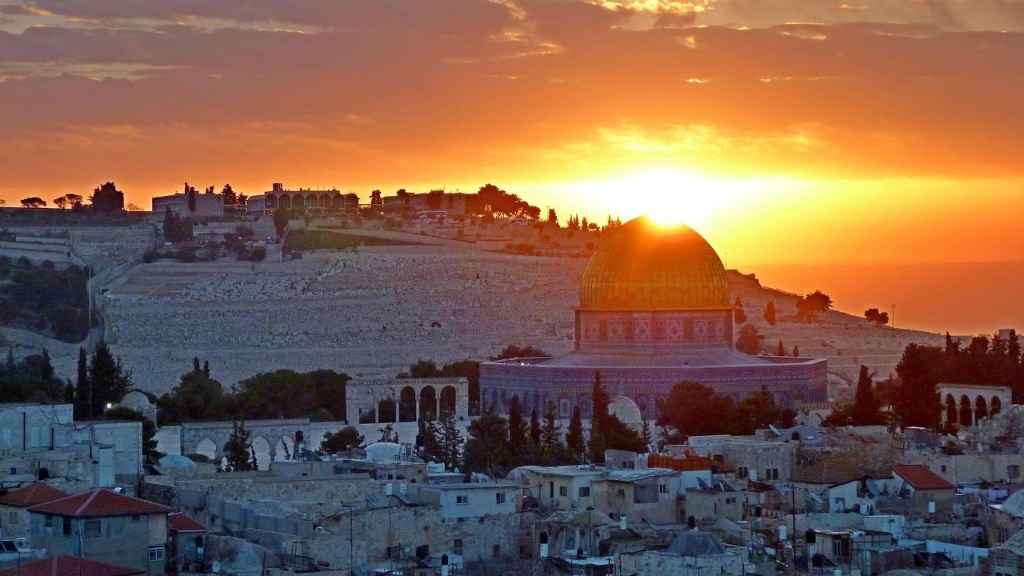
In recent months, more and more nations, especially in Europe, have moved to recognize Palestine as a legitimate state in the United Nations. On the surface, this appears to be a humanitarian gesture, an attempt to give the Palestinian people dignity, voice, and international standing. Yet the paradox is immediately clear. This recognition does not stop the bombs falling in Gaza, nor does it reconcile the bitter divisions between Hamas in Gaza and the Palestinian Authority in the West Bank. Instead, it functions as a performance, an act of recognition without resolution.
The United Nations was once imagined as a body that could resolve global conflicts through cooperation. In practice, however, it has often been a theater where states perform their values, their grievances, and their power struggles. Recognition of Palestine at the UN falls neatly into this pattern. It carries symbolic weight but leaves untouched the realities on the ground. The move allows European nations to posture as agents of peace while knowing full well that the conflict will continue.
This performance also reflects the deeper dysfunction of the UN. It is not that member states truly believe that recognition will bring peace. Rather, they understand that gestures themselves shape perception. In the world of diplomacy, appearing compassionate can be as useful as being compassionate. For the Palestinians, this offers little comfort, since recognition does not translate into freedom, security, or unity.
The Dysfunction of Global Ideals
The very name “United Nations” suggests harmony and solidarity. Yet from its birth, the UN has been less about unity than about balance. It provides a space where national interests can clash in a controlled environment. The globalist ideals in its charter promise common humanity, but the day-to-day reality is a system where power blocks compete.
This is why recognition of Palestine often looks hollow. It reflects the desire of nations to speak in the language of justice without actually confronting the structures that perpetuate injustice. For European powers, it means taking a moral stand without sacrificing strategic interests. For the United States, it means managing domestic pressures without losing influence in the Middle East.
What emerges is a contradiction. The UN speaks the language of global values, but its members act on self-interest. This contradiction produces an endless cycle of statements, resolutions, and recognitions that rarely translate into peace. The global ideals are there, but they are trapped inside a body that is also a marketplace of competing ambitions.
Zionism and the Nation-State Dilemma
To understand why this conflict resists resolution, it is necessary to consider the unique character of Israel itself. After the horrors of World War II, Israel was established as a refuge and a homeland for the Jewish people. Its creation was meant to solve an existential problem. Yet the form it took was that of a modern nation-state, with borders, armies, and political institutions modeled on European powers.
This produced a fusion that was both powerful and dangerous. Zionism, in its religious and cultural sense, carried thousands of years of longing for a promised land. The modern nation-state carried the logic of nationalism, sovereignty, and territorial defense. Together, they created a project that was not only about survival, but also about expansion, security, and identity.
For many traditional Jewish believers, this fusion was and still is troubling. They see the promise in the Torah as spiritual rather than political. They do not recognize the state of Israel as the fulfillment of prophecy. For them, mixing Zionism with nationalism is a distortion, a superficial grafting of sacred longing onto modern power politics. Yet for the state of Israel, this fusion has been the foundation of its existence. It explains both its resilience and its aggressiveness.
Europe’s Gesture of Recognition
Against this backdrop, Europe’s recognition of Palestine takes on a particular character. It is not simply about compassion for Palestinians. It is also about managing Israel. By recognizing Palestine, European nations place a moral limit on Israel’s actions. They signal that Israel cannot act without scrutiny.
There are also domestic considerations. Many European societies sympathize with Palestinians, seeing in their suffering echoes of colonial injustice. Political leaders cannot ignore this sentiment. Recognition allows them to align with public opinion while also maintaining their ties to Israel.
At the same time, recognition is carefully limited. It usually applies not to Hamas in Gaza but to the Palestinian Authority in the West Bank. This distinction reveals its hollowness. It recognizes a state that does not actually exist in unified form. It also avoids addressing Hamas, which is central to the current conflict. By doing so, Europe can appear compassionate while ensuring that nothing fundamentally changes. In effect, it maintains the conflict as manageable, rather than risking a real solution.
Liberal and Conservative Readings
Outside the Middle East, the conflict often becomes a stage for ideological sentiment. In the United States and elsewhere, support for either side often reflects cultural identity more than policy analysis. Liberals tend to side with Palestine. Conservatives, especially evangelicals, tend to side with Israel.
For liberals, the reasoning is primarily humanitarian. They see images of destruction in Gaza and cannot help but respond with sympathy. To them, Palestinians are victims of disproportionate power. Recognition of Palestine feels like a moral duty. Yet their position often remains shallow. It does not engage with the internal divisions of Palestinian politics or the broader strategic realities.
For conservatives, the support for Israel is deeply tied to religious conviction. Evangelicals see Israel as the people of the Old Testament, the chosen nation, and the land as the fulfillment of divine promise. Supporting Israel becomes an act of faith, almost a spiritual obligation. But this too is superficial. The modern state of Israel is not the biblical Israel of their imagination. It is a nationalist project infused with Zionist ideology. To equate it with scripture is to misread both history and theology.
Both positions, while heartfelt, are simplistic. They reflect emotional identification rather than serious engagement with the complexity of the conflict. And in their simplicity, they fuel polarization rather than understanding.
The Machinery of Benefit
If the conflict continues, who benefits? The answer is not ordinary Palestinians or ordinary Israelis, who live under fear, loss, and uncertainty. The beneficiaries are found elsewhere.
Political elites benefit because the conflict mobilizes their bases. Politicians in the West use it to rally voters, presenting themselves as moral leaders while blaming opponents for weakness. Leaders in the region use it to maintain legitimacy, portraying themselves as defenders of their people.
Geopolitical powers benefit because the conflict keeps Israel contained and prevents any single actor from dominating the Middle East. As long as peace is elusive, external powers retain influence.
Industries also benefit. The arms trade thrives on perpetual conflict. Aid organizations and contractors benefit from cycles of destruction and reconstruction. For them, the conflict is not only a tragedy but a source of income.
Ideological movements benefit as well. For nationalists, the conflict confirms their warnings about external threats. For religious groups, it confirms their prophecies. For activists, it provides a cause that energizes their identity. In each case, the conflict becomes fuel.
Globalism vs Anti-Globalism: A False Choice
Another tragedy is the way the conflict is reframed as a battle between globalism and anti-globalism. For some, to support Palestine is to embrace global humanitarianism. For others, to support Israel is to stand against global elites and for national sovereignty. This framing is not only simplistic, it is destructive.
The world is not divided into two camps. Globalism and nationalism are not pure categories. They are mixed realities, constantly shaping and reshaping each other. To force the Israel–Palestine conflict into this binary is to flatten history into ideology.
Yet media and political rhetoric thrive on binaries. They present the world as a contest between two sides. In doing so, they encourage people to hate each other along lines that do not reflect the complexity of reality. What should be a search for peace becomes another theater of the culture wars.
The Tragedy of Polarization
The deepest tragedy is not only the suffering in Gaza or the insecurity in Israel. It is also the way the conflict divides societies far beyond the region. In the United States, it has become a source of polarization between liberals and conservatives. In Europe, it deepens cultural and religious tensions. Even inside the UN, it divides nations into hostile blocs.
This polarization is fueled by media narratives that simplify and dramatize. Images of war are real, but their interpretation is shaped by frames that encourage outrage. Outrage then becomes identity. People no longer argue about policies. They argue about loyalty.
The result is unnecessary division. Families, communities, and nations turn against each other over a conflict that most do not fully understand. In some cases, the polarization becomes violent. Assassinations or attacks may occur, not because of local disputes, but because imported conflicts have become markers of identity. That is the ultimate tragedy. A conflict thousands of miles away fractures societies everywhere.
Beyond Performance
What would peace require? It would require honesty about the fusion of Zionism and nationalism, and the recognition that this fusion has created both strength and cruelty. It would require separating religious hope from political power. It would also require recognition of Palestine that addresses reality rather than symbolism. A divided Palestinian leadership cannot sustain a state. A recognition that ignores this only prolongs suffering.
Peace would demand courage, both from Israelis and Palestinians, and from the global powers that influence them. It would mean resisting the temptation of sentiment, resisting the lure of polarization, and refusing to profit from conflict. It would mean choosing reality over performance.
For many elites, this is frightening. A peaceful Israel, no longer entangled in conflict, could become a powerful force, technologically advanced and ideologically assertive. For some powers, this is a threat. But for ordinary people, peace is the only true path to dignity and security.
The Courage for Real Peace
The recognition of Palestine by European nations may appear noble, but it reveals the hollowness of the international system. It shows how performance replaces substance, how sentiment replaces strategy, and how polarization replaces understanding. The conflict has become more than a local struggle. It has become a mirror that reflects the dysfunction of global politics and the fractures of modern society.
If peace is ever to come, it will not come through symbolic recognitions or ideological postures. It will come through a deeper honesty about history, power, and human dignity. Until then, recognition will remain hollow, and the world will continue to divide itself over a conflict that benefits the few while destroying the many.
Image by krystianwin
 Tom’s Blog