
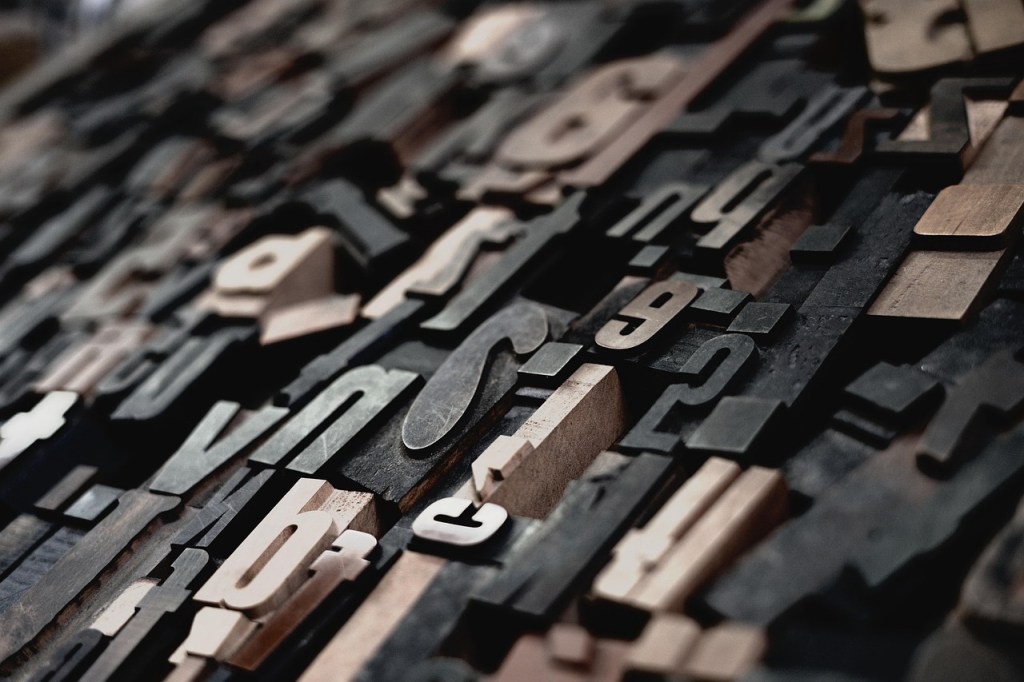
Languages are not simply tools of communication. They are also archives, keeping within their structures the echoes of past centuries. Every time we write or speak, we are inheriting choices made long before us, by scribes, poets, reformers, and governments. A word on the page may look ordinary, but its spelling, shape, and sound are the result of countless layers of history.
This dual nature of language creates a paradox. On one side, we want words to be easy to learn and pronounce, aligned with how people actually speak today. On the other side, we want words to preserve their links to history, so that a connection is visible across centuries and across related terms. Language constantly shifts, but writing systems are reluctant to follow, and this gap creates dilemmas that each culture must resolve in its own way.
The tension can be described simply. Should writing reflect the ear, that is, the way language is heard and spoken in daily life? Or should writing reflect the eye, that is, the visual memory of roots, origins, and meanings carried forward from the past? Every society that keeps written records must live with this paradox. Some choose clarity and reform, others continuity and conservation, and some attempt a hybrid balance.
European Dilemmas: Sound and History
English is often seen as the most irregular language in the modern world. This irregularity is not the result of carelessness but of a decision, conscious or not, to preserve the historical form of words. The spelling of sign keeps a silent letter g, which only reveals its purpose when we see signature or signal. The word heal has the same spelling family as health even though the vowel sound changes. Doubt keeps its silent b to remind us that it is related to dubious. English orthography is less about sound and more about showing where words came from and what families they belong to.
The reason lies in history. By the time English spelling was standardized in the fifteenth and sixteenth centuries, the language was undergoing profound shifts in pronunciation. The Great Vowel Shift moved long vowels dramatically, but spelling did not catch up. Later, waves of borrowing from French and Latin layered new words on top of Anglo-Saxon roots. The result is a system that looks chaotic but is in fact a fossil record of etymology.
French made a similar choice, though with its own logic. Many final consonants in French were once pronounced but later fell silent. The word grand once had an audible d, corps once had a spoken p and s, temps once had both final letters pronounced. The spelling remained fixed while the spoken forms shifted, producing a writing system full of silent letters. What looks like unnecessary decoration is actually historical depth. French children must memorize spellings, but they are also being trained to see the history of their language with every word they write.
By contrast, Spanish and Italian chose clarity. Their spelling systems are much closer to pronunciation, making them easier to learn and more transparent to outsiders. The Spanish word nación and the Italian nazione both reflect the Latin natio in a way that matches modern speech. These languages sacrificed some of the visible connection to older forms but gained a straightforward system. Their citizens can read with confidence that every letter corresponds to a sound, a luxury not available in English or French.
Japanese Dilemmas: Kanji, Kana, and Dual Histories
Japan faced its own dilemma, though in a different script system. When Chinese characters arrived, they brought with them not only a writing system but also an entire semantic universe. Native Japanese words, known as yamato kotoba, were mapped onto Chinese characters, which meant that Japanese sounds were now tied to foreign meanings. The word kami that once referred broadly to “above” or “superior” realities was split into 神 for god, 髪 for hair, and 上 for upper. What was once one sound family became three separate categories under the Chinese semantic lens.
This created both loss and gain. The loss was in the visibility of sound-based roots. Japanese speakers could no longer see the kinship between kami meaning deity and kami meaning hair. The gain was in precision and disambiguation. Kanji allowed readers to tell instantly which kami was meant, solving a problem of homophones in a language where many words share identical sounds. It also linked Japan to the prestige of Chinese civilization, giving access to philosophy, religion, and literature across East Asia.
Postwar reforms in 1946 tried to bring the script closer to sound. Outdated kana forms like ゐ and ゑ were removed, and official lists limited the number of kanji in daily use. Kana spelling was adjusted to match contemporary pronunciation, even if historical spellings were lost. Yet Japan did not abolish kanji. The hybrid system, where kanji represent meaning and kana represent sound and grammar, remains the compromise. It is heavy but functional, preserving both the sound of Japanese and the semantic depth of Chinese.
Parallels Across Civilizations
The Japanese situation may feel unique, but it has a close cousin in English. After the Norman Conquest, English absorbed vast numbers of French and Latin words. This created a dual-layered vocabulary: short and earthy Anglo-Saxon words like bread, home, fight, and love, alongside elegant or abstract French and Latin terms like residence, combat, and affection. Each pair carries the same meaning but a different register.
This layering produced richness but also division. A speaker can choose between ask and inquire, holy and sacred, kingly and royal. The first feels grounded and familiar, the second elevated and formal. Just as Japanese alternates between yamato kotoba and Sino-Japanese vocabulary, English alternates between its native and imported layers. Both languages live with two histories at once, and both systems produce a kind of semantic doubling.
What unites them is the same paradox. A native layer reflects the body and the earth, while an imported layer reflects prestige, abstraction, and intellectual tradition. This makes the language at once democratic and aristocratic, close to home and connected to the wider world. The cost is complexity, but the gain is expressive depth.
What Do We Want from Writing?
At the heart of the dilemma is the question of what we expect writing to do. Should it mirror how people speak today, giving every child and foreigner a simple path into literacy? Or should it serve as a record of history, carrying forward the memory of older forms, even if that makes it harder to master?
The trade-offs are stark. Phonetic reform brings accessibility, but it cuts away the etymological roots. Historical preservation maintains continuity, but it creates silent letters and irregularities. The ghosts of English letters and the fossils of French characters are evidence of a long memory, but also of barriers to learning. Spanish and Italian gained ease at the cost of some visible history. Turkish gained literacy by switching alphabets entirely, but at the cost of cutting itself off from its Ottoman archives.
Writing is never neutral. It is a cultural decision about whether to favor the clarity of the present or the resonance of the past. Each script reflects not only a linguistic system but also a philosophy of heritage.
Possibilities for Renewal
Despite these tensions, languages continue to search for ways to balance preservation and usability. Some efforts aim at restoration. Japanese linguists study man’yōgana texts to rediscover sound-based etymologies that kanji concealed. English etymological dictionaries remind readers that the silent b in doubt has a family connection to dubious. Such efforts keep alive the hidden kinship of words.
Other efforts aim at preservation. French continues to hold on to silent letters, not because they serve modern pronunciation, but because they embody continuity with older literature. English resists spelling reforms, partly because they would erase the visual links between related words. These conservative instincts may frustrate learners, but they protect the deep roots of language.
Improvement is also possible. Spanish spelling reforms in the eighteenth and nineteenth centuries created a clean and phonetic system without abandoning the Latin alphabet. Japanese kana reforms made spelling match pronunciation more closely while still allowing kanji to carry meaning. These reforms did not erase history but adjusted the balance.
Hybrid approaches may be the most practical. Japanese blends kanji and kana. English, though irregular, supplements learning with phonics instruction and etymological notes. Technology now allows us to carry dual views of a word: its current pronunciation and its historical layers. Perhaps the future of language preservation will rely less on reforming the script and more on how we teach and interpret it.
The Gift and Burden
Languages with dual layers, like English and Japanese, embody a paradox. They are both local and global, oral and written, native and borrowed. Their very irregularities reveal their long journeys through history. The learner may stumble on silent letters or multiple readings, but these difficulties are signs that the language is carrying more than one story at once.
The choice between reform and preservation is not one to be solved permanently. Every society finds its own balance. Some will lean toward clarity, others toward continuity, and many will compromise. What matters is that we remain conscious of the trade-offs and treat language not as a machine to be optimized but as a living archive to be read with care.
The deepest preservation of language lies not only in spelling systems or reforms but in how we teach, read, and interpret. When we see the silent b in doubt, or the separate kanji for kami, or the silent letters in corps, we are not simply confronting irregularities. We are encountering history embedded in language. To live with this awareness is to accept that language is both a gift and a burden, carrying the clarity of the present and the echoes of the past.
Image by Pexels
 Tom’s Blog