
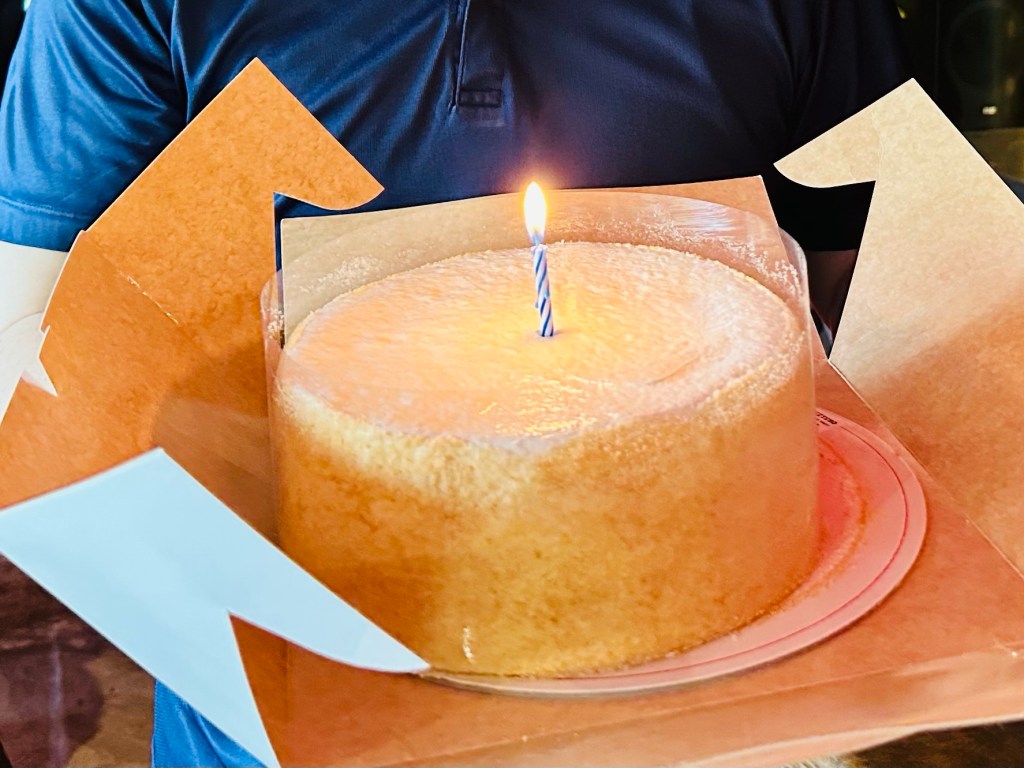
When people gather to say “happy birthday,” it is one of the simplest and most generous forms of recognition. Unlike other celebrations that highlight what someone has achieved or contributed, a birthday is not earned. It is not a medal, a diploma, or a prize. It is a reminder of the day you first arrived, nothing more and nothing less. That is why it carries such a unique purity.
Many of the world’s ceremonies are tied to comparisons. A graduation points to finishing a course of study, a promotion celebrates advancement over peers, and awards mark distinctions of excellence. These are meaningful in their own ways, yet they inevitably involve measures of difference. Someone is chosen, someone is not. Someone succeeds, another struggles. In such celebrations, envy can quietly stir, or pride can inflate.
A birthday moves differently. No one can be excluded from it, and no one has to prove anything. The only qualification is that you exist. This makes the birthday one of the few occasions where celebration is entirely unconditional. When we say “happy birthday,” we are not applauding an accomplishment but honoring the simple fact of life itself.
Existence as a Gift
Birthdays remind us that existence is not something we manufactured. None of us had a hand in choosing the time, place, or family into which we were born. Life arrived as a gift, mysterious and unearned. That truth is easily forgotten in the daily struggles and ambitions of adulthood, but a birthday draws it back into focus.
The more one reflects on the day of birth, the more remarkable it becomes. There was a moment when we were not here, and then suddenly we were. The transition from nothing to being is beyond comprehension, yet it happened to each of us. To celebrate that day is to recognize a miracle, even if it appears ordinary in the calendar of human affairs.
In this sense, a birthday is a yearly invitation to gratitude. It whispers that existence itself is worth acknowledging. Even if achievements fade, possessions shift, or status changes, the bare fact of being alive remains. That is enough for celebration.
The Equality of the Birthday
One of the quiet beauties of the birthday is its equality. Every person receives this day. It does not matter whether they are powerful or obscure, wealthy or poor, learned or uneducated. A birthday levels the field.
When you tell a stranger “happy birthday,” you are affirming their humanity. You are saying, without envy or hesitation, that their life matters simply because it is. It is rare to find a celebration where everyone qualifies. Most other rituals highlight difference, but a birthday highlights sameness.
This sense of shared equality can be deeply healing. In a world where comparison breeds discontent and division, the birthday reminds us that we are all participants in the same mystery. We all came into this world without asking. We all continue by grace, and we all are welcomed into another year with no need to prove ourselves.
Forgetting and Remembering the Sacred
Modern culture often treats life as if it were arbitrary. Birth is explained by biology, death by statistics, and existence by chance. In such a framework, a birthday can appear as a simple marker of time, nothing more than another turn of the clock. But when we pause, the sacred dimension becomes visible.
To mark a birthday is to remember that something beyond calculation brought us here. Whether one speaks of God, fate, or mystery, there is a sense of being called, of being welcomed. That recognition restores awe. It prevents life from shrinking into the ordinary routine of days and weeks.
In forgetting this sacredness, we can fall into either arrogance or despair. Arrogance arises when we imagine that we are entirely self-made, that our existence is solely the result of our choices. Despair arises when life seems random and meaningless. A birthday pulls us back from both extremes. It reminds us that existence is both gift and wonder.
The Other Door
If birth is the first door, then death is the other. Just as we entered the world without our choosing, so we will one day leave without our command. Both are mysteries that frame our time here.
It is natural to resist thinking of death as a mirror of birth, since one fills us with joy and the other often with sorrow. Yet the symmetry is undeniable. We came into the world by a call we did not hear beforehand. We will depart by another call we cannot anticipate. Both belong to the same divine rhythm of being.
Life is temporary. Some have many decades, others only a brief span. But no matter the length, the truth is the same: life here does not last forever. To see this clearly is not to diminish life, but to deepen our appreciation of it. The limits are what make it precious.
Can Death Be Celebrated?
To speak of death as celebration is difficult because grief is real. When someone departs, those who love them feel the ache of absence. No words can erase that loss. Yet alongside grief, another perspective is possible.
Death, like birth, can be seen as a divine intervention. Just as there was a moment when the world said, “Welcome,” there will be a moment when the world says, “Rest.” In many spiritual traditions, this is understood not as an end but as a return. To die is to be called home, to step through the other doorway.
If we could meet that moment with readiness rather than fear, death itself could take on the quality of a final birthday. It would be the day we are born not into time, but into eternity. Such a vision does not erase grief, but it transforms the meaning of departure.
The First and the Last Celebration
Think of the first birthday. On that day, you were too small to celebrate yourself. Others celebrated for you. Parents, relatives, and friends marked the occasion, rejoicing that you had arrived. Your awareness was minimal, but their joy was abundant.
Now imagine the final day. When that day comes, others will grieve. They will gather to remember, not to rejoice. Yet perhaps in the unseen realm, there will be celebration again. If there is a divine voice that whispers, “It is time, are you ready?” the most peaceful answer would be, “Yes, I am ready.” That readiness turns departure into fulfillment.
The symmetry between the first and the last celebration is striking. At both moments, our lives are held by others. At the first, we are celebrated without awareness. At the last, we may be celebrated beyond our awareness. In both cases, our lives are received as gift, and the circle is complete.
Learning to Live Between the Two
What then do birthdays and death-days teach us about living? They frame life as something given, bounded by two doors that are not ours to open or close. Between those doors stretches the time we call our years.
To live with awareness of both is to live with humility. We are not the source of our existence, nor its final master. We are guests, welcomed for a while. That realization can free us from both pride and despair. It can turn ordinary days into spaces of gratitude.
Celebrating birthdays becomes more than a social custom. It becomes a practice of remembering the miracle of being here. And preparing for the last celebration becomes more than fear of death. It becomes readiness to say yes when the final invitation comes. Life between the two doors becomes a training in gratitude, humility, and peace.
The Candle and the Final Light
Every year when the birthday candle is lit, it is not only a marker of survival, but a renewal of welcome. Each year we are reminded that our existence is celebrated simply because it is. And when the last light comes, if we can meet it with the same spirit of acceptance, then our departure will be no less miraculous than our arrival.
The first and the last celebration belong together. They are not accidents, but part of the same mystery. To celebrate a birthday is to acknowledge that existence is gift. To prepare for death is to acknowledge that gift is temporary, yet meaningful. Between the two, life unfolds in gratitude.
Image: A photo captured by the author
 Tom’s Blog