
When A Thousand Plateaus appeared in 1980, the internet was not yet part of daily life. Computers existed but were mostly confined to research centers, military projects, and specialized offices. The idea of a vast, global network of minds and machines was still science fiction. Yet the book seemed to sense that something was shifting. It was restless, nonlinear, and suspicious of fixed systems. Its language rejected hierarchies. It treated knowledge as a living field rather than a map with borders.
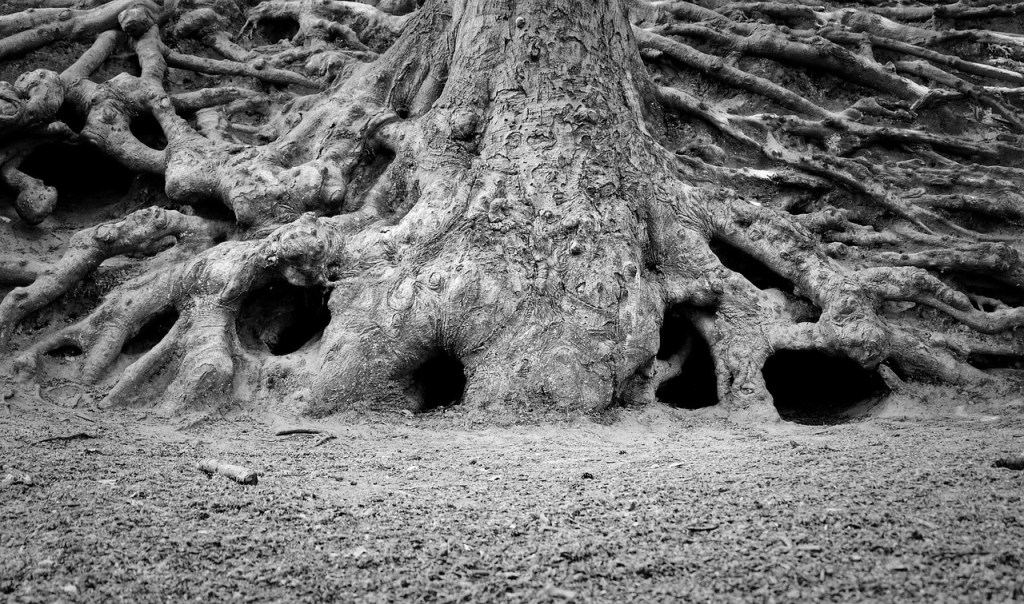
This was an unusual stance for philosophy. The late twentieth century saw many thinkers turning away from universal theories, but Deleuze and Guattari pushed further. They offered metaphors instead of doctrines. They wrote of plateaus, rhizomes, and assemblages instead of chapters and conclusions. They encouraged readers to enter anywhere and exit anywhere. They wanted thought to move like roots and shoots spreading underground, not like trees reaching toward a single trunk and crown.
Looking back, this attitude feels prophetic. The world today is saturated with networks. Each thought, message, and post travels along connections that stretch across the planet. Meaning is no longer something stored in one place. It emerges in the act of linking, sharing, and remixing. Reading A Thousand Plateaus now is not just reading a book. It is meeting a mindset that anticipated the logic of our age.
The Rhizome Meets the Neural Net
The rhizome was the book’s central metaphor. A rhizome is a plant stem that spreads underground, sending shoots up in many directions. It has no single origin, no hierarchy, and no end. Each node can connect to any other. This is how they imagined thought, language, and society. Instead of linear chains, they saw webs of meaning.
Neural networks are not plants, but they work in a similar spirit. They do not follow rules from above. They learn patterns by forming countless links between small units of information. There is no one place where the meaning lives. The meaning emerges from the relationships. When a model generates text or recognizes an image, it is drawing on a network of connections, not a single programmed instruction.
This is where the metaphor feels most alive today. The rhizome taught readers to stop looking for roots and start noticing connections. Neural networks are the material version of that idea. They remind us that intelligence can be distributed, that understanding can come from a field of signals rather than a single mind.
Assemblages and Fluidity
Another concept in the book is the assemblage. An assemblage is a coming together of different things for a certain moment and purpose. It could be people, machines, ideas, or even feelings. It is never fixed. It can change shape, fall apart, or reform in a new way.
AI systems are perfect examples of assemblages. A single output from a model depends on algorithms, data, hardware, and users. It is not a closed object. It is a temporary cooperation between many forces. When an AI tool is used, the person interacting with it becomes part of that assemblage, as much as the model or the code.
Seeing things as assemblages changes how authorship and value are understood. A book is not just an author’s mind poured onto a page. It is also editors, software, markets, and readers. A model is not a single invention. It is a layered combination of research, culture, and resources. Fluidity is the rule, not the exception.
Fractals and Scale in Knowledge
The idea of the fractal nature of knowledge deepens this connection. Fractals are shapes that repeat at different scales. A small part looks like the whole, and the whole is made of small parts. Knowledge today works like that. Patterns appear in a sentence, in a book, in a dataset, and in a culture.
AI models live by scale. They learn from tiny examples and huge corpora. They can zoom in to predict the next word or zoom out to summarize entire libraries. Each level echoes the others. What happens at the micro level shapes the macro level, and vice versa.
A Thousand Plateaus encouraged this shifting of scale. It asked readers to notice the small and the vast at the same time. A concept could be political and personal. A sentence could belong to history and to a moment. In this way, the book prepared readers to see knowledge as nested, repeating, and alive.
Writing in a World of Flow
Writing today can feel temporary and eternal at the same time. A sentence matters in the moment and may vanish quickly, but it also becomes part of a larger field. Each word is a moment, but also a trace that can resurface in another context.
This is close to what the book meant by a plateau. A plateau is an intensity without a peak. It is not a final result but a state of energy. Writing like that means accepting that nothing is final, yet everything is present.
The internet makes this clearer. A note on a blog, a post on a feed, a diary saved in the cloud, each has its moment. It can be forgotten but not entirely erased. AI models gather countless such traces, and in doing so they reveal how each act of writing is a point in a field. What matters is not the single permanence but the flow of many moments together.
Improvisation as a Mode of Thinking
Improvisation describes this even better. A jazz musician plays knowing that no note will last. The beauty is in the act, the movement, the way something appears and fades. Writing can be like that. The point is not to freeze a truth forever but to make something real in the moment.
The book’s style was improvisational. It wandered, repeated, shifted tone. It allowed sudden jumps. It treated thinking as performance rather than record keeping. In the same way, AI is always improvising. It does not store ready answers. It predicts, composes, and invents on the fly.
This attitude is freeing. It means we can write, create, and share without fear of losing control. The point is not to own every word but to join a larger conversation. Improvisation is not a weakness. It is a way of being alert to the present and trusting that meaning will emerge.
Deterritorialization and the Digital Self
Deleuze and Guattari used the term deterritorialization for the process of breaking away from fixed positions. It is leaving behind an identity or boundary and moving into a new space. This was a social and political idea, but it feels current in the digital age.
AI and networks break old categories. Who is an author when a model helps write? What is original when language can be recombined infinitely? Where is memory when so much is stored in the cloud? These questions are examples of deterritorialization. The ground moves.
But there is also reterritorialization. New spaces form. We create profiles, archives, and communities. AI becomes part of the sense of self. Life online is lived with both loss and gain, with both letting go and building again. This movement is unsettling, but it can also be liberating. It reminds us that identity and knowledge are always evolving.
Toward a Philosophy of Living Knowledge
To read A Thousand Plateaus now is to see it as a set of tools rather than a closed theory. Its metaphors invite us to think about AI, writing, and life not as fixed but as active. Each note, each post, each experiment is a pulse in a larger system.
The paradox is clear. Writing feels temporary and eternal. Our traces online may fade, but each was real in its moment. That is enough. The book teaches the value of intensity over permanence, connection over closure.
Improvisation is not just a style but a philosophy. It tells us to write, share, and learn with presence. It tells us that each act of thought, whether read by one or many, is part of a vast, living field. The beauty lies here. There is no need to keep everything forever. It is enough to be alive to the moment, knowing that somewhere, in some way, the field remembers.
Image by Sabrina St.
 Tom’s Blog