
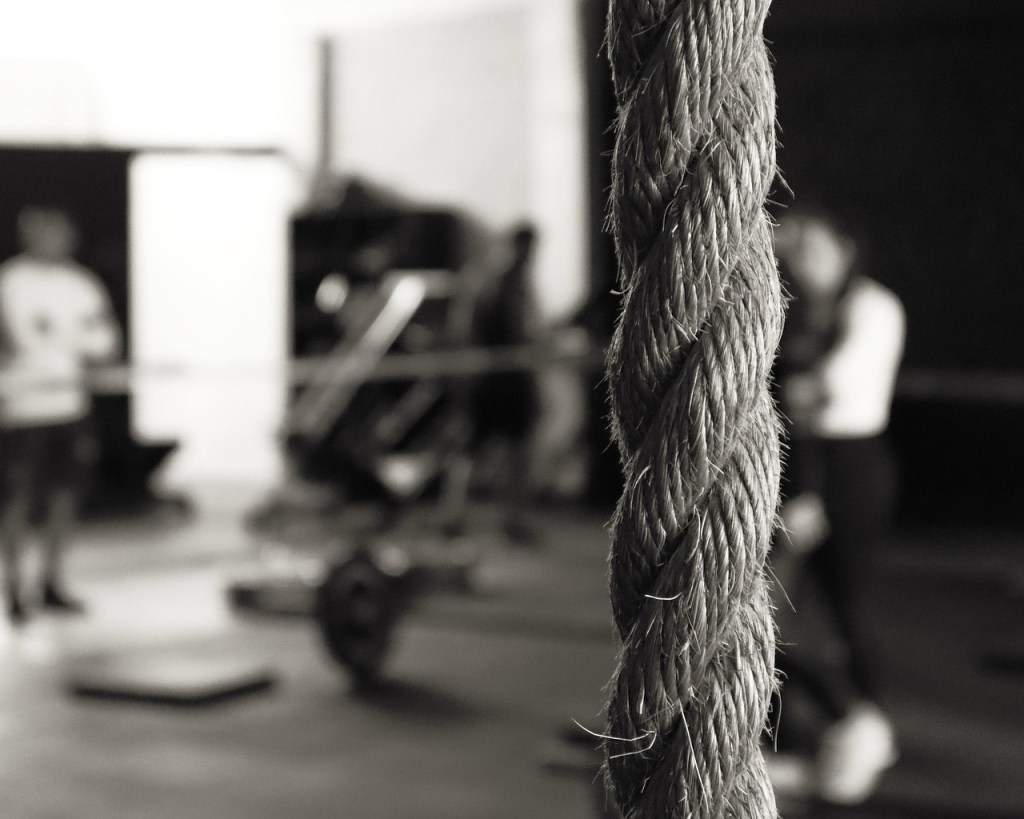
For most of history, physical training belonged to one of two worlds. One was the world of traditional exercise as part of daily life. Strength and endurance were not separate activities. They were woven into farming, fishing, carrying water, martial arts, or ritual practices. Tools were simple, often made by hand, and the training ground was the courtyard, the dirt path, or the open field. Strength was measured in the work done for family, community, or defense, not in trophies or broadcast times.
The other was the modern gym culture. Here, training became a separate compartment in life, often disconnected from daily necessity. Climate-controlled rooms were filled with machines, mirrors, and music systems. The focus shifted toward aesthetics, targeted muscle groups, and personal progression. It was the industrial world’s answer to the loss of physical labor, the culture of bodybuilding competitions, before-and-after photos, and memberships sold on promises of transformation.
In recent decades, a third world has emerged. It presents itself as a return to functional roots, stripped of unnecessary frills. CrossFit, Hyrox, and other branded “minimalist” formats promise a kind of primal fitness. They attract those disillusioned with the image-driven gym, people who want to move, lift, and run in ways that feel closer to real life. Yet this third space is not as simple as it appears.
The Camouflage of Functional Minimalism
The rhetoric is primal. The movements look raw. The spaces feel stripped down compared to a luxury health club. But behind this surface, functional minimalism is often a carefully engineered business model.
The equipment is not improvised from what the land offers. It is precision-machined, standardized, and branded. Sleds, wall balls, and ski ergs are not relics of a simpler age. They are part of a replicable product that can be sold to thousands of gyms and events worldwide. The membership fees, event tickets, coaching certifications, and merchandise are woven into a corporate ecosystem.
Compared to traditional systems like Indian kushti wrestling or Persian pahlevani, this is a striking inversion. In those systems, the minimalism is not a style. It is simply the reality. The tools are wood, stone, rope, or earth. The culture is tied to a way of life, not to a logo. The authenticity comes from necessity, not from a marketing decision.
Modern functional minimalism, by contrast, is minimalism as an aesthetic choice; a style of branding that hides the machinery of commerce behind the appeal of grit and sweat.
The Arena as Product
The arena is not a neutral backdrop. It is part of the product.
In Hyrox or CrossFit competition, the floor is laid out with lanes, the equipment placed at precise intervals. There are timing systems, soundtracks, MC commentary, and sponsor banners. The lighting is tuned for both live experience and streaming footage. The event is choreographed so it works for the athletes, the audience, and the media feed.
This is not inherently wrong. Any large event needs structure. But it means that what we think of as a “test of functional fitness” is also a designed entertainment format. The spectacle is as much about reproducibility and market value as it is about the challenge itself.
This is why functional competitions are closer to professional sports than to the village training ground. The arena has to be built, maintained, and monetized. Every sled, every barrier, every branded water bottle is part of the show.
Sports and the Deceptive Hero
This same dynamic plays out far beyond fitness. Modern sports and arts are full of heroes who exist within manufactured arenas.
In traditional societies, the hero often emerged from direct necessity; the strongest warrior, the most skilled hunter, the leader who secured peace or food. Their recognition was not separate from the life of the community. The measure of their ability was survival and contribution.
In the modern and postmodern world, heroes are often shaped within competitive environments that are deliberately constructed. The Olympics, professional leagues, e-sports, and influencer platforms all create conditions for performance that are safe, controlled, and marketable. These environments simulate the conditions for greatness while insulating them from the chaos of reality.
The hero is still talented and disciplined, but they are also a role within a production. The rules, the media narratives, the branding deals, and the event design all shape the story. The spectacle of heroism often overshadows the practical or communal value of the skill itself.
The AI-Era Shift to Symbolic Competition
The rise of AI will accelerate this trend. As more productive labor moves to machines, there will be less room for necessity-based excellence. Food, shelter, transportation, and even problem-solving will be handled with minimal human input.
What remains for human effort will be in the realms of play, display, and symbolic achievement. The skills that gain recognition will be those that fit within visible, consumable formats. Competitive arenas, both physical and digital, will multiply.
This does not mean people will stop training hard, creating art, or pushing their limits. It means that more of this effort will be done within structures built for spectators, sponsors, and streams. The arena becomes the main habitat for human excellence, because it is the place where excellence can be seen, shared, and monetized.
The Inevitable Commercialization of Authenticity
This is where the paradox becomes clear.
As people long for primal authenticity, the dirt pit, the handmade tool, the uncoached challenge, the market finds ways to sell its simulation. Functional minimalism, heritage arts, traditional crafts, and even “digital detox” retreats all promise a return to the real. Yet they exist as packaged experiences, sold in units, complete with logos and merchandise.
Capitalism thrives on selling what it has already displaced. It is not surprising that as AI removes the grind of survival, authenticity itself becomes a premium product. We will seek it because survival is no longer a test. We will buy it because building it ourselves is no longer required.
The Manufactured Arenas of the Post-AI Age
Manufactured arenas will dominate the post-AI age. They will shape the heroes we admire, the competitions we watch, and even the way we train our bodies. The authenticity they promise will always be part reality and part stagecraft.
Yet they can still inspire. They can push people to discover limits, connect with others, and celebrate skill. The challenge will be to create arenas that do not hollow out the spirit of struggle they claim to honor.
Because the human need to test ourselves will not disappear. It will simply adapt to the ground beneath our feet, whether that ground is earth, concrete, or the synthetic flooring of a climate-controlled arena with a sponsor’s logo painted at the start line.
Image by Jonathan Velasquez
 Tom’s Blog