
Somewhere around the age of 38, something shifts. The body slows, subtly at first. Recovery takes longer. Fertility declines. The visible arc of youth begins to plateau. But what if this point is not just a slow descent into age, but a threshold into something new?
There is a theory, rooted in evolutionary biology, that human life was not designed to go far beyond 38 or 40 years. In early human societies, few people lived much longer. Accidents, disease, childbirth, and war often ended lives early. Even in peaceful conditions, the body’s prime years were generally behind by the fourth decade. And yet, here we are, living far past that point, building lives, raising grandchildren, and finding new meaning long after nature’s original cutoff.
We owe this to something extraordinary. Not just to better genes or healthier food, but to a civilization that shelters, heals, and teaches. We are alive today not simply because our bodies endured, but because culture held us. Language, medicine, science, ethics, and shared memory all converge to make a second life possible. And that second life, once we realize we’re in it, invites a different way of being.
Survival as a Gift
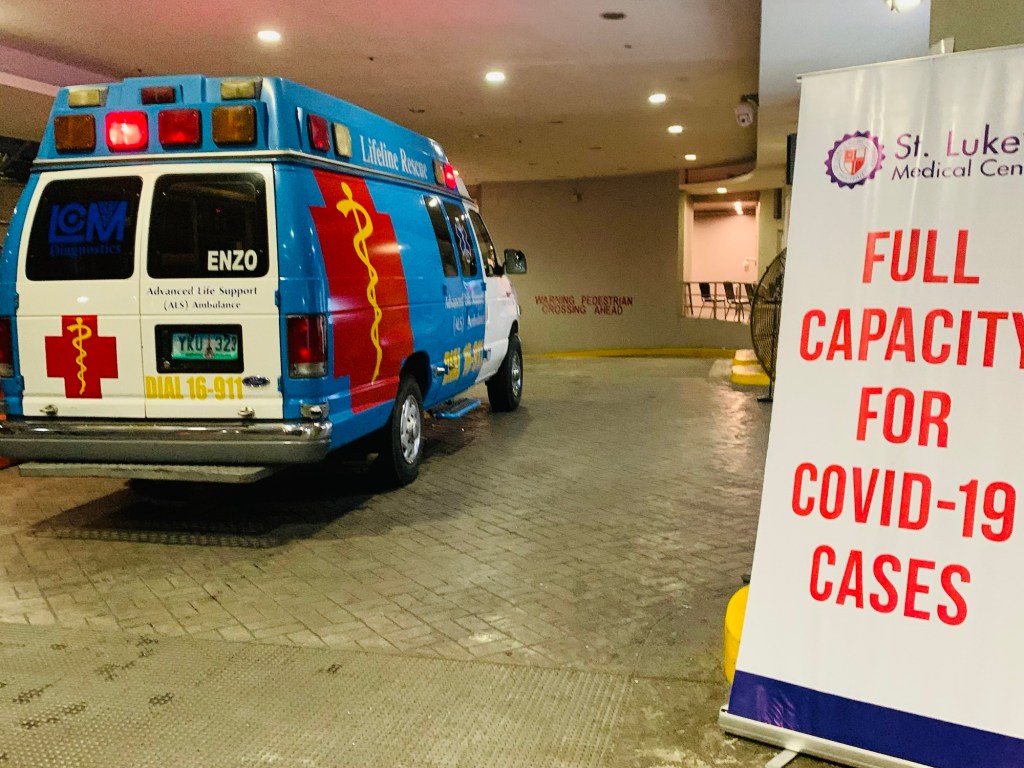
This understanding is not abstract for me. I have lived it. In August 2021, I was hospitalized with a severe case of COVID-19 during the Delta wave. My lungs were inflamed, my breath was uncertain, and for weeks I lay between the border of life and death. I remember the exhaustion, the haze of oxygen therapy, the quiet terror of not knowing what would happen next. There were moments when it felt like I might not return.
But I did.
And this was not the first time my life had been in jeopardy. My mother often told me that my birth was a critical one. I was a breech baby, born with a hip dislocation. At the time, there was no guarantee that I would grow up physically whole, let alone strong. But over time, and with care, I recovered. I learned to walk, run, and eventually grew into a healthy and fit body. What began as fragility turned into quiet strength. Even as a child, I was already living on borrowed grace.
So when I reflect on survival, it is not just about making it through a pandemic. It is about a lifetime of being held up by something beyond myself. I did not survive because I was strong. I survived because others acted. Because modern medicine existed. Because generations before me had built a world where premature death was no longer the rule.
What saved me was not just biology, but culture. Someone learned how to guide breech births safely. Someone studied respiratory care. Someone built hospitals. My survival was the result of countless acts of attention, memory, and mercy. And that is something I cannot take for granted.
I carry this awareness now in everything I do. Each step I take, each breath I draw, each thought I write feels like an answered prayer. I am not here because I earned it. I am here because I was given another chance. And that changes how I see the years ahead, not as a timeline to conquer, but as a life to offer.
The Shift From Earning to Receiving
In the first half of life, the dominant question is often, “What can I become?” We chase goals, degrees, jobs, relationships. We expand. We accumulate. We define ourselves by movement and momentum. We associate value with effort, and progress with control.
But after a close encounter with death or a brush with fragility, the question starts to shift. It becomes less about becoming and more about being. Less about what we can do, and more about what we can give.
This does not mean giving up ambition. It means allowing ambition to mature. The impulse to prove becomes the impulse to bless. Knowledge ripens into wisdom. Presence begins to matter more than performance. We realize that many of the best things we’ve received in life came not through struggle, but through being carried by something larger than ourselves.
This shift is not a defeat. It is a flowering.
Culture as a Lifeline
When you survive a medical crisis or a precarious birth, what saved you was not instinct. It was the accumulated knowledge of others. Someone figured out how to turn a breech baby. Someone developed antiviral medications. Someone standardized the procedures in the emergency ward. All of this came not from nature’s design, but from human will, compassion, and memory.
In this sense, we are not only biological beings. We are cultural ones. We live because others remembered what worked and passed it down. We are kept alive by stories, skills, and systems. Without these, many of us would not have made it to adulthood, let alone midlife.
This does not diminish the value of biology. It reminds us that biology alone was never enough. Civilization is not a luxury. It is the context that gives many of us a second chance. And this second chance is where deeper meaning begins to emerge.
From Knowledge to Wisdom
Something else changes after 38. The desire to acquire knowledge begins to feel different. We still enjoy learning, but there is a growing hunger not just to know, but to understand. Facts start to fade. Patterns begin to emerge. Information gives way to insight.
We no longer read only to memorize. We read to reflect. We write not just to publish or persuade, but to witness and offer. Writing becomes an act of gratitude, not a ladder for status. It feels less like career advancement and more like a form of prayer.
In this light, writing itself becomes sacrificial. Not in the sense of pain or loss, but in the sense of offering something up. We write to return the gift. To speak back to the world that kept us alive. To share what we have seen from the edge, with those who have not yet stood there.
This is the work of wisdom. It is quieter than achievement. It asks for depth, not just reach.
Living for Others
There is a beauty in the fact that we live longer than we were biologically required to. Evolution needed us to reproduce and survive long enough to raise our children. But culture, that deeper force, gave us the years beyond.
Why?
One possibility is that these later years are not meant for the self, but for others. Grandparents do not pass on genes. They pass on stories. Elders do not shape the tribe by force. They do it by presence, by perspective. They hold space. They calm fear. They remember what was forgotten. And in that remembering, they preserve the future.
To live past 38 is to enter the season of giving not as charity, but as calling. The reward is not in being seen as important. It is in becoming trustworthy. Not in building empires, but in cultivating souls. Your own, and those around you.
This is not lesser work. It is the heart of human flourishing.
The Body Reminds Us
Of course, the body reminds us every day that we are no longer twenty-five. Joints ache. Muscles recover more slowly. Eyes strain. But these are not punishments. They are invitations to live with greater care.
We begin to learn restraint. Not everything needs to be lifted. Not every race must be run. We move more slowly, but with more intention. We recognize the difference between force and power. Between noise and presence.
And sometimes, paradoxically, we grow stronger. Not in brute strength, but in resilience, clarity, and peace. We know what matters. We are not scattered. We are not desperate. We do not cling as tightly to things that once defined us.
The body ages, but the spirit deepens.
Being Lived
At some point, another change takes place. We no longer feel as though we are simply living. We begin to feel that we are being lived. Life is no longer something we must extract meaning from. It becomes something that moves through us.
This is not passivity. It is cooperation. We are not the source of life, but its vessel. We do not control time. We do not command healing. But we can receive. We can carry. We can honor.
To feel that we are being lived is to sense a rhythm beyond the calendar. A guidance beyond the checklist. It is the feeling that our breath is not ours alone. That we exist not by right, but by mercy. And that this mercy is meant to be shared.
The Writing That Remains
As we step deeper into this second life, we often return to writing. Not for recognition. Not even always for clarity. But for connection. For offering. For truth-telling.
We write because something in us remembers what it was like to not be able to. We write because we are still here. And to be here, against the odds, is a truth worth tracing on the page.
The act of writing becomes a form of gratitude. Each sentence is a return. Each page is a quiet thank you. Not just to the doctors or the ancestors, but to life itself. To the mystery that held us when we could not hold ourselves.
This is no longer thesis writing. This is testament. Not to brilliance, but to being.
A Life Worth Returning
To survive is not to triumph. It is to return. And to return well is to live differently. With less fear. With more love. With a steady recognition that we are temporary, but not meaningless.
A life lived after the threshold is not one of decline, but of deepening. We are not here to chase endlessly. We are here to remember, to give, to teach, and to bless. Life becomes less about legacy, and more about presence.
Not everyone gets this second life. And not everyone recognizes when it begins. But for those who do, there is no going back. There is only gratitude, and the quiet joy of continuing.
Not for our sake alone. But for the sake of others.
And that, perhaps, is what it means to be truly alive.
Image: A photo captured by the author
 Tom’s Blog