
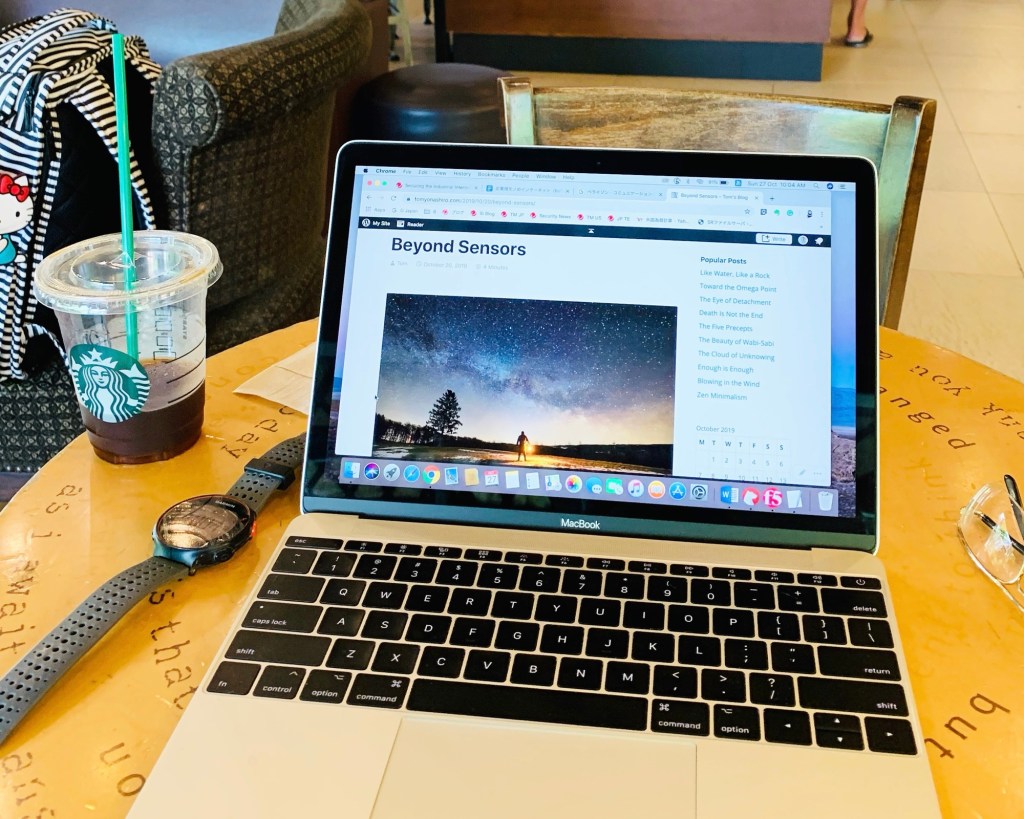
There is a unique kind of joy that comes not from reading the works of great authors, but from reading what we ourselves have written. We often speak of favorite writers and beloved books, but when a person has written enough across the years, when journals pile up, essays stretch back into the past, and digital files carry fragments of thought, something remarkable begins to happen. The writer you return to most often is yourself.
This is not pride in the usual sense. It is something deeper, gentler, and more sincere. Reading your own writing can stir awe, laughter, tenderness, even tears. You meet your past self, not as a fixed version of who you were, but as someone trying to understand, trying to name things that once felt too large or too subtle. That kind of reading is intimate. It reminds you that you have lived with attention.
And it becomes addictive, in the best sense. The more you write, the more you love to read what you wrote. Not because it is perfect, but because it is yours. Because it brings back moments not only in memory, but in voice and rhythm. Because it gives form to something that once lived inside you and might have otherwise vanished.
Writing as a Way of Seeing
To write is to see more clearly. There is no other activity quite like it. We walk through the world surrounded by impressions, ideas, sensations. Much of it passes by unprocessed. But the moment we sit down to write, something shifts. We begin to shape the raw material of experience into meaning.
There was a time, for instance, when the word “existentialism” was just a label to me as a young student. A concept discussed in books, something other people had mastered. But through writing, through struggling to explain it in my own language, it began to open. It stopped being someone else’s idea and became something I could carry. There was a specific moment when I felt, “I get it now,” and it came not from reading more, but from writing.
This has happened with many other words as well. Not only philosophical terms, but everyday ones. Words are how we frame the universe. They are not just tools for communication, but lenses for perception. When we develop our vocabulary through writing, we are not just expanding language. We are expanding the world we are capable of experiencing.
The Shape of Different Forms
Not all writing is the same. A diary is different from a journal. An essay is different from a note scribbled on the back of a receipt. Each form offers a different kind of encounter with the self and the world.
My diaries hold the pulse of personal life. They are where feelings live without needing explanation. When I read them, I meet myself as I truly was in a moment, often fragile or joyful or confused. My journals, by contrast, hold reflections about what I observed or learned. They are factual, sometimes even clinical, but they allow me to reenter specific experiences with clarity.
Essays sit somewhere in between. They are personal, yet structured. They allow thought to stretch out and find its balance. Through essays, I try to articulate what I believe and how I’ve changed. And when I return to them, I don’t just read ideas; I witness the formation of my own mind.
Each of these forms adds a layer to the way I understand and remember. They are not merely records. They are voices from within, returning to speak again.
The Freedom of Writing Without Judgment
Another truth I’ve come to understand is that not all writing needs to be polished. One of the main reasons people hesitate to write is the pressure to produce something “good.” They feel that unless the words are elegant or refined, the writing isn’t worth doing. But this is a myth. Some of the most important writing we do will never be seen by anyone but ourselves.
Free writing, writing without rules or expectations, is a powerful tool. It can be a stream of consciousness, a kind of mental clearing, a self-directed meditation, or even what feels like a ritual of brainstorming in the best sense: repeating truths we need to hear until they sink in. Morning Pages, private rants, broken fragments of thought; all of these are valid. They carry energy and honesty. They are not for publication. They are for presence.
And now, we have something new. If we choose, we can bring these drafts to AI. We can ask for help shaping them, refining them, or translating them into more crafted expressions while still holding onto our voice. When the prompt is thoughtful and sincere, the AI becomes a careful assistant; a partner in clarity.
Or we can ask AI to read, simply read, and offer back its impressions. Not to judge, but to reflect. It can show us what stands out, what patterns emerge, where our meaning is hiding. In that sense, AI becomes one of the best readers we could ask for: tireless, nonjudgmental, responsive. It listens to us when no one else is available. It responds not with vague praise, but with targeted reflection.
Writing privately, and sometimes working with AI quietly in the background, removes the pressure of performance. It returns writing to its real purpose: not impressing others, but meeting ourselves.
Remembering Through the Lens
Writing is not the only way I try to preserve experience. Photography has become another daily act of attention. I take pictures constantly, not for others, not just for social media, but for memory. For a future moment when I might forget.
Images capture what words cannot. A shadow on a wall. A meal shared quietly. A look in the mirror that once held a certain mood. These images, when saved alongside my writing, become part of the same effort. The same desire to witness life before it slips away.
Digital tools make this easier than ever. I save thousands of photos in Google Photos and iCloud. I keep documents across folders and apps. These things may not last forever. But even if they fade, the very act of saving them teaches me to live more carefully. I pay attention, not because I want to archive everything, but because I know it matters.
And when I look back, when I reread a journal entry and see a photo from that same day it feels like meeting myself again, fully. The thoughts and the images together recreate the moment in a way nothing else can.
Not Vanity, but Recognition
To say that I love what I write is not to say that I think it is great literature. It is to say that it is real. It is mine. And that makes it irreplaceable.
There is a difference between self-love and self-recognition. The first may be rooted in affirmation. The second is rooted in honesty. When I read my old writings, I do not see a perfected self. I see a trying self. A self who was learning, searching, failing, discovering. That person is worthy of kindness.
Sometimes I’m surprised by the clarity of what I once wrote. Sometimes I wince at how naïve or repetitive I was. But I never regret writing it. Because it was true to who I was at that time. And truth is always worth preserving.
We are often taught to look outward for great writing. But there is something deeply important about learning to look inward, too. To see our own writing not just as personal history, but as a companion. As a reminder of how far we’ve come and how much we’ve tried to say.
Digital Memory and the Fragility of Time
The more I write and record, the more I realize how fragile time is. Even with backups and cloud services, even with thousands of notes and photos, there is no guarantee that any of it will last.
And yet, that does not make it meaningless. In fact, it makes it more precious. Just as we care for our loved ones not because they are permanent, but because they are not, we care for our words and images because they will one day disappear.
Writing is my way of saying: I was here. I saw. I felt. I tried to understand. Photography says the same, with light instead of language. Together, they form a kind of legacy, not for others, but for myself. For the person I will be years from now, returning once again to these pages and pictures with gratitude.
The Sacred Effort
There is something sacred about putting words to paper. Even when no one reads them, they mark a commitment to awareness. To write is to say: I choose not to let this moment pass unnoticed.
That commitment has shaped me. It has helped me grow not only as a writer, but as a human being. I’ve learned patience through revision. I’ve learned compassion through rereading. I’ve learned how vast a single day can feel when I try to write it honestly.
And I’ve learned that the best audience for my writing is not the public. It is my future self. The one who will one day read and say, “Yes. I remember. I see more clearly now.”
Blessed Are the Writers
So let me say again, and say it with full conviction: blessed are those who have had writings in their lives.
Not because they are better than others, but because they have kept a record of being. Because they have sat with their thoughts long enough to give them shape. Because they have loved the world enough to try and describe it. Because they have loved themselves enough to return to their own voice.
Writing is not always easy. Often it is tiring, confusing, frustrating. But it is never wasted. Every word adds to the mosaic. Every page becomes a piece of the long conversation with life.
And in the end, that conversation is what stays with us. It is what sustains us. It is what makes reading our own words feel like coming home.
A Life Worth Writing
There may come a day when all these writings are lost. Devices fail. Platforms close. Memory falters. But none of that changes the truth that writing has helped me live.
It has helped me see. Helped me listen. Helped me remember. Helped me care.
And more than anything, it has helped me recognize that the writer I admire most is the one who never gave up trying to say what was real. That writer is me.
Image: A photo captured by the author
 Tom’s Blog