
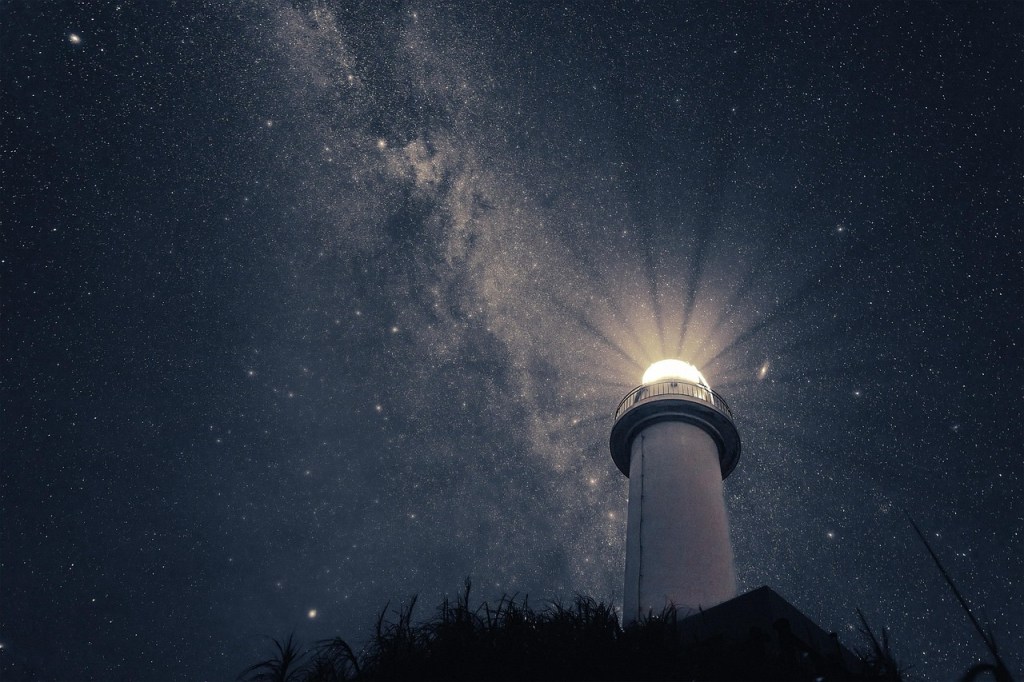
The universe is vast beyond comprehension. Trillions of stars. Countless planets. A scale so large that even our best telescopes can only peer into a fraction of what exists. And yet, in all this immensity, one question continues to haunt scientists, philosophers, and ordinary people alike: Where is everyone?
This question, often referred to as the Fermi Paradox, strikes at the heart of cosmic curiosity. If intelligent life evolved here on Earth, why not elsewhere? If even a small fraction of habitable planets developed life, and if even a smaller fraction of those developed technology, we should have seen signs of them by now. Radio signals. Spacecraft. Artifacts. Anything. But so far, there has been nothing but silence.
Over the years, a wide range of explanations have been proposed. Some argue that intelligent life is incredibly rare, perhaps unique to Earth. Others suggest that civilizations destroy themselves before they can explore beyond their stars. Some believe interstellar travel may be impossible due to the fundamental laws of physics. Still others imagine that we are being watched, but not contacted, like animals in a cosmic sanctuary. All of these ideas attempt to answer the same unsettling mystery. But maybe the real mystery is not about aliens. Maybe it is about us.
The Only Ones Who Ask
Among all known species, we are the only ones who look up at the night sky and wonder. Not just out of fear or instinct, but with an awareness that we are small, and the universe is impossibly large. We build telescopes and equations, myths and maps, all in an effort to grasp our place in something far bigger than ourselves.
What sets human beings apart is not only intelligence, but self-awareness. We are able to reflect on our own existence, to imagine futures we will never see, to ask questions without clear answers. We do not simply survive. We speculate, we project, we search. It is not enough to live. We want to understand why we live.
This capacity allows us to entertain the very idea of alien life, and not just as monsters or strangers, but as fellow minds. More than that, we can imagine the possibility of something beyond even life itself. Something transcendent. A source or witness. A presence that sees us, even if we do not see it.
The Feeling of Being Seen
To be conscious is to feel exposed. Not just to our surroundings, but to something larger. It is not uncommon for people, even in solitude, to feel watched. Not in a paranoid sense, but in a way that brings both awe and humility. This sensation has been described in countless religious and philosophical traditions as the feeling of being seen by God, or by something beyond comprehension.
In Christian mysticism, this is often called the loving gaze. To be known fully, without disguise or defense. In Zen Buddhism, it may appear as the quiet awareness into which the self dissolves. In philosophy, thinkers like Heidegger spoke of human existence as a condition of openness, not closed systems. We are not sealed off. We are porous to being itself.
This sense of being seen is not merely a side effect of human psychology. It is a clue. A hint that consciousness may not be entirely self-contained. That perhaps it is relational by nature. To know oneself might require being known. And in that act, something else begins to stir.
The Universe Looking Back
If consciousness is not just isolated awareness, but the capacity to reflect, then something remarkable happens. We begin to consider the possibility that as we look out into the universe, the universe might, in some form, be looking back. Not necessarily as a bearded god or a fleet of alien spacecraft, but as an unfolding awareness within the very fabric of existence.
Carl Sagan once said that we are a way for the cosmos to know itself. This was not poetic exaggeration. It was a profound observation about the nature of self-conscious life. When we think about the universe, the universe is, in a sense, thinking about itself through us.
Teilhard de Chardin, a Jesuit paleontologist and mystic, proposed that evolution was moving toward greater complexity and awareness. He imagined a final point of convergence, not just of biology, but of mind and spirit. A kind of divine self-recognition. Others, like Alan Watts, described individual consciousness as the universe peeking through countless eyes. In this view, we are not separate observers. We are moments in a cosmic dialogue.
If this is even partly true, then the silence of the stars becomes something very different. Not an absence of others, but the waiting stillness of something profound. Not a lack of communication, but the background presence of an awareness that does not speak in words or signals.
Maturity Before Contact
Among the various theories that explain the absence of contact with other civilizations, one has always stood out for its quiet provocation. The Zoo Hypothesis suggests that advanced civilizations may be watching us but choose not to interfere. The reasons for this could be practical, ethical, or even spiritual.
Perhaps they are waiting. Not for us to invent faster spacecraft, but for us to grow in other ways. To become more peaceful, more united, more reflective. To ask not only how to conquer the stars, but why we should. This would mean that contact is not a reward for intelligence alone, but for something deeper. For maturity. For wisdom.
It is possible that true interstellar dialogue begins not with engines, but with insight. Not with signals sent across light-years, but with a shared recognition of being. A kind of cosmic resonance between minds that have faced their own reflection and found themselves capable of more than survival.
If so, then we are not merely being tested in our scientific ability, but in our spiritual readiness. The first requirement for contact may be the ability to listen, not just outward, but inward. To hear the quiet within the silence.
The Sacred Solitude
If we are alone in the universe, even for a time, it is not a punishment. It is a kind of solitude that carries responsibility. We are, perhaps, the first to awaken. The first to look back across the void and ask who else is watching.
Solitude is often feared, but in the lives of saints, sages, and artists, it has always been the place where transformation begins. Before Moses received the commandments, he wandered in the desert. Before the Buddha taught, he sat beneath the tree in silence. Before any masterpiece is made, there is a quiet room and a blank page.
The silence of the stars may be like that. A blank page on which we are meant to write something new. Not a message to others, but a way of becoming something others would want to hear from. A civilization worth meeting. A mind worth sharing the cosmos with.
In this sense, the paradox is not a failure of science, but an invitation to soul-making. The long silence is not a void, but a space held open for us to become fully human.
Seen and Seeing
When we gaze at the stars, we do not just look outward. We also see ourselves. The questions we ask about the universe are always, in some way, questions about ourselves. Are we alone? Are we special? Are we ready to be known?
The feeling of being seen may be the universe’s first answer. Not through messages etched in radio waves, but through the awakening of our own awareness. Through the strange, unshakable intuition that something knows us, even when we feel most isolated.
This is not a claim about theology or science alone. It is a gesture. A possibility. That perhaps the deepest intelligence in the universe is not the one we discover, but the one we become. And in that becoming, we may find that we are not alone after all.
Not because someone answers our call. But because the moment we knew to ask, something had already been listening.
Image by Kanenori
 Tom’s Blog