
There is a quiet anxiety that many people feel when standing in front of a vast library or opening a new digital archive. It is the sense of being dwarfed by the endlessness of knowledge. Shelf after shelf, tab after tab, article after article; each one beckoning, each one offering something essential, something worth knowing. The mind asks, where do I begin? And deeper still, a quieter fear surfaces: I will never read it all.
This reaction is common, and it makes sense given how most of us have been taught to relate to knowledge. We were trained to move linearly, reading word by word, line by line, slowly accumulating meaning. Reading was not just a task, it was an ethic. To rush was to disrespect the content. To summarize was to lose its soul. The value of learning was often equated with depth and effort, and both were measured by time and attention to the finest detail.
But this idea of knowledge, while deeply rooted in tradition, may also be subtly misleading. The anxiety we feel in front of a massive archive or a limitless internet might not be the result of laziness or lack of discipline. It could be the effect of seeing knowledge through a false lens, as something static, something to be conquered piece by piece. In reality, knowledge does not sit still. It changes, grows, folds into itself, branches outward. It is alive, and like many living things, it moves in patterns. The question is not how to read everything, but how to see the shape of what we are engaging with.
Knowledge as Fractal
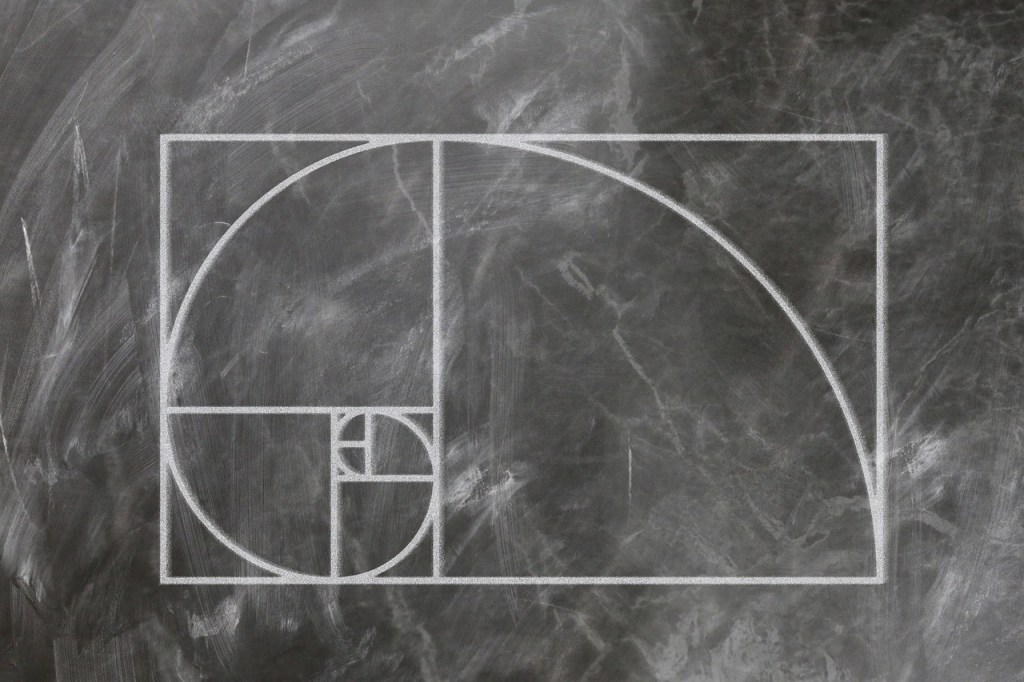
One way to better understand this living quality of knowledge is to think of it as fractal. A fractal is a pattern that repeats itself across different scales. Whether you zoom in or zoom out, the structure carries a similar rhythm. You see this in coastlines, tree branches, lightning bolts, and even the veins of leaves. Each part reflects the whole, not through uniformity, but through resemblance and recursion.
Knowledge behaves in a similar way. At the smallest level, a sentence can carry the tone or worldview of an entire philosophy. A paragraph might reveal the structure of a discipline. A book might carry the intellectual DNA of a generation. And across many books, many thinkers, patterns start to emerge again; questions that reappear, metaphors that echo, tensions that persist. If we only stick to one level of analysis say, reading each book thoroughly from start to finish, we may never glimpse these larger structures.
This is not to say that careful, close reading has lost its value. Rather, it means that close reading is only one form of attention. In a fractal context, every level matters. Each summary, each article, each dialogue, even a short note, can carry resonance with much larger structures. We tend to think of summaries as weak imitations, but in reality, they are simply slices of the same fractal form. They are expressions of knowledge at a different scale. What matters is not the length of what we read, but the shape we begin to see through it.
When we shift our orientation in this way, the burden of “not reading enough” starts to fade. The point is no longer to accumulate, but to recognize. To trace patterns. To sense how ideas interlock, reflect, and transform across time and context. Knowledge becomes less like a mountain and more like a constellation, where meaning comes not just from each star, but from the lines we draw between them.
The Role of AI: Partner in Perception and Scale-Shifting
In the age of AI, something profound is happening to how we relate to knowledge. Artificial intelligence is not just speeding up access or shortening reading times. It is offering a new way to interact with the fractal nature of knowledge itself. AI lets us shift between scales more freely than ever before. It helps us see the forest and the trees, and sometimes, even the weather patterns moving across the entire forest.
For instance, a single AI-generated summary might capture the key claims of twenty books on the philosophy of science. But more than that, it can compare, contrast, and reframe those claims in seconds, highlighting overlaps, tensions, and blind spots. It can generate follow-up questions that cut through disciplinary jargon. It can trace how a concept evolved over centuries, or how it appears in different fields. In this way, AI becomes more than a tool for efficiency. It becomes a guide through scale.
This capacity changes what it means to think. We are no longer confined to the slow trench of sentence-by-sentence accumulation. We can rise above the page and begin to sense the movements of ideas across time and space. We can jump from a summary to a footnote, from a metaphor to its historical roots, from a theme to its contemporary implications. Thought becomes less linear, more cartographic. We are mapping knowledge, not climbing it.
Of course, this does not mean everything becomes superficial. What AI offers is not a shortcut, but a shift in perspective. It invites us to think in multiple directions at once, to explore ideas not just for their internal precision but for their structural connections. The thinker in the AI age is not just a reader, but a pattern-seeker, a synthesizer, a co-observer with machines that now speak in the rhythms of thought.
The False Romance of Depth and the Ethics of Attention
One of the most common criticisms of this new way of engaging with knowledge is that it lacks depth. Summaries, dialogues, and AI syntheses are often seen as thin or shallow; fast food for the mind, unworthy of serious attention. This critique usually comes from a noble place. After all, close reading is where nuance, poetry, and subtlety often reside. The slow work of interpretation can reveal truths that no machine can simulate.
Yet, we must be careful not to romanticize a particular mode of knowing. The idea that slow, sentence-based reading is the only authentic way to engage with knowledge is itself a cultural construct. It comes from a time when books were rare and education was elite. In many ways, it is a discipline born of scarcity. Today, we face the opposite problem. We are flooded with information, and the ethics of attention must adapt.
Authentic attention does not depend on slowness. It depends on presence. It depends on the intention to see clearly, to question sincerely, and to listen for patterns beyond the surface. A summary, if read well, can spark more insight than a book read passively. A dialogue, if approached with curiosity, can open more doors than a chapter skimmed in haste. The question is not how much time we spend, but how deeply we sense the rhythm of what we are engaging.
We need to let go of the false binary between depth and scale. In a fractal structure, each part contains something of the whole. A small insight can open into a wide field. A brief exchange can carry a universe. The goal is not to defend one scale against another, but to move between them with sensitivity and grace.
Toward a New Literacy: Thinking in Fractal Time
As AI continues to reshape our relationship with information, we are being invited into a new form of literacy. This is not just about speed or scope. It is about learning to think in a different rhythm. Traditional literacy focused on decoding and comprehension. This new literacy is about synthesis, perspective, and resonance. It asks us not just to understand, but to observe how understanding itself unfolds across layers.
To think in fractal time means learning to shift between scales without losing coherence. It means treating a summary not as a shortcut but as a lens. It means treating conversation with AI not as a gimmick, but as a space where patterns can emerge. It means accepting that knowledge is never finished, always recursive, always on the move.
This kind of thinking has consequences. It can reshape how we teach, how we research, how we write. It can reshape how we feel about not knowing everything. Instead of feeling behind, we can begin to feel connected to a living network of thoughts, voices, and histories. We become not masters of knowledge, but participants in its unfolding.
AI does not replace the soul of thinking. It expands its reach. It helps us see the echo of one idea in another, the repetition of a theme across eras, the evolution of a question from silence to speech. This is not a loss of depth. It is a change in dimension. It is a movement from absorption to resonance.
The Quiet Freedom of Letting Go
Perhaps the most beautiful part of this new perspective is that it gives us permission to let go. We do not need to read everything. We do not need to memorize every detail. We are no longer burdened with the illusion of totality. Instead, we can return to the joy of curiosity. We can follow trails, notice shapes, listen for echoes. We can learn not by conquering, but by tuning in.
Knowledge, seen in this way, is not a pile of content but a landscape of relationships. And like any living landscape, it changes with each season, each step, each glance. AI, if we use it wisely, can help us see these changes. It can help us walk through this landscape with new eyes.
In this moment, we are more than just readers. We are witnesses to a shift in the very texture of knowledge. It is no longer just what we know, but how we relate to knowing that is being transformed. And in that shift, there is possibility. There is grace. There is, perhaps, a new kind of wisdom.
Image by Gerd Altmann
 Tom’s Blog