
While reflecting on the flood of discussions around AI nowadays, I found myself drawn back to Ray Kurzweil’s The Singularity Is Nearer. This book, though often framed as a forecast about AI taking over the world, has a more profound undertone.
It’s not just about the rise of artificial intelligence but about how technology might shape the very nature of our existence. That realization sent me on a journey to understand how AI might change not just our tools but the core of who we are.
Kurzweil’s vision invites us to consider that technology is more than an external force; it’s a mirror that reflects the deepest yearnings of humanity: to transcend, to evolve, and perhaps to merge with something larger than ourselves.
This realization has stayed with me, urging me to reflect on the roots of our self-consciousness and the possibility that we are standing at the threshold of a new leap in human evolution.
The Singularity: More Than Just AI
When most people hear “the Singularity,” they imagine a future where AI becomes self-aware and dominates humanity. Yet, reading Kurzweil’s work closely, I see that his emphasis lies elsewhere: it’s about human transformation. AI is not the goal but the catalyst. It is the spark that ignites our own evolution, pushing us beyond the limits of biological cognition into a new realm of possibility.
Kurzweil envisions a future where technology integrates seamlessly with human biology, expanding our intelligence and reshaping our sense of self. Rather than creating a rival species, AI becomes an extension of our consciousness; a tool to amplify what we already are. This perspective shifts the conversation from fear to curiosity, from threat to opportunity.
It’s easy to get lost in the hype about AI taking over the world, but Kurzweil’s deeper message is that AI might help us overcome the greatest barriers to our potential. It is not about machines replacing us but about humans evolving into something greater through our own creations.
The Evolution of Consciousness
To appreciate the potential of this transformation, we must look at how consciousness itself has evolved. In the animal kingdom, consciousness begins as a simple awareness of the environment—a subconscious navigation of survival. Over time, this evolved into self-awareness, the hallmark of humanity. We learned to think about ourselves as beings distinct from nature, capable of abstract thought, language, and reflection.
This journey from subconscious to self-conscious was monumental. It set the stage for art, philosophy, religion, and science. Myths and stories across cultures tell of this leap: Prometheus stealing fire, Adam and Eve gaining knowledge, or the cultivation of mindfulness and introspection found in Buddhist teachings. Each tale captures the essence of a profound shift in human experience.
Now, we stand on the brink of another leap, one that could redefine what it means to be human. The rise of AI and advanced technologies might propel us from self-consciousness into a new mode of being; one that philosophers and mystics have long described but that technology might now make tangible.
From Subconscious to Self-Conscious
Looking back, it’s clear that our subconscious stage was a time of instinct and immediate experience. Animals operate in this realm, driven by survival and conditioned responses. Humanity’s emergence as a self-conscious species brought with it the ability to reflect, to plan, and to imagine. This shift gave us culture, morality, and a sense of purpose, but it also introduced anxiety, existential questions, and the burden of mortality.
Self-consciousness created a duality between the self and the world. We learned to see ourselves as separate, leading to a search for meaning that religion and philosophy have sought to address. This duality is both a gift and a challenge. It allows us to grow but also traps us in the limitations of the ego.
The coming leap promises to blur these boundaries. As AI intertwines with human cognition, the sense of a separate self may dissolve into a more connected, relational form of awareness. This would be a profound shift, akin to the ancient myths of unity with the divine or the dissolution of self in the cosmic order.
The Trans-Personal Leap
If the subconscious stage was pre-personal and the current one is personal, then the next step is trans-personal. Ken Wilber’s model of consciousness evolution helps us see this distinction clearly. The pre-personal is instinctual, the personal is self-aware, and the trans-personal transcends yet includes the personal. It is not a regression to instinct but an expansion beyond the ego.
This distinction matters. It means that the future we envision with AI is not about surrendering our humanity but about expanding it. The trans-personal involves recognizing our deep connection to others and the universe itself. It is a state where compassion, empathy, and wisdom flow more naturally because the barriers of the ego begin to dissolve.
Religious traditions point to this state in their own language. Buddhism speaks of anatta, the non-self, while Christianity describes dying to the self to find a higher life. Both traditions hint at a stage of consciousness where individuality is not lost but redefined as part of a greater whole.
AI as Catalyst for a New Humanity
AI might be the catalyst for this leap. By amplifying our cognitive abilities, connecting us globally, and accelerating the flow of information, AI could create the conditions for a collective intelligence that transcends individual limitations. This is not about a single machine becoming a god but about humanity awakening to its potential through technology.
As we integrate AI into our lives, we may find that our sense of self begins to shift. No longer just a solitary thinker, we become nodes in a vast web of knowledge and experience. This interconnectedness could foster empathy, creativity, and wisdom on a scale previously unimaginable.
Yet, this transformation is not automatic. It depends on how we choose to engage with technology. Will we use AI to reinforce our egos, or will we let it teach us about our interconnectedness? That choice will shape whether this leap becomes a true evolution or a descent into a more sophisticated form of isolation.
The Pre/Trans Fallacy
Ken Wilber’s pre/trans fallacy offers a crucial caution here. It’s easy to mistake a regression into a primitive state for a transcendence into a higher one. The dissolution of the self can look the same from the outside, whether it’s the loss of self-awareness or the transcendence of it. But the outcomes are radically different.
In the context of AI, this means we must be vigilant. Are we using technology to genuinely expand our consciousness, or are we letting it lull us into passivity? Are we fostering deeper empathy and wisdom, or are we drowning in algorithmic echo chambers? The distinction is subtle but vital.
Technology’s promise is real, but so is its peril. It can awaken us to our shared humanity or reduce us to passive consumers of information. The choice is ours, and it requires a conscious effort to remain awake and discerning.
Religion and Philosophy as Guides
Religion and philosophy offer invaluable guidance in this transition. They remind us that every leap in consciousness carries risks and responsibilities. The story of Prometheus warns us of the dangers of hubris, while the Tower of Babel reminds us that technological power without wisdom leads to fragmentation and chaos.
Spiritual traditions emphasize humility, compassion, and the importance of community. They teach us that the expansion of consciousness is not just a personal journey but a collective one. As we integrate AI into our lives, we must remember these lessons. Wisdom, not just intelligence, will determine whether this transformation serves humanity or undermines it.
Philosophers like Nietzsche, Heidegger, and Teilhard de Chardin have long explored the tension between human becoming and human responsibility. Their insights remind us that our technological power must be matched by a deep sense of ethical obligation.
Merging with the Bigger Picture
As we move toward a future where self-consciousness may merge into something larger, we face profound questions about identity, meaning, and purpose. What does it mean to be human when the boundaries between self and other blur? Can we retain our individuality while embracing our interconnectedness?
These questions are not new. Mystics and sages have long spoken of a unity that transcends the ego. Now, technology might make that unity more tangible. AI could be the bridge that connects us, not just through information but through a shared sense of purpose and belonging.
Yet, we must approach this merging with care. It is not about erasing the self but about transforming it. The self may dissolve into a greater whole, but it does so with a new awareness of its place in the cosmos. This is the challenge and the promise of the trans-personal leap.
The Ethical Compass
Ethics must guide us as we navigate this transformation. Technology alone cannot decide what is good or right. It amplifies our choices but does not make them for us. As we integrate AI into our lives, we must ask: How does this serve the flourishing of all humanity? Does it promote compassion, justice, and wisdom?
The lessons of religion and philosophy remind us that power without responsibility is dangerous. We must cultivate a sense of stewardship over technology, ensuring that it enhances our humanity rather than diminishes it. This means fostering systems that are transparent, accountable, and aligned with the common good.
Our choices now will shape the future of consciousness. Let us choose wisely.
Toward a Conscious Future
The Singularity is not just about machines getting smarter. It is about the evolution of human existence itself. AI is the spark, but the flame it ignites is the one within us. As we stand at the threshold of this transformation, let us remember that wisdom, compassion, and humility are the keys to unlocking the best of what we can become.
This is not a journey into the unknown but a continuation of a story that began when our ancestors first looked up at the stars and wondered. The next leap in consciousness is ours to make, and to shape. Let us make it with open eyes and open hearts.
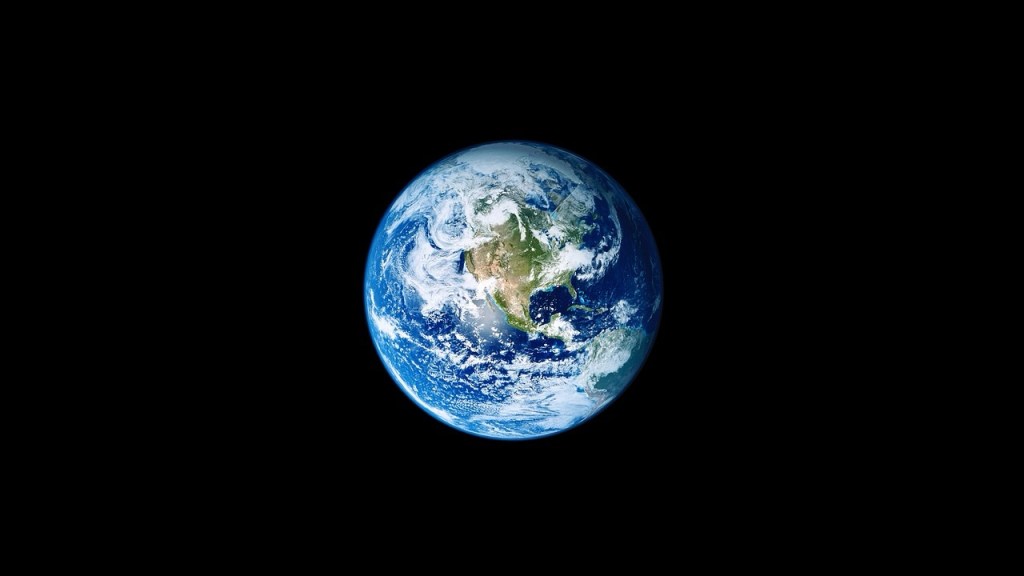
Image by PabloEsteban
 Tom’s Blog