
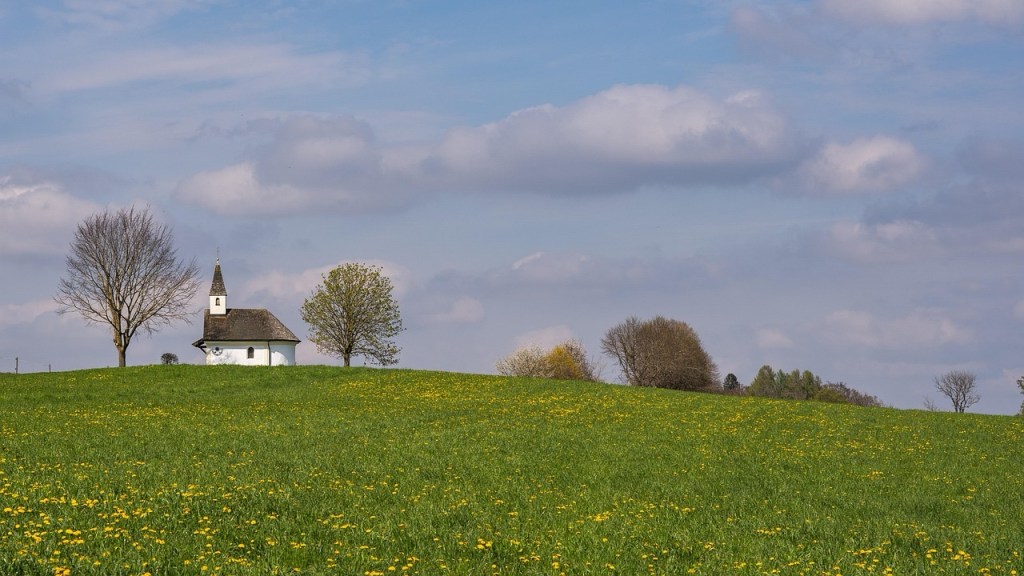
One of the TV series that lingers in my childhood memories is Little House on the Prairie. I remember being captivated by the warmth of the Ingalls family and the simplicity of their frontier life. The way they built their home from scratch, shared meals by the hearth, and faced each new day with quiet courage always left a lasting impression on me.
Back then, I only saw a heartwarming story of family togetherness and adventure. But recently, I came across a discussion that changed the way I see it. Someone suggested that the series embodies the very inception of American values; a powerful yet sometimes contradictory mix of self-reliance, ambition, community, and the push for new frontiers. That insight stayed with me.
It made me realize that what looked like a simple tale of homesteading was also a reflection of a larger cultural narrative. The idea that you could build a life from scratch, free from the limitations of the old world, is at the heart of the American story. Yet that same impulse also carries an inherent tension: between community and individualism, tradition and innovation.
The Roots of Self-Reliance
The concept of self-reliance runs deep in American history. When the Mayflower set sail in 1620, its passengers, the Pilgrims, were driven by a desire to shape their own destiny. They sought to build a community grounded in their beliefs, away from the constraints of the Church of England and the social hierarchies of the old world.
Ralph Waldo Emerson captured this spirit in his essay “Self-Reliance,” published in 1841. He argued that true independence comes from trusting one’s own instincts and resisting the pressure to conform. His words echoed across generations, inspiring countless Americans to believe that each person carries within them the power to determine their own fate.
This ethos found expression in the homesteaders and pioneers who headed west, in the entrepreneurs who started businesses from scratch, and in the inventors and dreamers who turned ideas into realities. It’s a mindset that both nurtures communities and, at times, pulls them apart in the pursuit of individual dreams.
Amish Settlements: Tradition and Community
In places like Lancaster County, Pennsylvania, Amish communities offer a different vision of self-reliance; one rooted in tradition and mutual support. These settlements stand apart from the fast-paced modern world, favoring simplicity and humility over technological progress.
Their daily lives revolve around manual labor, craftsmanship, and close family ties. Horse-drawn buggies and hand-built barns remind visitors that self-sufficiency does not always mean innovation. For the Amish, self-reliance is about preserving a way of life handed down through generations, trusting in the wisdom of the community.
Yet even in their refusal to embrace modern conveniences, the Amish embody the same independent spirit that motivated the Ingalls family to settle on the prairie. Their resistance to change is not mere stubbornness; it is a deliberate choice to build a life on their own terms, in a world that constantly beckons them to conform.
Las Vegas: Reinvention and Individualism
If Amish settlements represent tradition, Las Vegas stands as the ultimate symbol of reinvention. In the middle of the Nevada desert, the city rises like a neon oasis of possibility, where fortunes are made overnight and identities are reshaped in the glare of casino lights.
Las Vegas embodies a different kind of self-reliance; one that prizes risk, freedom, and the power to start over. Here, the past can be shed as easily as a slot machine receipt, and the future is limited only by the size of one’s dreams.
This culture of personal reinvention mirrors the same pioneering spirit that once sent wagons westward across the prairie. It’s a testament to the American belief that anyone, regardless of their origins, can reinvent themselves and achieve success through determination and grit.
Isolation: The American Landscape of Separation
Beyond the differences in values, what unites places like Little House on the Prairie, Las Vegas, and Amish settlements is their physical and symbolic isolation. The Ingalls family lived on a homestead surrounded by open prairie, miles away from the nearest neighbor. The Amish choose to live in settlements intentionally separate from the rhythms of the modern world. Las Vegas itself is a glittering island in the desert, cut off from other cities by vast stretches of emptiness.
In the United States, this sense of isolation is not just geographical but cultural. Unlike Europe or parts of Asia, where cities and villages often flow into one another, American cities are often surrounded by expanses of “nothing,” a patchwork of highways, gas stations, and fast-food outlets connecting isolated hubs. Between one city and the next, there may be miles of uninhabited land, a testament to the frontier spirit that left its mark on the landscape.
This physical separation reflects a deeper cultural pattern: a belief in individual independence and self-reliance. Even today, Americans value the idea of the “single-family home” with its own yard and fences; symbols of privacy and personal space. From the mansion behind high walls to the high-tech smart home that can function like a fortress, Americans often seek both security and autonomy.
Supply Chains and the Isolated Entity
This isolation raises questions about how such communities sustain themselves. Historically, American settlements relied on supply chains that connected them to markets and resources. The Ingalls family depended on trade with town merchants for essentials they couldn’t produce themselves. Las Vegas, though a city of self-invention, depends on water piped in from miles away and a complex supply network that feeds its lights and casinos.
Even the Amish, despite their self-sufficiency, rely on surrounding communities for certain materials and services. Modern American life is deeply dependent on supply chains that bridge these isolated pockets of habitation. Highways, railways, and air routes bring goods to even the most self-reliant homesteads, weaving a web of interdependence beneath the surface of independence.
This paradox of isolation and connection reflects America’s history of expansion and enterprise. Settlements built in isolation, whether homesteads or high-tech smart cities, still require the lifelines of commerce, culture, and cooperation. These supply chains are the hidden arteries that sustain the body of the nation.
Bridging Tradition and Innovation
The contrast between Amish communities and Las Vegas highlights the spectrum of self-reliance in America. From the shared traditions of simple living to the bold ventures of entrepreneurs in the desert, both expressions spring from the same well of independence and creativity.
This duality surfaces in many facets of American life, including the embrace of technology alongside a reverence for faith, and the tension between progressive change and conservative values. It’s a country where old and new constantly negotiate their place, where family dinners can coexist with the hum of social media.
Communities across the nation navigate this balance in their own ways, blending respect for heritage with the drive to forge ahead. This dynamic interplay shapes not only the cultural landscape but also the national character, fostering a society that values both continuity and reinvention.
The Intersection of Faith and Progress
The American journey has always wrestled with the relationship between faith and progress. The early settlers brought with them a deep religious conviction, which shaped not only their communities but also the emerging nation’s identity. Faith-based institutions provided moral frameworks, education, and social services that would help define the American experience.
At the same time, the country has been a laboratory for scientific innovation and technological breakthroughs. From the telegraph to the internet, from medical advances to space exploration, Americans have pushed the boundaries of what is possible.
Yet these two forces, faith and progress, have not always moved in harmony. Debates over issues like evolution, climate change, and reproductive rights reveal the fault lines where religious traditions and scientific inquiry meet. This tension reflects a broader ambivalence in the national psyche: the desire to honor the past while forging ahead into the unknown.
Political Polarization
The tension between tradition and innovation, community and individualism, is mirrored in American politics. The two major parties often stand as avatars of these divides, with Republicans championing conservative values and Democrats advocating for progressive change.
These political identities encompass more than just policy positions. They reflect different understandings of self-reliance, freedom, and community. One side may emphasize personal responsibility and limited government, while the other highlights social justice and collective action.
Yet within each party, there is diversity. There are conservatives who champion renewable energy and liberals who hold deep religious convictions. These internal variations remind us that the American identity is complex, shaped by a thousand different paths that sometimes cross and sometimes clash.
Living with Contradictions
Little House on the Prairie is more than a memory of my childhood; it now feels like a window into the American soul. The warmth of family dinners, the struggles to build a home, and the sense of forging a new life from scratch; these images capture the essence of self-reliance that Emerson celebrated.
Yet that same spirit also leads to the contrasts that define this country: the simplicity of Amish settlements and the neon dazzle of Las Vegas, the comfort of tradition and the thrill of reinvention. And, perhaps most strikingly, the recurring motif of isolation, physical and cultural, runs through each of these examples.
This paradox of separation and connection, of forging a home in the wilderness while depending on the wider world for support, defines the American experience. It is not a problem to be solved but a dynamic to be lived with, a reminder that even as the prairie winds blow cold, the human spirit builds, dreams, and grows.
Image by Christel
 Tom’s Blog