
We live in an age where science is often seen as the most reliable way to understand the world. Its language carries weight, its figures command authority, and its conclusions are often treated as final. From climate policy to pandemic response, science has become the guiding voice in many public debates.
At the same time, something is shifting. There is confusion, mistrust, and polarization. Many feel overwhelmed by claims that seem absolute one year and revised the next. Others are alarmed by how often scientific discourse takes on a tone of moral certainty, silencing dissent rather than fostering discussion.
The situation is even more complex when different scientists contradict each other while labeling one another as pseudoscientific. What once promised clarity now feels entangled in ideology, media, and fear.
The Ideal of Science and Its Constructive Promise
Science earned its reputation by offering a way to move beyond superstition and dogma. Rooted in observation, experimentation, and replication, it promised a method to distinguish truth from error. The great scientific revolutions, from Copernicus to Darwin, changed not only what we believed but how we came to believe anything at all.
This ideal remains powerful. Scientific dialogue, at its best, is open, self-correcting, and grounded in humility. The willingness to test, fail, revise, and try again is what sets science apart from rigid ideologies. It creates a space where disagreement is not weakness but a vital part of progress.
But ideals do not always translate into practice. Science, like any human institution, is subject to politics, funding pressures, and personal ambition. When these forces shape what is researched, published, or promoted, the boundary between science and belief begins to blur.
The Limits of Science
One of the deepest ironies of science is that the closer it gets to foundational questions about time, matter, consciousness, or the origin of the universe, the more it begins to resemble myth. Theories about the Big Bang, black holes, dark matter, and dark energy are presented with confidence, yet they remain far from provable in the way everyday physics is. These concepts offer a narrative framework more than verifiable truth.
Even in areas once thought settled, revisions emerge. Newton’s laws gave way to Einstein’s relativity, which in turn was challenged by quantum theory. Each framework explains the world up to a point, then breaks down. None is false, yet none is final.
Philosopher Immanuel Kant warned us about this long ago. He saw that human reason, when trying to grasp totality, leads to contradictions. What we call “science” is not the world as it is, but the world as it appears to minds like ours. As science stretches to explain everything, it enters the realm of antinomy, where opposite conclusions both seem valid, and certainty slips away.
Science vs. Pseudoscience, Even Among Scientists
While the distinction between science and pseudoscience is crucial, it is often messier than it seems. It is not uncommon to see scientists accuse others, equally credentialed, of being unscientific. Debates in medicine, physics, psychology, and nutrition often devolve into camps, each claiming the mantle of truth while discrediting the other.
The labeling of dissent as “pseudoscience” can sometimes be necessary, especially when dealing with dangerous misinformation. But it can also be misused to protect dominant paradigms and suppress emerging ideas. History shows that views once ridiculed as pseudoscientific were later accepted as breakthroughs. The very process that should welcome challenges often resists them most fiercely.
This isn’t just about science as method; it’s about science as culture. Peer review, funding sources, institutional affiliations, and media exposure all influence which voices are amplified. When scientific debates resemble political campaigns more than collaborative inquiry, public trust begins to erode.
Failed Forecasts and Performative Certainty
Scientific modeling is essential for planning and preparedness, but it becomes dangerous when predictions are treated as inevitable timelines. The Club of Rome’s Limits to Growth report in the 1970s warned of global collapse due to population growth and resource depletion. While its models were thoughtful and grounded in systems analysis, many of its more dire predictions did not come to pass, at least not within the expected timeframes.
Rather than prompting sustained reflection, these failed forecasts have often served to discredit future warnings. The public begins to associate scientific caution with alarmism. This is not entirely fair; models are based on assumptions, and outcomes can change with new actions. But when predictions are delivered in apocalyptic tones, they sound more like prophecy than science.
The problem lies not in raising concerns but in presenting them with theatrical certainty. When the narrative shifts from “this could happen” to “this will happen by 2030,” the line between warning and dogma fades. And when such claims are repeated without reflection, even well-intentioned science begins to sound like ideology.
The COVID-19 Pandemic and the Collapse of Epistemic Consensus
COVID-19 exposed the fragility of scientific consensus in real time. As the virus spread, public health guidelines shifted rapidly. Scientists disagreed over lockdowns, masks, treatments, and vaccine rollout strategies. Some voices were amplified; others were dismissed as irresponsible or conspiratorial, even when their critiques were nuanced and scientifically informed.
This created confusion, especially when what was once labeled misinformation later became accepted. The messaging “trust the science” rang hollow when “the science” was visibly changing. Of course, science is supposed to evolve with new data. But when governments and media used science to justify sweeping mandates, and dissent was silenced, the space for public reasoning narrowed.
What should have been a moment for collective humility became a contest for authority. The long-term damage wasn’t just to public health; it was to the credibility of science itself. People began to ask not just what is true, but who decides what is true.
Climate Change and AI
Today, climate change and artificial intelligence dominate the headlines of scientific concern. Many scientists issue urgent calls to action, warning that we may have only a few years left to avert catastrophe. These warnings are often well-founded, grounded in decades of data and careful modeling.
And yet, the tone in which they are delivered can backfire. Apocalyptic language, especially when repeated, can create fatigue, denial, or passive despair. The phrase “we have only ten years left” has been heard for decades now, and while the threat remains serious, the repetition begins to sound like background noise.
Similar dynamics are unfolding in the conversation around AI. Some experts warn that uncontrolled AI development could lead to human extinction. Others argue that these fears are exaggerated and distract from more pressing, concrete issues like surveillance, bias, and labor disruption. The debate quickly turns personal, with each side accusing the other of naivety or fear-mongering.
What’s at stake here is not just policy, but the very way science communicates with society. When scientific authority becomes a tool to shame, frighten, or dominate, it loses its ability to educate and inspire.
Science as Narrative
Science does not operate outside culture; it is part of it. Just as history is written by the victors, science is often shaped by those with institutional power. Funding agencies, academic journals, and media platforms play a major role in deciding what is researched, published, and promoted.
This does not mean that all science is corrupt or unreliable. But it does mean we must pay attention to context. Who benefits from a certain narrative? Who decides what counts as a legitimate question? These are not cynical questions. They are philosophical ones.
When science is stripped of these questions, it risks becoming scientism; a belief system that presents itself as neutral while serving particular interests. The goal is not to reject science, but to understand it as a living, human practice; complex, sometimes contradictory, and always evolving.
Toward a More Mature Understanding of Science
If we want science to continue serving society, we must approach it with maturity. This means appreciating its power without mythologizing it. It means recognizing that disagreement among scientists is not a failure, but a feature of genuine inquiry.
It also means cultivating a public culture that values discussion over declarations. Warnings about climate, pandemics, or AI are important, but they must be paired with humility, transparency, and openness to complexity. Models are tools, not prophecies. Data is not destiny.
We need not less science, but better public reasoning. The philosophical dimension of science, the recognition that all knowledge is provisional, should not be hidden in academic corners. It should be part of how we teach, write, and speak about science in everyday life.
Awe and Doubt
Science has transformed our understanding of the universe. It has lifted countless lives, expanded our knowledge, and connected the world in ways once unimaginable. But its strength lies not in certainty, but in self-correction. Its beauty is not in authority, but in wonder.
We must resist both blind faith and blind rejection. To treat science as gospel is to miss its essence. To treat it as fraud is to abandon its promise. The real challenge is to hold awe and doubt together to honor the achievements of science while never forgetting that it is a human endeavor, with all the imperfection and possibility that this implies.
In a world of rising complexity and uncertainty, this balanced view may be our best hope, not just for truth, but for wisdom.
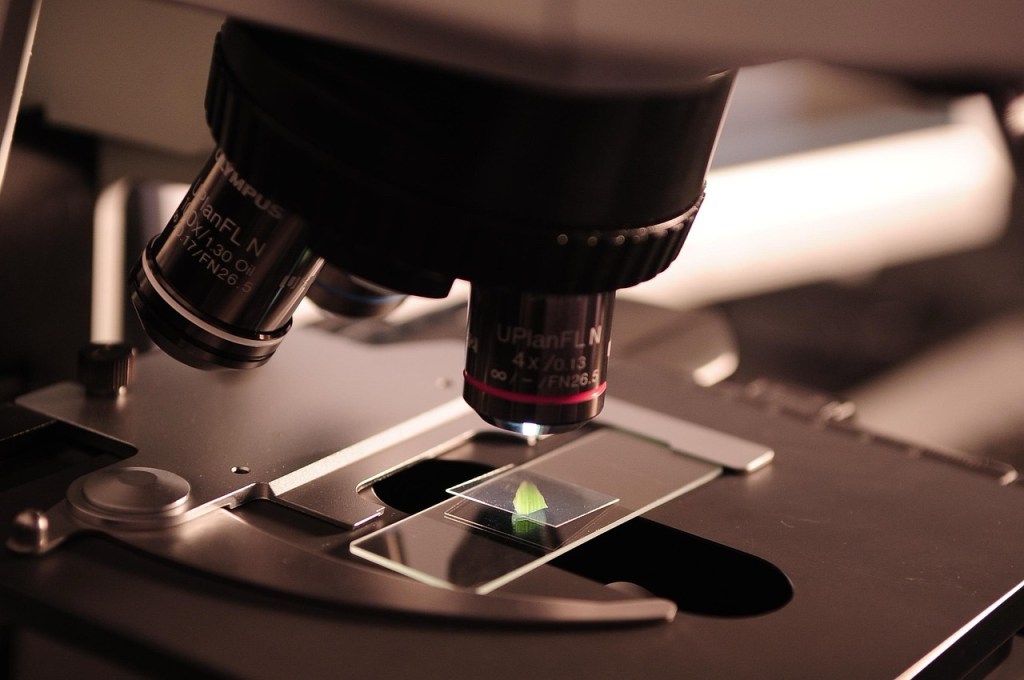
Image by felixioncool
 Tom’s Blog