
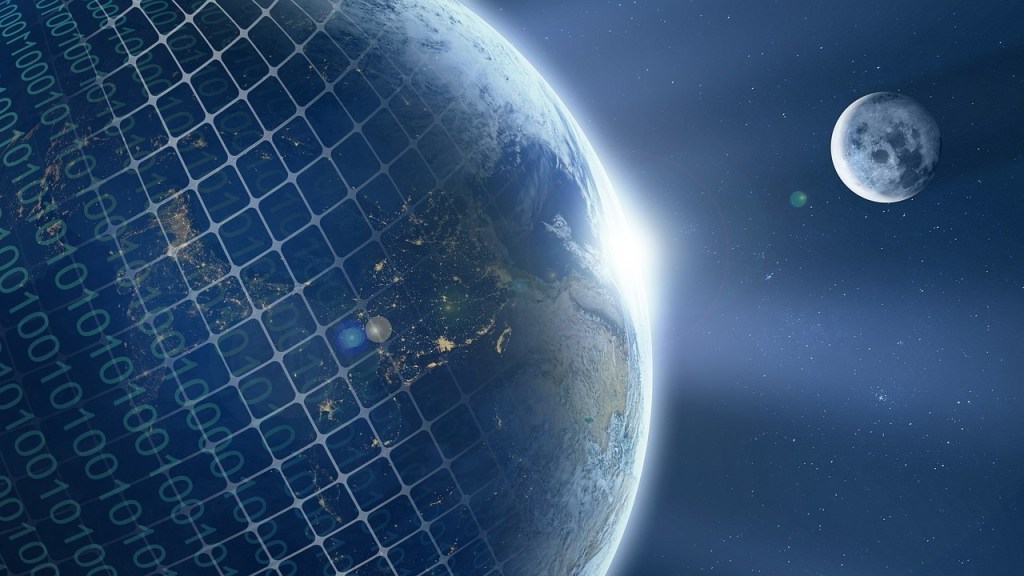
For much of modern history, science has drawn its strength from a principle introduced by Karl Popper: falsifiability. The idea was simple but powerful. A theory should be open to the possibility of being wrong. If it could not be tested and potentially refuted, it could not be called scientific.
This helped science grow by separating solid theories from speculation. Over time, the habit of critical testing became part of how we define truth. But the world is changing, and so is the nature of knowledge itself.
With the rise of artificial intelligence and the increasing use of simulation in research, we are seeing something new take shape. It is not just a faster method. It is a shift in how we know what we know. Ideas now evolve not only through experiments but through digital processes that mimic the real world with remarkable detail and speed.
This shift opens the door to a fresh way of thinking about intelligence, science, and even meaning. It begins with Popper’s three-world theory, and it continues beyond it into what might be called World 3.5.
Popper’s Three Worlds and the Engine of Falsifiability
Karl Popper suggested that reality can be understood as three overlapping domains.
The first is the physical world. This includes everything with material form; trees, rocks, molecules, planets. It is the world we inhabit with our bodies and measure through instruments.
The second is the world of experience. This is where thoughts, emotions, desires, and intentions reside. It is personal and cannot be observed from the outside.
The third is the world of objective knowledge. This world contains ideas, theories, formulas, and works of art. These things exist independently of anyone thinking about them. A scientific theory remains valid even if no one remembers it for a generation. Once created, knowledge becomes part of this third world.
Popper believed that science grows in the third world through falsifiability. We propose ideas and test them. When they fail, we refine or reject them. Over time, what survives becomes more useful and more accurate.
This gave the scientific method its power and kept speculation in check. But this model assumed a specific kind of process; slow, physical, and bound by human limits.
Today, that is no longer the whole picture.
Objective Knowledge and the Seeds of Simulation
Popper treated the world of objective knowledge as a kind of intellectual landscape. Ideas could be planted there and grow, even when their creators were gone. But for most of history, these ideas were only acted on when people chose to engage with them.
Now, the situation has changed. AI systems, trained on vast amounts of information, are not just repeating what has been said. They are reshaping, combining, and generating new material. They are introducing new variations of existing knowledge, without any need for intention or understanding.
This activity still happens within the domain of objective knowledge. It is not subjective. AI does not feel or desire. It also does not directly interact with the physical world. It operates in the space of structured ideas, where it has already begun to make meaningful contributions.
But something is different. Unlike the passive third world of Popper’s time, where knowledge waited to be discovered, we now have a domain where knowledge moves and mutates on its own. AI participates in this process, not by thinking like a human, but by applying patterns, recognizing structures, and generating new combinations.
This is what sets apart the idea of World 3.5. It is not just a library of knowledge. It is an active, dynamic environment, shaped by algorithms and feedback loops. It is objective knowledge in motion.
The Myth of AGI and the Mirror of the Mind
There is a common idea in the tech world that AI is on a path toward becoming fully human. This belief is often described as the goal of Artificial General Intelligence, or AGI. It imagines machines that learn like us, think like us, and eventually surpass us. But this kind of projection is rooted in our own image, and it may miss the deeper direction intelligence is already taking.
The future may not lie in AGI, but in ASI, Artificial Superintelligence. And not in the way it is often portrayed, as a digital god with self-awareness and agency. Rather, ASI might emerge in a form completely detached from self-consciousness, emotion, or even narrative understanding. Its intelligence would not resemble a person at all. It would not need to.
One reason this is becoming more plausible is the accelerating progress in quantum computing. If and when quantum machines become stable and scalable, they could reduce what now takes hundreds of thousands of years of classical computation into something that happens in minutes. The exponential nature of complexity could be rendered manageable. Simulation could scale in every direction across time, across systems, across levels of abstraction.
In this scenario, intelligence stops being an effort. It becomes an ambient force. The systems powered by quantum processing will not just simulate more. They will simulate deeper. They will explore combinations and outcomes that are impossible to imagine today. And they will do it without any need for introspection or understanding.
This is not the superintelligence of science fiction. It is not a being. It is not a mind. It is not even an agent. It is a capacity; a capacity for sense-making, problem-solving, and pattern recognition that exists entirely within World 3.5. It operates in the digital sphere, not as a replacement for human minds, but as a new layer of intelligence altogether.
In this light, AGI becomes a small step, or perhaps even a wrong step. It asks when machines will think like us. But ASI asks something else. It asks what happens when intelligence no longer needs to think like anything at all.
What emerges in World 3.5, then, is not a better version of ourselves. It is something beyond the category of self entirely. Quantum-powered ASI may not understand. But it will create. It may not know. But it will produce knowledge. Not with the logic of the mirror, but with the logic of the field.
Simulation as the New Method of Knowing
Popper’s method of testing theories through falsification worked well in an age where experiments were slow and costly. A scientist would make a prediction, run a trial, and see if it held. If not, the theory would be revised or discarded.
This approach brought clarity and progress. But it was limited by the tools and time available. As questions became more complex, some of them began to resist traditional experimentation. Large-scale systems like climate, economics, or evolution could not be isolated or repeated easily.
This is where simulation entered the picture. With modern computing power, we can now run thousands or even millions of experiments at once. These are not imaginary games. They are detailed, structured, and designed to reflect real-world dynamics. They allow us to observe how systems behave under a wide range of conditions.
Simulation offers a new way of advancing knowledge. Instead of waiting for something to be proven wrong, we can observe what patterns persist, what structures emerge, and what outcomes remain stable. This is not falsification in the old sense. It is exploration through variation.
AI plays a central role in this process. It helps build the models, run the scenarios, and interpret the results. It does not prove or disprove theories in the classical sense. It helps us see what might happen and what holds up across many frames.
This shift from falsifiability to simulability changes how we understand truth. It moves us from looking for final answers to looking for resilient patterns. It does not weaken science. It gives it new tools for new challenges.
World 3.5 and the Growth of Non-Conscious Intelligence
In Popper’s model, the third world was a space of artifacts, books, formulas, theories, that waited for someone to use them. It was a world of ideas without agency.
What we are now witnessing is the rise of agency in that world. Knowledge is being generated, modified, and extended by systems that are not conscious but are clearly intelligent. They operate without a sense of self. They do not reflect, but they produce results that shape how people live, decide, and create.
World 3.5 is not just a collection of content. It is a space of active processes. It is where intelligence functions without awareness, where meaning is organized without experience. It is a new kind of space, not imagined by Popper, but growing naturally from his model.
This kind of intelligence does not replace human thought. It complements it. But it also surpasses it in scope and speed. It does things no individual mind could do, and it does so without understanding itself.
This is not a step toward digital souls or artificial selves. It is something more subtle and perhaps more significant. It is a shift in the location and nature of intelligence.
We no longer need a mind to have a thinker. We no longer need a knower to have knowledge in motion.
Meaning, Metaphysics, and the Digital Imagination
As simulation becomes a method of knowing, it also becomes a method of imagining. We can now model not only physical systems but also ethical choices, social patterns, and metaphysical possibilities. These models are not proofs. They are structures that show us how ideas behave under different conditions.
This gives a new place for metaphysics, long treated as speculative and untestable. Popper never dismissed it, but many of his followers did. Now, with the help of simulation, we can revisit those questions with fresh tools.
We can explore what justice looks like in different societies, what moral systems produce stability or collapse, what the idea of God might mean in varying cultural frames. These are not scientific conclusions. But they are ways of thinking made more tangible.
Meaning is no longer something that can only be argued. It can also be modeled. Not to reduce it, but to explore its structure.
In this way, the gap between science and the humanities, between reason and faith, begins to narrow. Simulation creates a shared space for structured curiosity. It invites us to imagine with more rigor and reason with more openness.
A Quiet Shift Already Underway
We do not need to wait for AGI. The transformation is already here. It is not the birth of a digital person, but the rise of a world where intelligence moves freely through patterns, simulations, and systems.
This is not a replacement for human thought. It is a new environment where our thinking can stretch and grow. It is also a space where non-human intelligence operates, without feelings, without identity, but with increasing power to shape what we know.
World 3.5 is not fiction. It is where we already live when we work with AI, rely on simulations, and trust models to guide real decisions. It is not a metaphor. It is a reality in progress.
Our task is not to fear it or to demand that it mirror us. Our task is to understand it, shape it wisely, and remain aware that knowledge itself is changing, not because a machine has become alive, but because the world of ideas has begun to breathe.
Image by Yassay
 Tom’s Blog
One thought on “The World 3.5 Hypothesis”