
Some things move quickly. Others move with weight. In modern life, we often measure success by acceleration; faster results, quicker growth, immediate relevance. And yet, not everything meaningful follows that rhythm. Some things, perhaps the most essential ones, unfold slowly, deliberately, and with an awareness that their value is not tied to novelty, but to depth.
Time is not a single stream. It bends depending on where we stand and what we do. The workplace follows one kind of tempo. The sanctuary follows another. The university, the family, the diary; each of these carries a different kind of time within it.
Lately, I’ve been reflecting on this difference; how some institutions seem built to vanish and others to endure. How some writings are forgotten within days, while others remain alive for centuries. And how our personal efforts, like writing or study, may quietly resist the fast world around us, choosing instead to hold space for something slower, but perhaps more lasting.
Structures That Remember
Some organizations seem built to last. Their walls, practices, and identities hold the weight of centuries, not just seasons. Kongō Gumi in Japan is one such case. Founded in the sixth century, it is often cited as the oldest company in the world. Its craft is temple carpentry; a trade deeply intertwined with spiritual and cultural continuity. The fact that it continues today is not simply about good business decisions. It is about purpose rooted in permanence.
Most private companies, however, do not follow this arc. They rise quickly, grow fast, and either evolve or dissolve. Few corporations live long enough to see a full century. That is not necessarily a failure; it is a reflection of the economic ecosystem they inhabit. Modern capitalism rewards adaptation, not longevity. The goal is often to seize the present moment, not to pass through generations.
But this contrast makes Kongō Gumi all the more intriguing. It does not simply serve a market. It serves memory. The temples it helps maintain are not just religious spaces; they are living timepieces. Through them, the company becomes part of something enduring. Not a product cycle, but a lineage. Not a business plan, but a rhythm.
Campuses and Countries
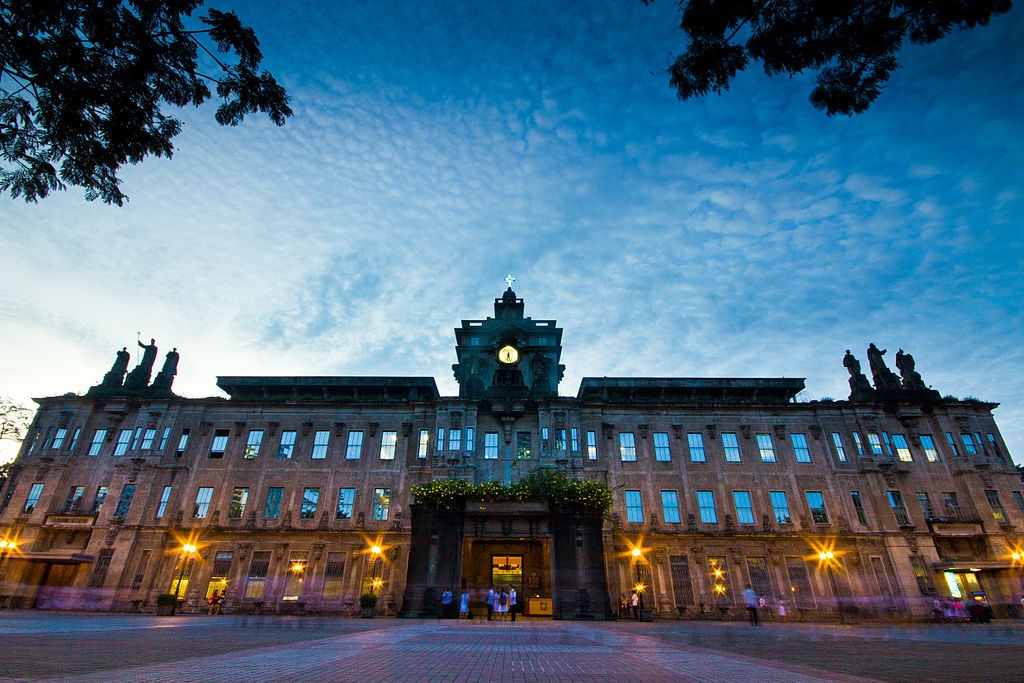
Universities, in their best form, share something with temples. They are designed to carry knowledge, values, and traditions across time. Many of the world’s oldest universities were born from religious orders. The University of Bologna, for example, dates back to the 11th century. In Asia, the University of Santo Tomas in the Philippines holds a similar legacy, established in the early 17th century under Dominican leadership.
These schools were not merely centers of information. They were vessels of cultural and theological continuity. Students came not just to prepare for professions, but to inherit worldviews. The architecture often still tells the story; stone libraries, courtyards filled with echoes, altars beside lecture halls.
As time moved forward and modern nation-states emerged, universities took on a new role. They became part of the machinery of state-building. In many countries, the oldest and most prestigious schools were founded to educate civil servants, judges, and political leaders. These institutions reflect the life of the nation itself. Their birth often coincides with constitutional milestones or independence movements.
And yet, unlike most government agencies or offices, these campuses have something else: a sense of place that endures. You can return decades later, walk down the same corridors, and feel a connection to your younger self. Even as the world changes, these institutions carry a kind of spatial memory. They remind us of who we once were, and who we hoped to become.
Written Words and the Weight of Time
Not only buildings and institutions carry time within them. So do words. But the kind of time they carry depends on why and how they were written.
News articles, for instance, live in the now. Their purpose is immediacy. They are born from a need to report, inform, or sometimes provoke. The value of a news piece peaks quickly. A week later, it may already feel outdated. A year later, it may seem like a relic, a frozen moment that no longer breathes.
But every so often, these pieces are pulled into the realm of history. They become reference points. Archives. Primary sources. What was once just another report becomes a clue to understanding the past. In this way, even journalism, which begins with urgency, can eventually join the stream of something lasting.
On the other hand, there are writings that are not meant to expire. Classic literature, sacred texts, philosophical treatises; these are not trying to chase events. They are trying to reveal what remains true despite them. The Bible is a perfect example. It has been read daily by countless people across generations, not because it reports news, but because it speaks to the condition of the human soul.
These writings live outside the clock. They are timeless not because they ignore reality, but because they go deeper into it. They do not fade with fashion or trend. They remain as long as the questions they pose still matter.
Long Work in a Fast World
It can be strange to consider how different activities operate at different speeds. Take the writing of a dissertation. For many, it is a process that takes years. Thought accumulates slowly. Ideas are refined, revised, revisited. Sometimes, the writer returns to the same paragraph dozens of times before it feels right.
Now place that against the backdrop of the modern city. During the years it takes to complete a dissertation, entire skyscrapers are built. Businesses move in and out. Startups launch, pivot, vanish. Malls open and close. Technologies shift. A social media platform may rise and fall in the time it takes to finish one academic chapter.
But this is not a problem to be solved. It is a reality to be understood. The work of the mind, especially the kind that seeks meaning, is not measured in quarters or earnings reports. It operates on a different register. What looks like slowness may, in fact, be a kind of fidelity, to truth, to precision, to the inner world.
This contrast teaches us something about patience and presence. The world will always move quickly. But not everything of value is built at that speed.
Writing Between the Currents
In my own case, I write blog entries frequently. But the frequency is not about chasing attention. It is about remaining faithful to a rhythm, one that listens more than it reacts. My focus is not on hot takes or viral moments. It is on capturing thoughts that might still matter a year from now, or ten.
I call it timelessness with flavors of timeliness. I draw from the present, a conversation, a memory, an observation, but I try not to be confined by it. What I hope to offer are reflections that touch the now while pointing toward what lasts.
This kind of writing sits in between categories. It is not news. It is not formal scholarship. It is more like a daily meditation. A record of noticing. A way to place my own life in dialogue with deeper things. I do not write to impress. I write to remain in contact, with meaning, with others, and with myself.
And over time, I find that these writings become a personal archive. They store not just my thoughts, but the shape of my becoming. In them, I recognize not only the things I once believed, but the kinds of questions I continue to carry.
What Time Reveals
When we look across the landscape of institutions, texts, and personal expressions, one pattern stands out. Things last not because they resist change, but because they are rooted in something deeper than change. A company that repairs temples lasts because it serves a story greater than profit. A university endures because it tends to the formation of minds. A book survives because it speaks to something we still need to understand.
And sometimes, it is not the age of the thing that gives it value, but the quality of its presence. A small chapel can carry more silence than a cathedral. A single poem can say more than a whole year of headlines. A blog entry, written with care, can outlive a thousand social media posts.
In the end, we are all choosing the rhythm we live by. Some prefer speed. Some choose depth. Most of us live somewhere in between, pulled by demands, drawn by meaning.
But perhaps the question is not which is better. Perhaps the question is what kind of time we want to leave behind. Will it vanish like a discarded office space? Or will it linger, like a worn bench under a tree, waiting for someone to sit and remember?
The choice is ours. Not just in what we build, but in how we live. And in how we write.
Image: University of Santo Tomas
 Tom’s Blog