
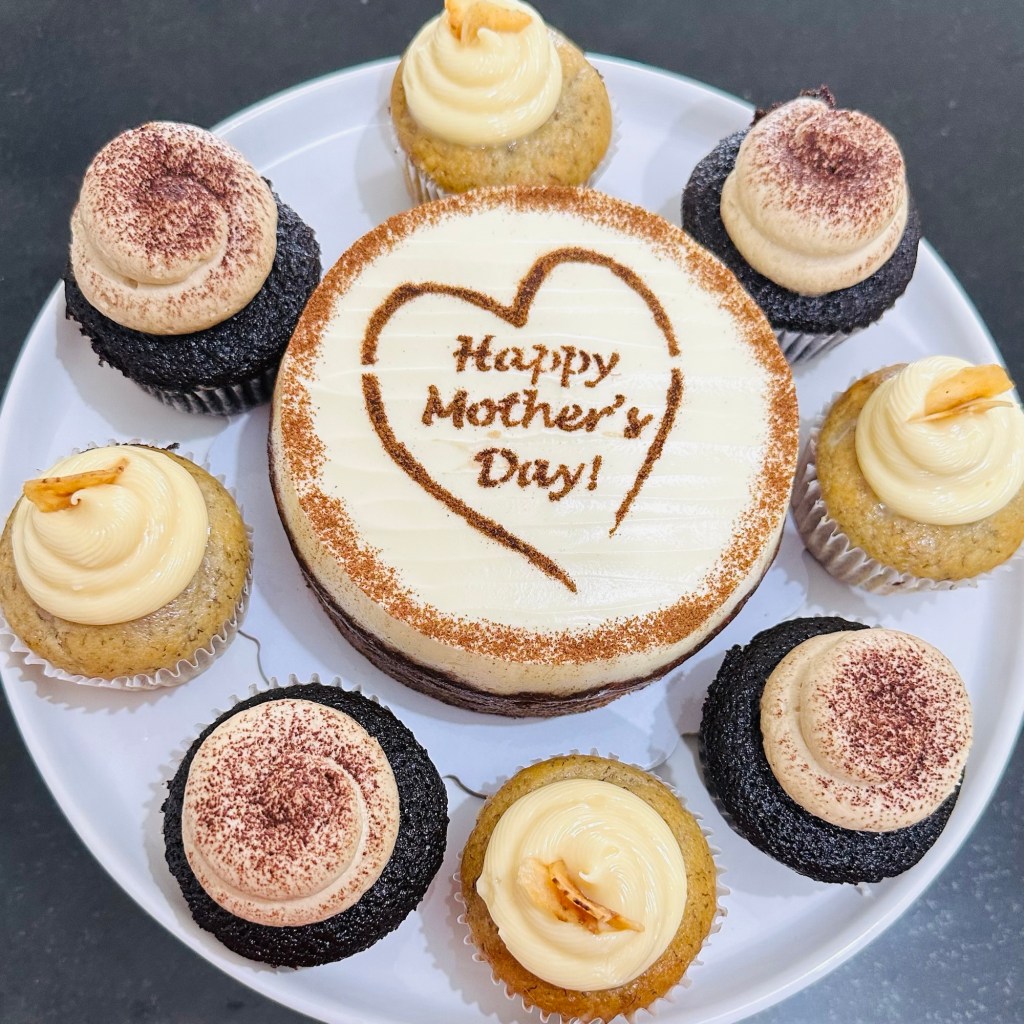
Today is Mother’s Day, a time to pause and appreciate the mothers who shape our lives, not just personally but culturally. In the Philippines, where nearly 80% of the population is Roman Catholic, this day carries a special weight. It’s not just a celebration of mothers, but a moment that draws attention to the deeper symbolic and spiritual dimensions of motherhood.
The figure of the Virgin Mary is ever-present in Filipino life. She’s not just a religious icon but a cultural anchor, a symbol of compassion, resilience, and unconditional care. From roadside altars to public processions, from prayers whispered in jeepneys to songs sung in church, Mary’s presence is quietly constant. It’s no wonder then that the societal role of mothers in the Philippines carries a kind of sacred respect, often unspoken, but deeply felt.
Yet, for all this reverence, we sometimes forget the quiet force mothers truly represent. In daily life, in homes and offices, they do more than care; they manage, decide, lead, and persevere. Their influence is not always loudly asserted, but it is almost always determinative. And this power is more complex than it first appears, especially when viewed through the lens of culture, history, and politics.
Maternal Kinship
Long before colonization reshaped social structures in the Philippines, the region was home to vibrant cultures with strong maternal and bilateral kinship systems. These pre-colonial societies often traced family lines through both parents or through the mother, and women held important roles not only in the home but in community leadership, agriculture, and trade.
This cultural memory still echoes in modern Filipino families. Mothers are typically the emotional centers of the household, but their authority goes beyond care. They often control the budget, make household decisions, and guide the moral direction of the family. Even when fathers hold symbolic authority, it is frequently the mother who ensures that life runs. This arrangement is not a result of necessity alone; it reflects deep historical roots where the maternal line was considered central.
In many ways, this makes the Philippines quite distinct within Asia. While neighboring countries tend to lean toward patriarchal traditions, the Philippines, along with some other Southeast Asian nations, has maintained a system that grants significant informal power to women. This isn’t always written in laws or policies, but it is felt in the rhythm of everyday life.
The Colonial Overlay
But the story doesn’t end with indigenous traditions. The Philippines was under Spanish rule for over 300 years, and with that came Catholicism, and with it, a layered gender ideal shaped by machismo. Spanish culture has long idolized a certain type of male heroism: stoic, commanding, sometimes distant, but always the provider and protector. At the same time, women, especially mothers, were idealized as self-sacrificing, pure, and submissive.
This mix produced a kind of cultural paradox. On one side, the image of the Mother was elevated to near-divine status, thanks in part to the Virgin Mary. On the other, real-world power, legal, political, economic, was increasingly coded as male.
What happened in the Filipino psyche is telling: instead of erasing the older maternal kinship patterns, these Spanish ideals fused with them. The result? A society where mothers are admired with deep emotional and moral reverence, yet expected to work silently and tirelessly behind the scenes. They are entrusted with the labor of love, and often the labor of survival, while men are often given the spotlight of recognition, even when their contributions are symbolic at best.
In this way, machismo didn’t overpower maternal culture; it reshaped it into a more complex structure of public visibility versus private influence. And this paradox is nowhere more visible than in the world of politics.
Between the Action Star and the Mother-Leader
One of the most striking contradictions in Filipino political life is the coexistence of two seemingly opposing ideals: the macho strongman and the motherly reformer.
Filipinos have long been drawn to tough-talking male figures who embody power, control, and charisma. Leaders like Joseph Estrada, Ferdinand Marcos, and Rodrigo Duterte built their personas on the idea of being the father who protects the nation, often through brute force or performative masculinity. In many cases, these figures were also literally actors; action stars whose on-screen personas bled into real-world power. The public craved control in times of uncertainty, and these men seemed to offer it.
And yet, the Philippines is also one of the few countries in the world that has elected multiple women to the presidency, first Corazon Aquino, then Gloria Macapagal Arroyo. Most recently, Leni Robredo gained immense popularity, especially among youth and civil society, not because she projected machismo, but because she embodied compassion, discipline, and moral integrity. In a society shaped by maternal influence, voters often see women not as weak, but as trustworthy and capable.
This contradiction is not an accident. It reflects a deep cultural duality: Filipinos admire strength, but they trust care. They crave order but value humility. And in this duality, mothers, and mother-like leaders, find their place not in opposition to power, but as a quiet alternative to its abuses.
Mothers in the Corporate World
This maternal strength is not confined to politics. In fact, it might be even more visible in the corporate world. Compared to many Asian countries, the Philippines has a remarkably high number of female managers and executives. Women lead teams, drive decisions, and shape company culture with a firm hand and a relational mind. This isn’t framed as feminism; it’s often just called competence.
Many of these women are mothers, and they manage not just careers but households. They are expected to deliver results at work, attend PTA meetings, care for aging parents, and make sure everyone eats on time. They juggle roles with a kind of grace that society often takes for granted. But their influence is undeniable.
What’s fascinating is that Filipino society accepts this without fanfare. There is little need to justify female leadership in practical spaces; it’s seen as natural, even expected. Yet at the same time, formal structures and old hierarchies remain largely male-dominated. Women lead, but men are still often credited.
This, too, is a kind of cultural paradox. Real power lives with women, but symbolic power still tends to go elsewhere. And in this space between reality and recognition, mothers continue to work, quietly, tirelessly, and often invisibly.
The Moral Architecture of a Nation
In many ways, Filipino mothers don’t just raise children; they shape the moral architecture of the nation. Through storytelling, discipline, encouragement, and example, they instill values like resilience, empathy, and faith. They are often the first teachers, counselors, budget officers, and healthcare providers a child will ever know. And they do it all in a society that simultaneously praises them and expects them to stay humble.
This isn’t unique to the Philippines, of course. But what makes it notable here is the cultural clarity with which mothers are seen as central, and yet the ambiguity in how that centrality is valued. They are not excluded from influence, but they are often excluded from recognition.
And still, they persist. They remain the light of the home, as the saying goes. But they are also the quiet power behind many homes, offices, and even national decisions. Their strength is rarely announced, but it is always felt.
A Culture of Gratitude
Mother’s Day, then, is more than just a commercial holiday in the Philippines. It’s a brief cultural pause; a moment to recognize something that never stops. It’s not just about giving flowers or taking mom to lunch. It’s about seeing the structural truth that motherhood, in this country, is both a personal bond and a public force.
In a world that often glorifies dominance and visibility, Filipino mothers offer a different kind of example: that power can come through presence, that leadership can mean listening, and that love can be a form of strength.
Perhaps the most important thing we can do today is to acknowledge the contradictions we’ve inherited, and begin to see them not as flaws, but as spaces for deeper understanding. We live in a country where women are expected to do everything, and often they do. The least we can offer is clearer appreciation, fairer systems, and shared responsibility.
Because behind every strong home, strong company, and strong country, there is almost always a mother, not just lighting the way, but quietly holding it all together.
Image: A photo captured by the author.
 Tom’s Blog