
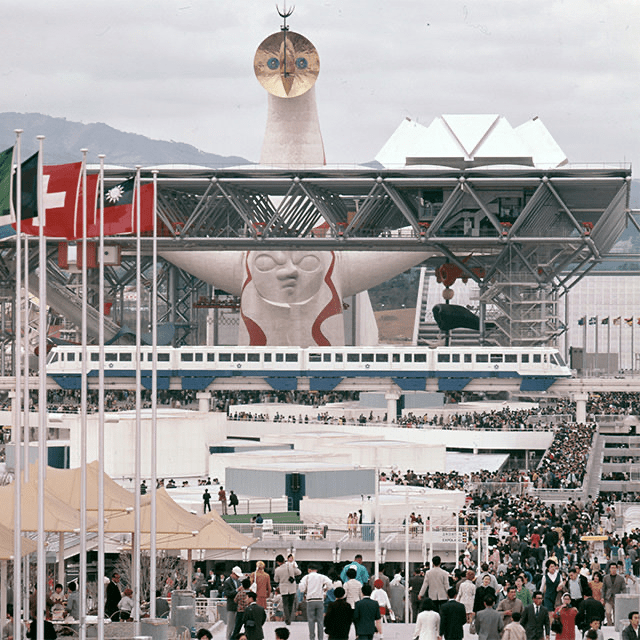
Every Expo is more than a gathering of architectural marvels and futuristic gadgets. It is a stage where a society dreams aloud. In 1970, Japan stood on that stage for the first time, presenting itself not only as a recovering nation but as a force of optimism. The theme, “Progress and Harmony for Mankind,” echoed from the halls of global ambition and local pride. Visitors came not only to witness technology but to believe in it. The Expo became a celebration of possibility.
Fast forward to 2025, and Japan again invites the world to Osaka, this time on Yumeshima Island, a reclaimed area in the bay. The theme, “Designing Future Society for Our Lives,” reflects a shift in tone. It feels more introspective and grounded. The dream remains, but the mood carries more caution than before. Unlike the 1970s forward momentum, the 2025 version carries the weight of reflection and uncertainty.
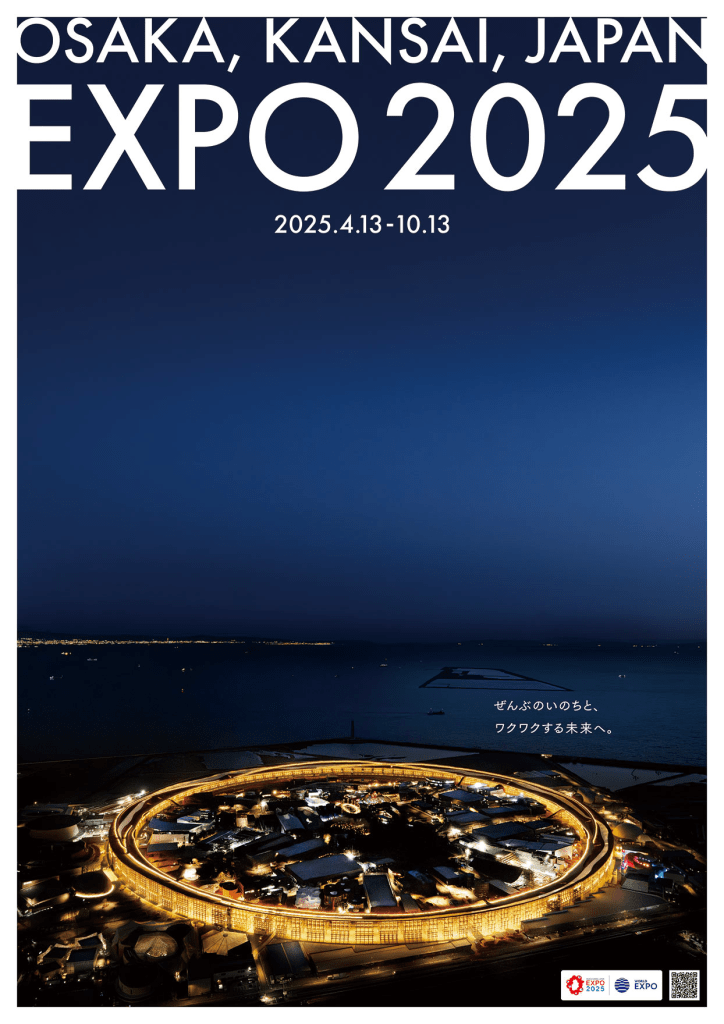
In that sense, the Expo is not only about what is displayed. It is about what is felt. Between the pavilions and the shows, one can sense the pulse of the times—our hopes, our doubts, and the fragile balance that ties them together.
The Shadow of Dual Futures
The future has always carried two faces. One smiles with promise; green energy, artificial intelligence, and medical breakthroughs. The other shows worry; climate shifts, digital overreach, and deepening inequality. The Expo prefers to focus on the first, but the second is always close by.
There is something theatrical in how we present progress. The smooth surfaces, confident slogans, and futuristic architecture create an air of certainty. But just behind them, visitors might notice the long lines, awkward designs, or smart features that confuse more than they help. These are not just glitches. They reveal the gap between idea and experience.
Such discomfort becomes symbolic. When a space built to represent innovation ends up frustrating its users, it tells a deeper story. It shows that change is not seamless. It hesitates. It tests our patience. And sometimes, it doesn’t quite work.
The divide that emerges between those who embrace the Expo and those who criticize it is not a sign of failure. It is a mirror. That tension itself reflects the complexity of the age. Perhaps we need that disagreement. Without it, we are not being honest with ourselves.
Rituals of Progress
We often think of Expos as shows of technology, but they may be better understood as rituals. Like festivals or public ceremonies, they give shape to a story about who we are and where we are heading.
In 1970, the story was simple. Japan had rebuilt from the war, learned from abroad, and was now showing its strength. The Expo became the stage for that declaration. People didn’t just visit. They believed. They were surrounded by signs of a better life—new trains, televisions, and job opportunities. The ritual worked.
In 2025, the story is harder to define. We are not rebuilding. We are rethinking. The confidence that once came from machines now feels incomplete. Today, we speak more often about balance, community, and ethics. These are harder to exhibit in a hall or to capture in a gadget.
Still, the gathering continues. The ritual lives on. We still come together, still hope, still ask whether a better future can be shaped.
The Quiet Maturity of Trial and Error
One of the most honest signs of wisdom, whether in people or in societies, is the ability to learn from what did not go as planned. Not only to fix the mistake but to face it without excuse. The Expo, even with its upbeat tone, offers quiet lessons in this form of maturity.
Complaints about design flaws or overcrowding are not just noise. They are part of the process. Every critique carries a message. There is no real innovation without iteration, and no refinement without friction.
This mindset brings a kind of humility. The Japan of 2025 knows its limits in ways that the Japan of 1970 did not. It sees its aging population, its regional struggles, and its place in a more complex global environment. But that does not weaken its desire to imagine. It simply grounds it.
There is strength in continuing to try even when things are no longer perfect. There is meaning in welcoming the world, knowing that some parts will break down. And there is growth in accepting that those rough spots are not shameful. They are part of the learning curve.
A World No Longer Easily Impressed
The challenge is also in the audience. In 1970, people were easier to impress. Many had never seen a color screen, a satellite feed, or anything close to a digital display. The Expo truly felt like a step into the future.
Today, most visitors carry more computing power in their phones than the Expo’s entire data systems did back then. They expect wonders but rarely feel them. In this age of constant updates, surprise is harder to come by.
This shift makes the Expo’s job different. It cannot rely on novelty alone. Instead, it must try to help us think differently. The goal is not only to say what is possible but to remind us what is worth pursuing. That is a more subtle kind of message.
Some people may leave disappointed, saying there was nothing new. But perhaps the Expo’s silence speaks louder. Perhaps what it invites is not applause but reflection.
Design as a Shared Language
Every Expo is also a lesson in communication. The buildings, the walkways, the signage; they all try to speak to visitors. But not everyone hears them the same way.
The 2025 Expo tries to speak in the language of tomorrow: clean lines, automation, and digital interfaces. But many people reply in the language of today; seeking comfort, simplicity, and clarity. When these languages clash, confusion follows.
That confusion should not be dismissed. It reveals something real. It shows where design has spoken too fast, or too softly. These moments are not failures. They are invitations to adjust. The dialogue between creators and users is what shapes the future.
Public design is not just about what looks good. It is about what feels right to those who live with it. And that is a conversation worth having.
The Meaning of Repetition
Some critics say that this Expo feels like a repeat of 1970, with little added. And there is truth to that. The format remains. The flags, the pavilions, the global theme; it all echoes what came before.
But repetition can serve a purpose. In some traditions, repeating a practice is a way of finding deeper meaning. Each time you walk the same path, you bring a new perspective. The context changes, and so does your experience.
The Expo may look similar, but the world around it is not. The questions we face are different. The stories we tell ourselves have grown more complex. We gather again not because we have all the answers, but because we still care to ask.
Maybe that’s not a failure to innovate. Maybe it’s a sign that certain moments are worth returning to.
Echoes and Emptiness
As people walk through the Expo grounds, they carry invisible luggage. Some remember the 1970 Expo as children or teenagers. Others are here for the first time, not knowing what to expect. These mixed histories add depth to what they see.
At the same time, there is a stillness. Not everything is loud or dramatic. Some displays are quiet. Some spaces feel empty. But that emptiness, too, holds meaning. In a world filled with noise, a quiet space can be more powerful than a flashy one.
Silence invites thought. It gives room for questions to surface. What are we truly building? Who are we leaving behind? Are we measuring success by the right standards?
Maybe those quiet moments are not gaps but pauses; places where deeper thinking can begin.
Seeing With Different Eyes
In the end, the 2025 Expo will not be remembered the way the 1970 Expo was. The context is different. The mood of the world has shifted. But that does not make it less valuable.
We live in a more complicated time. Certainties are fewer. Hopes are more measured. But that complexity is part of growth. A society that can reflect and revise is one that has matured.
What matters most is not the spectacle but the sincerity behind it. If the Expo can hold space for both celebration and concern, then it is doing something meaningful. If it allows people to question, then it is already succeeding.
Progress does not always come in giant leaps. Sometimes it comes quietly in the form of better listening, smarter adjustments, and more honest conversations.
And maybe the real message of Expo 2025 is this: the future will not arrive all at once, dressed in silver and light. It will come in pieces, through trial, through dialogue, through shared experience.
It will come not when we build the perfect world, but when we learn to build better ones, together.
 Tom’s Blog