
It began with something as technical as a chemical: flocculants—agents that make murky water suddenly clear by clumping together impurities into visible particles that sink to the bottom. Watching video clips of this process can feel strangely magical, like a visual metaphor for healing: something dark, toxic, and clouded suddenly becomes transparent and full of life again.
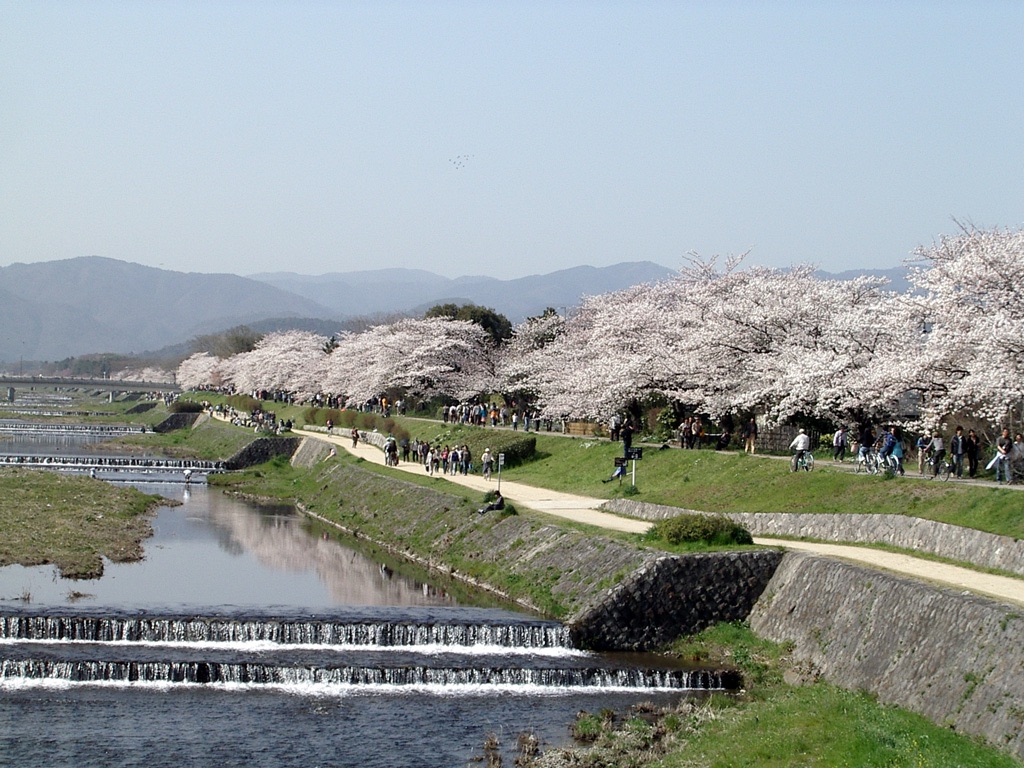
I was drawn to this image. It reminded me of rivers I’ve known and lived near—most notably the Pasig River in Metro Manila, and also the serene Kamo River in Kyoto, my mother’s hometown, whose quiet flow through the city once stirred something peaceful in me.
The Pasig feels like a wound in the heart of the metropolis, while the Kamo feels like a soul that never forgot how to breathe. One evokes concern, the other calm. But both, in their own way, remind me that rivers carry stories—and that water, when restored, can carry us somewhere too.
Why We Can’t Just Pour Chemicals and Walk Away
The temptation to see flocculants as a silver bullet is real. Just one application of this powder or liquid in a controlled tank, and what was once black and stinking becomes clear enough to see the bottom. It’s easy to imagine this being done to an entire river—a magic dusting of redemption.
But as I looked deeper, I realized the sobering truth: real river restoration doesn’t happen in test tubes. It doesn’t happen with one-time interventions. It requires something more uncomfortable—systems change, political coordination, public discipline, and a deep cultural shift in how we relate to water.
In open, flowing bodies like rivers, we can’t simply control all the variables. There are thousands of pollution sources—factories, households, informal settlements, storm runoff, even religious rituals. Using chemicals like flocculants without addressing these root causes would be like cleaning your room while someone else keeps throwing garbage through the window.
The Pasig River
I’ve long been familiar with the Pasig River. Once the lifeline of the city, it’s now more known for its smell than its significance. People avoid it, or worse, ignore it. It’s been the subject of dozens of clean-up attempts, committee names, and even ferry systems that never quite took off.
And yet, underneath the murk, there is movement. NGOs, government bodies, and citizens have made progress in segments. Areas like Estero de Paco showed that even small-scale efforts—relocating communities, installing proper sanitation, and turning riverbanks into gardens—could yield results. It’s not a lost cause.
But the question remains: why is large-scale restoration so difficult to sustain? The answer isn’t just technical—it’s psychological, political, and historical. Rivers reflect the systems around them. A polluted river is often the visible symptom of an invisible failure: of urban planning, public infrastructure, and shared responsibility.
Cases of River Revival
Thankfully, we’re not starting from scratch. Around the world, there are powerful stories of rivers that have come back to life.
In Seoul, South Korea, the Cheonggyecheon Stream was once a buried, polluted mess hidden under a highway. Through an ambitious and controversial urban project, the highway was removed, the stream was restored, and it became a new symbol of the city’s revival—a space of nature, culture, and connection.
In London, the Thames River, declared biologically dead in the 1950s, was slowly revived over decades through investment in sewage treatment, pollution control, and regulation. Today, it hosts a wide range of aquatic life and is used for transport and recreation.
Closer to home, Singapore’s river clean-up is perhaps the most relevant example. The Singapore River was, like Pasig, a dumping ground. But through strict industrial regulation, relocation of informal dwellers with comprehensive resettlement programs, and massive public education, it became the polished riverfront we see today—vibrant, clean, and fully integrated into urban life.
Even more ambitious is the case of the Ganges River in India. Sacred but heavily polluted, the government launched the Namami Gange mission in 2014, investing billions in sewage treatment, industrial control, and public behavior change. Progress is slow but visible—proving that even the largest and holiest rivers can be revived with consistent effort.
Japan’s Rivers
Having lived in Japan, I witnessed firsthand how formerly polluted rivers like the Yamato River in Nara, the Yodo River in Osaka, and the Kamo River in Kyoto were brought back to life.
These were not overnight miracles. They involved massive investment in sewage treatment, public-private cooperation to monitor industrial pollution, and a deep cultural respect for nature that embedded rivers into daily life. The Kamo River, in particular, stood out to me. It flows gently through Kyoto, bordered by stone paths and willow trees. People sit quietly by its edge, watching the water, writing poems, playing music. It feels more like a living companion than an environmental feature.
That’s the secret: rivers don’t heal just when we clean them. They heal when we reconnect with them—emotionally, spiritually, and socially.
So, Why Is It Still So Hard?
If the solutions are known, and the examples are there, why do cities like Manila still struggle?
One reason is the scale of urban poverty and inequality. You can’t simply relocate thousands of people without offering them dignity, housing, jobs, and education. You can’t ask households to stop polluting if they don’t have access to proper toilets and waste collection.
Another reason is political fragmentation. In Metro Manila, multiple agencies and local governments oversee the river, often with conflicting priorities or short-term agendas. Continuity across administrations is rare.
There’s also corruption and mismanagement, which drain funds meant for long-term infrastructure. And finally, there’s public apathy. People have lived with a dirty river for so long, many no longer believe change is possible.
The Need for a Holistic and Strategic Vision
This is where the reflection returns to flocculants.
They remind us that change is possible. That something dark can become clear. But they also remind us of the limits of shortcuts. True restoration is not about magic powders—it’s about systems thinking.
What’s required is more than just technology. There must be infrastructure that serves all people, laws that are enforced fairly, education that inspires responsibility, and city design that integrates the river as a living element rather than a waste channel. These actions require long-term commitment, not just during a mayor’s term or a media campaign, but across generations.
It’s easier to say than to do. But in some ways, that’s the point. If we only chose what was easy, rivers would never be clean again.
The River as Teacher
This reflection brought back to mind a novel that once moved me deeply—Siddhartha by Hermann Hesse. In it, the protagonist, after a long spiritual journey through the world, comes to live by a river. And there, in the quiet flow of the water, he begins to understand life more deeply than through any doctrine or debate.
The river becomes his teacher.
Like Siddhartha, perhaps we too need to stop and listen. Rivers have a way of reflecting us. In their dirtiness, we see our excesses, our indifference, our fragmentation. But in their flow, we see something deeper: patience, continuity, the passage of time and change.
Maybe this is what the flocculant videos teach us beyond chemistry—the idea that purity is possible, but it comes through movement, reaction, and release.
Restoring the Soul of the City
Flocculants may trigger the dream, but it is the human will—organized, informed, compassionate—that makes the dream real.
We need more than funding and engineering. We need to restore our emotional connection to our rivers. The way Kyoto sits by the Kamo. The way Varanasi prays by the Ganges. The way Seoul dances by the Cheonggyecheon.
For Manila, the Pasig River isn’t just a utility. It is our mirror, our memory, and our future. Cleaning it means cleansing our mindset—from apathy to action, from resignation to responsibility.
Clear Waters, Clear Vision
Water has always been a metaphor for clarity. And maybe that’s what this reflection is really about: clarity. The kind that lets us see the problem fully—not as something to be fixed quickly, but something to be understood, embraced, and transformed.
Flocculants show us a reaction. But what we need is a revolution—not in the streets, but in the systems, minds, and hearts of the people.
So when I see those clips of dirty water turning clear, I no longer think of a miracle. I think of a message: it is possible. But we must do the work.
Image: Kamo River
 Tom’s Blog