
During my younger days, I used to hear some fascinating jokes. One playful exchange went like this:
Where do you live?
Well, I live in this world. The planet Earth is my home.
Is that your address?
In a way, yes. On the scale of the universe, Earth is just a tiny dot. So, I suppose you could call it my “address.”
Beyond its humor, this response carried a deeper implication—an aspiration to be a borderless wanderer. If the entire planet is my home, then I can belong anywhere on it. From this perspective, geopolitical disputes over small patches of land seem absurd. Why do we fight, and even kill each other, over mere fragments of our shared home, this tiny planet floating in the vastness of space?
A Teenage Perspective
As I grew older, I encountered another version of the same playful mindset, this time applied to books:
Can you show me the books you own?
Since the Earth is my home, all the libraries in the world are my bookshelves. Every book I can access and read is, in a way, mine.
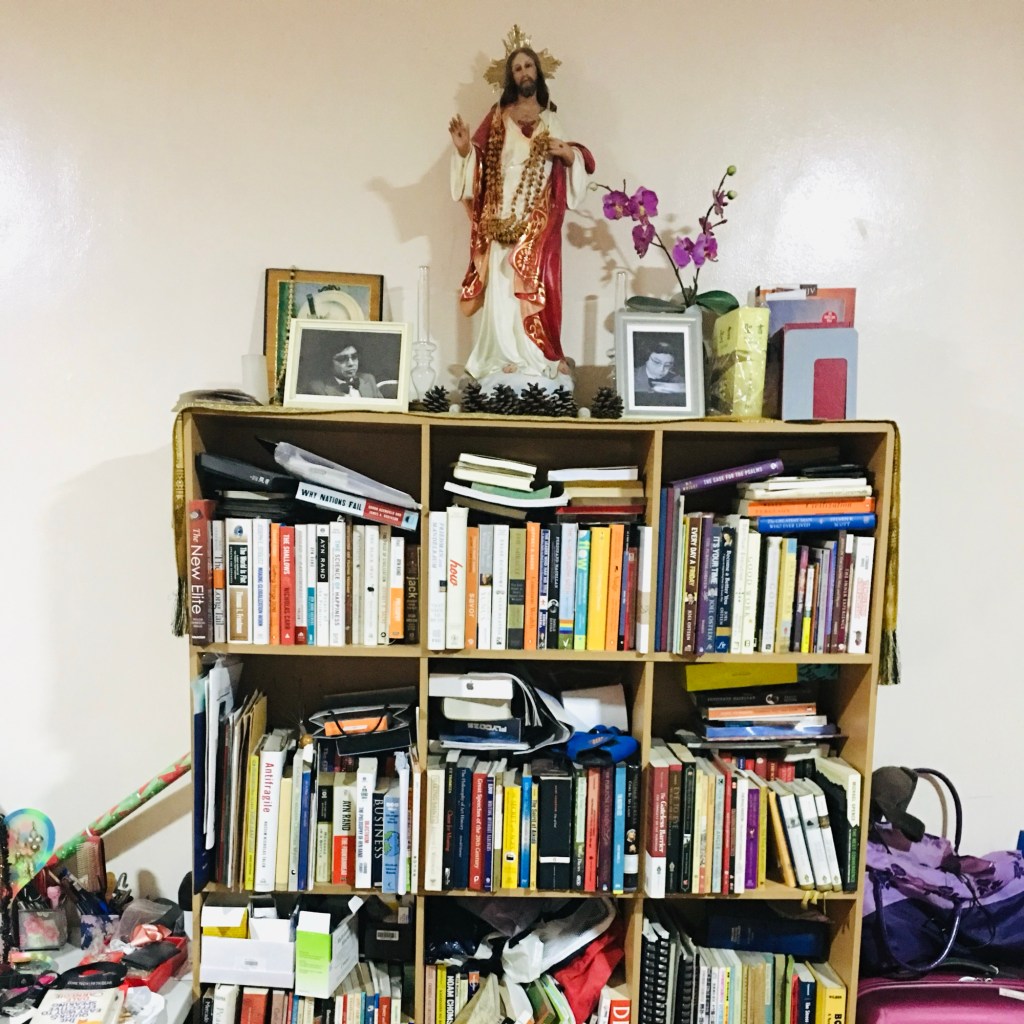
This idea fascinated me, especially when I lived in a small house where book storage was a challenge. Once books piled up, I had to decide which ones to sell to make space for new ones. Later, when I studied abroad for years, choosing which books to bring was a struggle. In those days, books were all paper-based, and their weight and volume were serious constraints. My suitcase was often filled with books, making travel cumbersome.
That’s why the thought of treating all the world’s libraries as my personal bookshelves was so appealing. If I could access books anywhere, why should I worry about physically owning them?
The Digital Revolution
Thanks to digital devices and the internet, this problem has virtually disappeared. With an app like Kindle, we can now store thousands of books in a single lightweight device—an innovation that feels revolutionary. I sometimes recall with amusement how, in the past, just ten hardcover books could take up most of my suitcase space, making my luggage unbearably heavy.
Beyond digital storage, the internet has changed everything. We are no longer limited to carrying books physically; now, we can access almost any knowledge instantly, as long as we have an internet connection. Google’s search technology completed this revolution, putting vast amounts of information just a few clicks or taps away.
Suddenly, what once seemed like a childhood fantasy has become reality. Almost all human knowledge now exists in digital form, accessible anytime and anywhere. While we often take this for granted, the benefits of this transformation are profound.
The Ultimate Curator
This transformation isn’t just about Google Search. In recent years, generative AI has made the experience even more powerful. When we imagined that all the world’s libraries could be our bookshelves, one challenge remained: how do we manage such an overwhelming volume of information?
In the early 2000s, Google’s search engine was groundbreaking. However, as profit-driven capitalism and consumerism exploited SEO techniques, search results became increasingly cluttered with commercialized, manipulative content. Instead of us managing information, information started controlling us.
This is where generative AI enters the scene. Unlike traditional search engines, which simply retrieve links, AI engages with us in natural language, curating knowledge in a more personalized and meaningful way. It has the potential to become the world’s best librarian—guiding us through the vast ocean of human knowledge with intelligent, conversational assistance.
More than that, AI is changing the way we think about personal knowledge management.
Rethinking PKM
The concept of personal knowledge management (PKM) originated in an era when physical libraries were our main sources of information. Back then, time in a library was limited, and even when we borrowed books, we couldn’t keep them forever. That’s why we took notes, created index cards, and built personal knowledge repositories. Through slow reading, reflection, and journaling, we internalized ideas, eventually producing our own intellectual outputs.
But in an age where AI and digital knowledge access are ubiquitous, do we still need the traditional PKM system? Of course, mindful reading, note-taking, and journaling remain valuable practices. However, given the powerful tools now available, should we rethink how we engage with knowledge?
Today, AI can facilitate dynamic dialogues, helping us scan and access relevant resources more efficiently than ever. Instead of hoarding personal notes and PDFs, we can interact with AI to navigate information in real-time. In essence, our childhood dream has become real:
We can access all human knowledge instantly.
With AI acting as a curator, we no longer need to manually organize vast amounts of information. Instead, AI can guide us to the most relevant books and articles based on our interests at any given moment. Given this advantage, what is the point of stockpiling personal knowledge in local storage or cloud drives? While these methods are still useful, they are fundamentally remnants of an era when physical libraries dictated the structure of intellectual life.
The Future of Knowledge
The way we manage knowledge is evolving. The dream of having all the world’s books at our fingertips is no longer a fantasy—it is our daily reality. With AI serving as both curator and conversational guide, we are moving beyond traditional methods of knowledge storage and retrieval.
While there is still value in personal notes and deep reflection, we should also embrace the new tools at our disposal. The digital revolution has freed us from the constraints of physical bookshelves, and AI is now helping us navigate the boundless ocean of human knowledge.
The libraries of the world are indeed our bookshelves. And with AI by our side, we are better equipped than ever to explore, learn, and create.
Image: A photo captured by the author.
 Tom’s Blog