
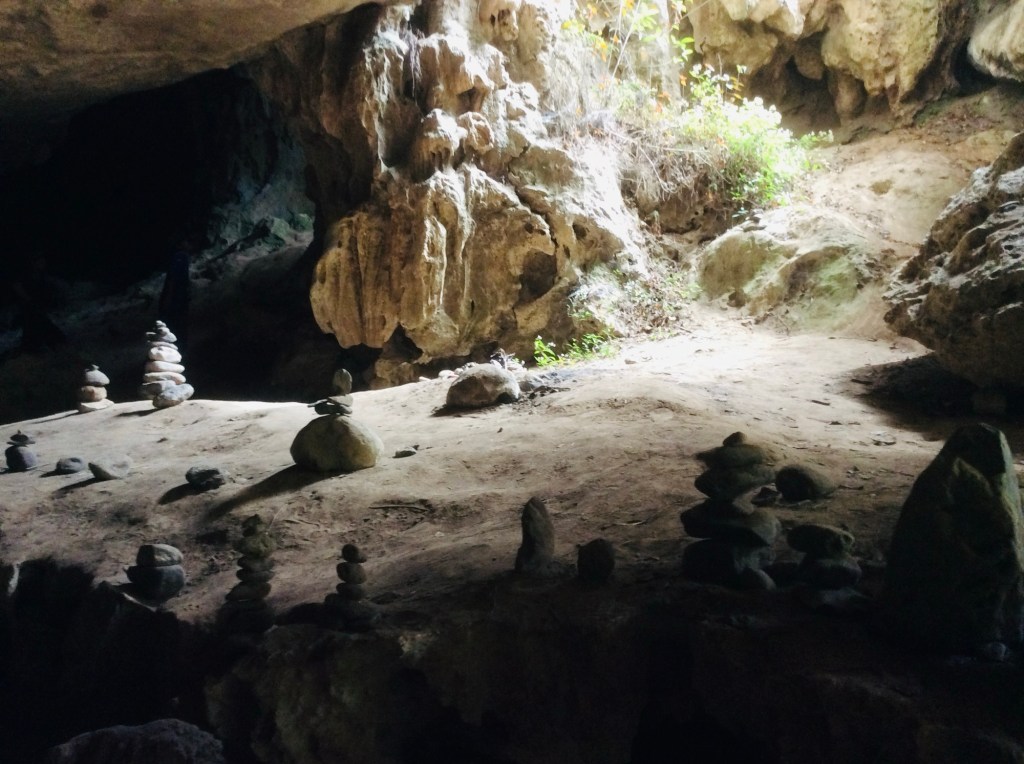
Often we say that something is “eye-opening.” The implication is that as our eyes open, we move toward a state of enlightenment. After a long period of blindness, we might eventually reach a point where our eyes are truly open and we can see the truth of the world. But is that really so?
What does it mean to say your eyes are truly open? Can we finally attain enlightenment? Can our eyes—our very faculties of perception—set us free by revealing the truth? How can we be sure that our eyes are indeed open?
This approach can seem deceptive. Often, even deliberately, we convince ourselves that our eyes are open and that we have found the truth. Is this not a form of pseudo-spirituality?
The Cave Allegory
In a sense, we humans suffer because of our blindness and ignorance. As Plato described, the world we see is merely a shadow projected on the wall of a cave.
Due to our inherent limitations, we are condemned to live our entire lives within this cave, unable to perceive the “true” world beyond. The cave itself symbolizes the limits of our cognitive, epistemological, and ontological existence.
Perhaps before our birth or after our death we might be free from this cave, but by that time we are no longer ourselves—no longer interested in the “true” world outside.
The Universe as a Cave
Similarly, no matter how far we extend our vision or how advanced our intelligence becomes in seeking to understand the universe, we cannot see beyond the cave. After all, the entire universe is the very cave in which we live.
The cave encompasses all of time and space. Eternity is not simply an extension of our spacetime-bound universe. In cosmology, we speak of the universe’s beginning—the Big Bang—and its potential end, whether through a Big Crunch, black holes, dark matter, or dark energy. Yet, whatever theories we propose, we are still only seeing the shadow of the cave.
In fact, the very act of perceiving—whether with our eyes or our intellect—is nothing more than witnessing the shadows on the cave wall.
In short, as long as we rely on our limited senses, we will forever see only the shadows of the cave. This is the very tautology of how we perceive, live, and exist in the universe.
The Paradox of Enlightenment
Thus, the distinction between having one’s eyes “open” or being blind loses its meaning. Even if you believe your eyes are open and that you are enlightened, what you see is still only the shadow of the cave—as long as you try to perceive reality solely through your limited faculties.
In other words, you may believe your eyes are open, but you remain blind. We are all blind in the sense that all our eyes and our intelligence can perceive is merely the shadow of the cave.
Is it then impossible to see the “truth” beyond the cave? Yes—if we rely on our eyes and intellect as the sole means of perception, our vision remains confined to mere shadows. As the Bible reminds us:
Having eyes, see ye not? And having ears, hear ye not? And do ye not remember? (Mark 8:18)
Embracing Our Limitations
So, what should we do? While we may not be able to overcome this limitation, we must at least accept the truth of our inherent blindness.
There is no such thing as truly open eyes. Even if our eyes appear open, they are ultimately incapable of revealing the complete truth. We remain blind regardless of their state.
This is the first truth we must accept—a complete surrender to the reality that all we perceive is nothing but the shadow of the cave. In other words, we must relinquish our futile attempt to see beyond these shadows.
Living Within the Cave
As long as we live in this world and the universe, we cannot escape the fact that we exist within this cave. Denying this reality is like denying life itself. Even if we imagine a state beyond life—whether after death or before birth—we would no longer be ourselves and might not even care to perceive what lies outside the cave.
Yet, there is a point: in eternity, in heaven, or in the timeless, spaceless realm beyond the cave, there is no illusion or shadow to deceive us.
Recognizing the Shadows
But here on Earth, we must accept that we are all blind. Our eyes—and even our intelligence—serve only to perceive the shadows of the cave. There is no such thing as fully open eyes or complete enlightenment. We must be cautious of pseudo-spiritual deceptions.
No matter how we articulate our experience, all we see are mere shadows. Yet these shadows are cast by something real. We can never escape the cave as long as we remain ourselves—and the deception only deepens when we become full of ourselves. Still, we know that these shadows originate from something beyond the cave.
We can never fully leave the cave, yet we are aware that the shadows come from something outside it. What is that something? We can never see or understand it completely, for we are inherently blind within the cave. But then, what is it? What kind of shadow is it?
Let us heed the call to self-denial:
If any man will come after me, let him deny himself, and take up his cross daily, and follow me. (Luke 9:23)
We are all blind within this cave of existence. On Earth, all we perceive is the shadow of the cave. So, what is this shadow? It is the shadow of something beyond, something we can only indirectly call heaven.
In the end, all we can do is pray:
Thy will be done, on earth as it is in heaven. (Matthew 6:10)
Image: A photo captured by the author.
 Tom’s Blog