
Have you heard about what is called the Comic Sans trick? It is well-known among those who know it well. While it sounds strange, many people claim it works; when you write, if you use a font like Comic Sans, strangely enough, you can write more, and you can feel you have overcome your writer’s block.
Knowing its power, using this specific font is especially recommended for your initial draft or pre-writing process, where you have to write a lot to overflow with ideas.
I also use it often. For example, in my case, for any writing task on my MacBook Air (if not on my iPhone), most of my initial writing is done in apps like TextEdit with the plain text format. In this setup, I use either monospace fonts like Menlo or Monaco or, if not monospace, due to this trick, my first choice is Comic Sans.
Why Comic Sans?
But it sounds strange enough. Why Comic Sans? It has been known as one of the “worst-designed” fonts in the history of computing. It was designed in 1994 by Vincent Connare, a typographer at Microsoft. It was intended as a font used in comic-style bubbles for a character help program called Microsoft Bob.
The intention was to make it a more playful, informal typeface inspired by comic book lettering from DC and Marvel comics. That’s why, using this font, we can all feel like we are reading comic books, feeling like children. Moreover, due to its playfulness, this font has been welcomed or even overused in schools, in handout documents, and even textbooks for young students.
Because of this, perhaps most of us, when using this font, can easily recall our childhood or classroom memories. Even in the shopping malls I’ve recently visited, the floor for childcare and maternity items prominently used the font in tags and boards. I am also sure this must be one of the main fonts used in toy shops as well.
The Love-Hate Relationship with Comic Sans
It is indeed overused. Because of that, there was even a backlash that led to the creation of the Ban Comic Sans Movement in 1999, spearheaded by Dave and Holly Combs, who wanted to end the inappropriate use of the font. Many designers criticized it for being unprofessional, overly casual, and poorly designed compared to other typefaces.
It is said that, as many font designers believe, Comic Sans was not a type of font well-designed through a long period of planning and creation but was more like an instantly created typeface just to use for a character named Microsoft Bob. Thus, the big irony is that such a “poorly designed” font gained huge popularity from the 1990s onwards.
At the same time, it has been “disliked” by professional designers to the extent that they proclaimed the ban. It looks playful and yet unprofessional. So, people inevitably feel a sort of love-hate ambivalence toward this unique font.
Another factor is that its legibility and friendly tone have even been defended in certain contexts, such as its use for individuals with dyslexia, as its irregular shapes can make it easier to read.
How Does Comic Sans Help Overcome Writer’s Block?
If so, why does this playful font have such mysterious power to mitigate writer’s block?
If you search for a keyword like “Comic Sans trick,” you could see a lot of online discussions and articles, even YouTube videos showing their actual tests of whether it really works or not. Most of them claim it works well.
I myself can also confirm it works, especially in the stage of drafting. It’s strange enough. It’s just a font, but indeed font matters. With Comic Sans in your writing, you can feel the flow of thought more productively.
The Role of Playfulness
But, if it works, what could be the mechanism behind it? Can anyone make any rational, reasonable, or scientific explanation for it? I am not sure if there is any “serious” academic study about it. But there is a certain consensus among many who claim it works. As far as I’ve read, one common factor is playfulness.
One obvious and outstanding characteristic of Comic Sans is its playfulness. It reminds us of cartoons, kindergarten, elementary school, toy shops, picture books, and more. It reminds us of the playfulness of children.
In this regard, we can also say Comic Sans looks playfully childish. And then, what is the implication of being playfully childish? It is true spontaneity. By using Comic Sans, we can feel like we’ve gone back to our playful, childlike state, and its very attribute is fearless spontaneity. Like children, suddenly we can talk freely, fearlessly, and spontaneously. In this childlike state, there is no such thing as “writer’s block.”
What is Writer’s Block?
What is writer’s block? It is a sort of freezing state where we are unnaturally and psychologically pressured to write well. This pressure makes us feel that we can’t and shouldn’t write anything unless and until we have a good idea, valuable and worthwhile enough to be written.
That’s why often we tend to believe in such a thing as inspiration and gods of creativity like Muses that should intervene in our activity; otherwise, anything we do would be mediocre or worthless. That is one of the worst myths we should remove from our hearts and minds.
While not everyone can, of course, be great artists, creativity is not a kind of special asset that can only be given through exceptional talent or by some sort of divine intervention. If we believe so, we have already been brainwashed by the modern or postmodern consumeristic values of art and creativity.
The Impact of Modern Education on Creativity
Let’s recall when we were still children. We didn’t have such a thing as writer’s block. Well, perhaps we did. If so, I would like to say this is the unfortunate side effect of modern education and school systems.
In schools, teachers “judge” whatever students do. The works of children are being “scored” as good or bad. Worse, they are being compared among classmates. Through years of schooling, then, while some students gain confidence, most of them lose it.
Sooner or later, they believe they are just mediocre, far from artists, without any talent for creativity. In this aspect, unfortunately enough, schooling kills the artist’s mind of children. It kills the very spontaneity of all those playful children.
An Example of Playfulness
Just recently, I attended the birthday of an eight-year-old boy whom my wife and I had attended for his baptism when he was only a newborn baby. We’ve been with him ever since.
He has been a very playful, joyful, chatty boy. His spontaneity in speaking up about anything playfully and joyfully, without shyness, makes everyone around him smile and feel happy. That is the common trait of all children at his age in one way or another, unless they are unnecessarily pressed by “scoring” or “comparisons.”
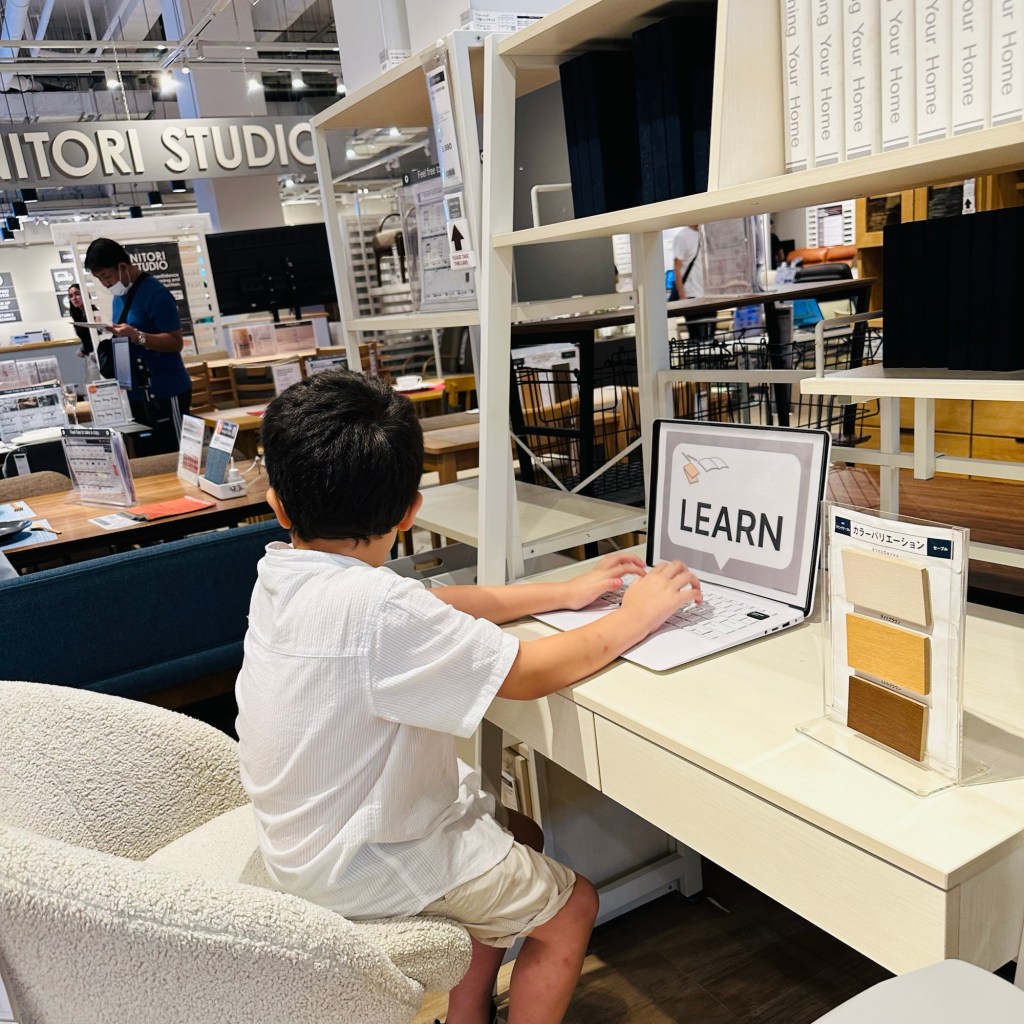
We enjoyed the happy birthday party; after that, we visited a home goods store nearby where we roamed around to check various items like utensils, furniture, and the like. For children, these shops are no different from toy shops.
He checked one item after another with us, describing what it is or could be, guessing, and how it is created or innovated. I was so delighted to hear his creative, spontaneous explanations about these items. He has never been bothered by any kind of “writer’s block” or any kind of fear or hesitation. That’s playfulness!
Restoring Playfulness
At this very moment, I’ve just realized this is the secret or mechanism that the Comic Sans trick gives us. Professional designers said it was poorly designed. They said it was overused. They even banned its use. Let’s not be bothered by this kind of “adult perspective.”
Comic Sans is the font that restores childlike playfulness in us, and by doing so, it can help us overcome our writer’s block, which is often caused by our adult perspective being bombarded by constant “scoring,” “comparison,” and self- or others’ criticism.
At least at the stage of drafting, we need to go back to our playful childhood since it is the only way to make us truly spontaneous.
The Power of Playfulness in Life
And this approach should apply to almost all of our activities. We must remember that we are all artists. We are all talented. We can recall this truth only when we are truly spontaneous. And the key is playfulness.
Let’s be playful in every aspect of life. Any problems, even adversity—can you tell yourself, “Let’s enjoy it playfully”? In the midst of adversity, not only loving your fate but also smiling with your playfulness?
If you can do so, not an illusory Muse we believe in deceitfully, but the true God will finally smile at you. You smile at you, and only then, God smiles at you as well. Blessed are those who can keep childlike playful spontaneity in life.
Image: A photo captured by the author.
 Tom’s Blog