
Language is a grid through which we perceive the world. When I was a student, learning about the arbitrariness of language through Ferdinand de Saussure’s explanation was eye-opening. There is no “logical reason” why we call an apple an “apple” when seeing the fruit in front of us in English, while others call it ringo in Japanese or manzana in Spanish.
In Japanese, hot water is called yu (湯), while water alone is mizu (水). Why is it a single word in Japanese, while in English it requires a combination of an adjective and a noun? The simple answer is that the grid of each language is different. With traditional hot springs in Japanese culture, a primary word like yu exists instead of a combination like hot water.
There must be countless variations depending on each language. I’ve heard that Inuit people have a rich vocabulary of single words for describing subtle differences in snow. Snow is a vital part of their life and culture, shaping the way they see and interact with the world.
***
Another example I recall is how newborn babies see the world. Since they don’t know any language yet, the world they perceive must be an unclassified chaos, like heaven and earth before God brought order.
For example, a baby may “see” an apple in front of them, but they don’t know what it is or what it is called. Moreover, imagine parents smiling at a baby. This baby has not learned language; hence, the concepts of “mother,” “father,” or “parents” are absent.
The baby might “feel” a sense of love—the sensations unfolding in front of them may feel warm, happy, safe, and comfortable. But without language, these experiences remain unclassified phenomena that the baby can barely comprehend.
Newborn babies live in chaos—a world of phenomena without any grid to classify it—much like the first week in Genesis, when God’s work of bringing order and naming everything had not yet been completed.
***
The sense of self is likewise vague for these newborn babies. When they hold a toy in their hand and bite it, they don’t feel pain. But when they bite their hand or fingers, they do feel pain, yet they can’t understand why this difference exists. The distinction between the self and the world around them is not yet clear. In this sense, these babies are self-unconscious beings. In other words, the duality of self and others is not yet fully formed.
There is a famous psychological experiment that illustrates this state. If you show a piece of cardboard to a baby, with one side red and the other side blue, and you show them the red side, they understand the board has two colors. Now, if you ask the baby what color they see, they will answer “Red.” But if you then ask what color you see, they will still say, “Red.” They haven’t yet reached the stage where they can put themselves in another’s shoes. What they see is what they see; what others might see is beyond their comprehension.
This difficulty is not limited to children. Even for mature adults, developing empathy—a capacity to see the world through others’ perspectives—is a lifelong journey.
***
The same applies to delayed gratification. A well-known experiment, the marshmallow test, illustrates this concept. A child is left alone in a room with a marshmallow, and a teacher promises a second marshmallow if they can wait fifteen minutes without eating the first. Videos of this experiment show the children’s adorable struggle, some patiently waiting and others succumbing to temptation.
The key insight from this experiment is that children who could wait tended to achieve greater success later in life, underscoring the value of patience. Yet, I find myself more curious about how these children see the world differently. Like empathy, can patience be developed as we grow?
***
This question applies to us adults too. Many of us struggle with various addictions—not just to marshmallows but to substances or behaviors like alcohol, smoking, or gambling. While such addictions often require medical treatment, could some of these struggles be mitigated earlier in life? How can we create conditions to avoid such challenges?
A grid of language shapes how we see the world. The sense of self and empathy forms another grid, influencing how we interact with others. And as the marshmallow test demonstrates, our ability to resist immediate gratification can significantly affect our lives.
The world is hard for those suffering from addictions, and in one way or another, we are all affected by the challenges of modern life. Like children, we remain vulnerable to how we see and navigate the world.
***
Possessiveness offers another example. How do we determine whether an item belongs to us or someone else?
One of the reasons colonization occurred was that Westerners had a strong sense of land ownership. Even in the Old Testament, landownership holds cultural importance. In regions colonized by Western powers, indigenous peoples often lacked this strong sense of ownership, enabling invaders to claim lands as their own.
In the twentieth century, humanity experienced devastating conflicts—from two World Wars to the Cold War. Despite our advancements, we still lacked maturity. Why? Was it due to territorial disputes, ideological differences, or economic reasons? Perhaps it was all of these and more. What is clear is that we are not so different from newborn babies.
***
We suffer from addictions, conflicts, and pains. We lack sufficient self-awareness, empathy, and patience. These deficiencies divide us. While language and psychological development give us tools to navigate the world, they are not enough. As Jesus said:
Forgive them, for they do not know what they are doing. (Luke 23:34)
We often do not know what causes our suffering due to our immaturity.
One neurodiverse child once abruptly grabbed a piece of chocolate from another boy, feeling no guilt. This reflects a psychological spectrum in the sense of possession. Such moments offer reflections: just as a baby doesn’t distinguish their toy from their hand at first, a child may not grasp that what they see as red is perceived as blue by another. Similarly, a child might not yet understand the value of waiting fifteen minutes for an extra marshmallow.
As adults observing these children, we recognize that we too are not yet mature enough to handle the challenges of the world.
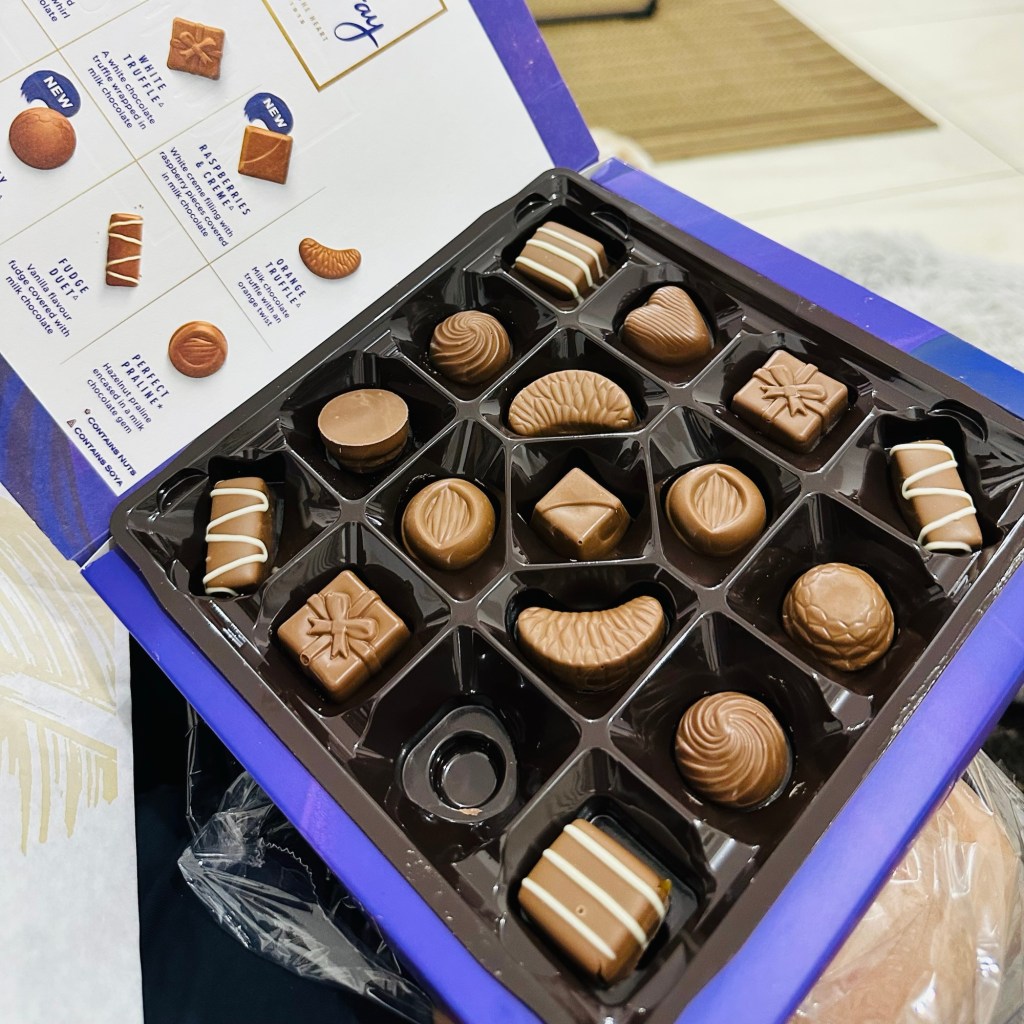
Image: Photo captured by the author.
 Tom’s Blog