
For centuries, human societies have organized themselves in a way that feels almost second nature: hierarchies. From the family tree to the government, businesses, and even armies, this top-down structure has been our go-to system. And it’s no wonder—hierarchies are clear, stable, and easy to understand. But as the world grows more complex and interconnected, the cracks in this traditional structure have started to show. Is there a better way to organize ourselves in the modern age?
What if we looked at how the brain works? Or how AI and neural networks operate? These systems, which rely on connections and adaptability rather than rigid control, are starting to inspire new ways of organizing everything from businesses to communities. They’re flexible, creative, and capable of responding to change—qualities that are essential in today’s fast-paced world. And with the rise of AI, we may finally have the tools to make these systems work for us.
Why Hierarchies Worked for So Long
Hierarchies aren’t just a human invention—they’re everywhere in nature. Think about the solar system, where planets orbit stars, or ecosystems, where predators sit at the top of the food chain. These structures work because they create order out of chaos. In human societies, hierarchies do the same: they divide responsibility, create clear lines of authority, and ensure everyone knows their role.
Religious stories even reflect this. Take the Bible, for example. When Moses was overwhelmed by the responsibility of leading the Israelites, his father-in-law Jethro suggested breaking the group into smaller clusters, each led by appointed leaders. This system—a hierarchy—allowed Moses to focus on the big picture while others handled smaller tasks. It’s a model that businesses and governments have followed for centuries.
But while hierarchies are great for creating order, they have their limits. They can be slow to adapt, rigid in the face of change, and overly reliant on the people at the top. In a world that’s moving faster than ever, these limitations have become more obvious.
A New Idea: The Holon Model
As people began to question the effectiveness of rigid hierarchies, another concept emerged: the holon. Think of a holon as something that’s both its own thing and part of something bigger. A cell, for example, is an independent unit, but it also works within the larger system of the human body. This idea, introduced by writer Arthur Koestler, is a way of thinking about systems that are both autonomous and interconnected.
In organizations, the holon model allows teams or units to act independently while staying aligned with the larger organization’s goals. Imagine a multinational company. Each regional office can make decisions that work for its local market but still follows the company’s overall strategy. This balance between freedom and coordination makes holonic systems more adaptable than traditional hierarchies.
Still, the holon model isn’t perfect. While it allows for more flexibility, it can struggle in situations where constant change or rapid innovation is needed. That’s where an even more radical idea comes in: the neural network.
What We Can Learn From Neural Networks
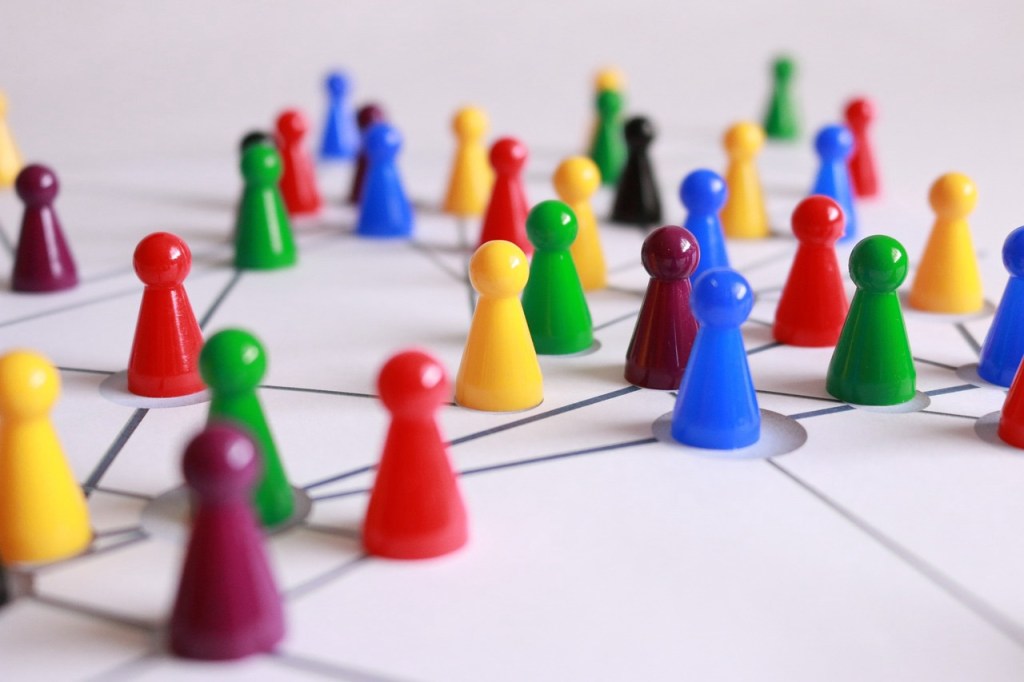
Unlike hierarchies or even holonic structures, neural networks are completely decentralized. There’s no “boss.” Instead, every part of the system (or “node”) is connected to every other part. Think of your brain—each neuron connects with others to form a vast, flexible network. This interconnectedness allows the brain to solve problems, adapt to new situations, and create entirely new ideas.
Now, imagine if organizations worked like this. Instead of strict roles and top-down directives, people would connect and collaborate freely. Information would flow naturally, and solutions would emerge from the collective intelligence of the group. Sounds ideal, right?
In some ways, this is already happening. Open-source software projects, like Linux or Wikipedia, are examples of neural network-style collaboration. People from all over the world contribute independently, yet the end result is a cohesive, high-quality product.
But neural networks aren’t without challenges. Without clear leadership, it’s easy for efforts to become disorganized. And with so much information flying around, it can be hard to separate what’s important from what’s noise. This is where artificial intelligence comes into play.
How AI is Changing the Game
AI has the potential to make neural networks practical on a larger scale. One of AI’s greatest strengths is its ability to process massive amounts of data and identify patterns that humans might miss. This means AI can help individuals and teams see both the big picture and the small details at the same time.
For example, in a traditional hierarchy, strategic decisions are made by leaders at the top, while workers on the ground focus on execution. But with AI, everyone can access the same insights. A factory worker could use AI tools to make decisions that improve efficiency, while executives use the same tools to fine-tune long-term strategy. This blurring of roles means that anyone, regardless of their position, can act like a leader when needed.
AI also enhances collaboration by connecting the right people at the right time. Imagine a system where AI analyzes a problem, identifies the experts best equipped to solve it, and brings them together automatically. This kind of intelligent coordination could make neural networks more effective than ever before.
A World Beyond Hierarchies
As AI becomes more integrated into our lives, the way we think about leadership and organization could shift dramatically. Instead of relying on rigid hierarchies, we could move toward systems that are more fluid, where leadership emerges naturally depending on the situation. This isn’t about eliminating hierarchies entirely—they still have their place—but about finding a balance that works for a more complex world.
In this future, organizations might look less like pyramids and more like living ecosystems. Each individual or team would function as an independent node, contributing their unique strengths to the whole. With AI as the connective tissue, these systems could adapt to challenges, foster innovation, and maintain stability, all at the same time.
Transforming the Way We Work
The way we organize ourselves has always shaped the way we live and work. Hierarchies gave us the structure to build civilizations, but they were born in a world that moved much slower than ours does today. Neural networks, inspired by the way our brains work, offer a new approach that’s better suited to the complexities of the modern world. And with AI, we finally have the tools to make these systems work.
This isn’t just about businesses or governments. It’s about how we collaborate, solve problems, and create the future. The transition from hierarchies to networks is already happening. The question is, how quickly can we embrace it—and how ready are we to rethink the way we work?
The answer could shape the next chapter of human progress.
Image by Gerd Altmann
 Tom’s Blog