

Oral storytelling is as old as humanity itself. Long before written language emerged, stories were shared, remembered, and passed down through spoken words. These stories were more than just entertainment; they carried history, morality, and cultural identity. They were the lifeblood of communities, a way for people to make sense of the world and their place in it.
Storytelling was inherently a communal act. Families gathered around fires, villages came together during festivals, and individuals shared tales during travels. The storyteller’s voice held power—intonation, rhythm, and emotion brought characters to life and painted vivid scenes in the listeners’ minds. These moments of storytelling were deeply interactive; listeners didn’t just hear the story—they experienced it.
This oral tradition demanded incredible memory and skill. Epic tales like The Iliad or The Mahabharata were preserved for centuries through the voices of storytellers. These narratives were shaped and reshaped with each telling, reflecting the collective memory of the community. Yet, despite its richness, oral storytelling was ephemeral. Once the words were spoken, they existed only in the minds of the listeners, leaving no permanent record.
St. Augustine and the Unusual Sight of Silent Reading
The act of reading aloud was so central to ancient culture that silent reading was considered almost strange. One famous account comes from St. Augustine, who wrote about his mentor, St. Ambrose, reading silently. Augustine was astonished by this practice, which he had never encountered before. In his Confessions, Augustine describes how Ambrose would sit with a book and read silently, moving his eyes over the text without uttering a word.
This moment reveals much about the norms of the time. Reading aloud was the dominant way to engage with texts, especially in an era when literacy was rare and books were expensive. By reading aloud, individuals not only processed the text themselves but also made it accessible to those around them. Silent reading, by contrast, was a private act, internalizing the words rather than sharing them.
Ambrose’s silent reading marked a subtle but significant shift in the practice of reading—a move toward a more introspective and solitary relationship with text. Yet even as silent reading gained prominence, the tradition of reading aloud remained vital, especially in communal and religious settings.
The Biwa Hōshi and the Japanese Tradition of Oral Storytelling
Oral storytelling continued to thrive in other cultures, often taking on unique forms. In Japan, the biwa hōshi exemplify the enduring power of oral tradition. These blind monks traveled from place to place, reciting the epic tale of the Heike Monogatari while playing the biwa, a traditional lute.
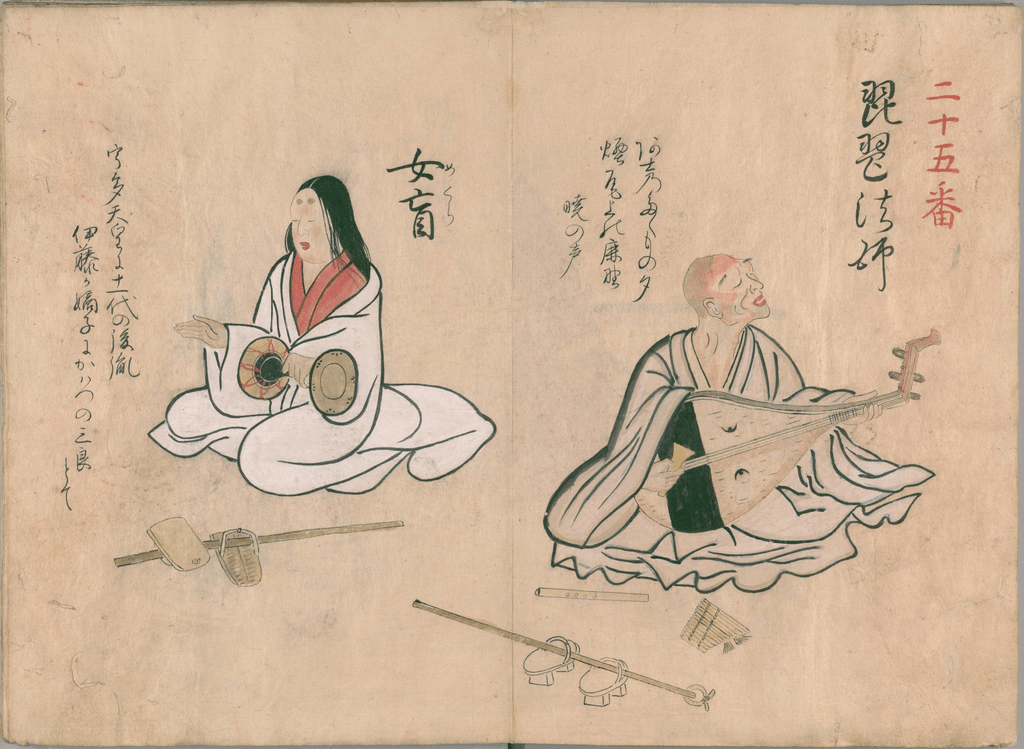
The Heike Monogatari recounts the rise and fall of the Taira clan during Japan’s Genpei War. Through their performances, the biwa hōshi brought history to life, blending music, rhythm, and narrative into an unforgettable experience. Their recitations were not just about transmitting information; they were about evoking emotion and preserving cultural memory.
The biwa hōshi represent a profound connection between sound and story, embodying the idea that words spoken aloud carry a unique power. Their tradition highlights how oral storytelling remains relevant even in highly literate societies, offering a communal and performative way to engage with history and culture.
Reading Aloud: Bridging Oral Tradition and Modern Practice
The practice of reading aloud continues the legacy of oral storytelling. In many ways, it transforms written text into a performance, reviving the communal and interactive aspects of storytelling. For much of history, reading aloud was the primary way texts were shared. In early Christian communities, scripture was read aloud during worship, not only as an act of devotion but also because most people couldn’t read.
Reading aloud gave life to the written word. It wasn’t just about comprehension—it was about presence. The voice of the reader added tone, rhythm, and emotional nuance, much like the oral storytellers of old. Words that might seem static on a page became dynamic when spoken, carrying the weight of the reader’s interpretation and the immediacy of the moment.
Even today, reading aloud remains an essential practice in many religious and cultural contexts. The recitation of scripture—whether chanting sutras in Buddhism, reciting the Qur’an in Islam, or proclaiming Bible verses in Christianity—transforms written text into a shared spiritual act. The spoken word bridges the gap between the internal world of thought and the external world of sound, fostering a connection to the divine and to one another.
Silent Reading: A New Way to Experience Words
Silent reading, in contrast, offers a more private and introspective encounter with text. Historically, it wasn’t always the norm. Early manuscripts were often written in scriptio continua, with no spaces between words or punctuation. This made vocalization essential for decoding the meaning of the text. Silent reading only became common as literacy spread and written texts evolved to include spacing and punctuation.
While silent reading allows for personal reflection and deeper engagement, it lacks the performative and communal aspects of reading aloud. Silent reading internalizes the experience, turning it into a conversation between the reader and the text. Yet, even in silence, the rhythm and tone of the words often resonate in the reader’s mind, a faint echo of their spoken origins.
The Sacredness of Sound
One of the most profound aspects of reading aloud is the way it mirrors the sacredness of oral traditions. In many religious practices, the act of vocalizing scripture is seen as an act of devotion. Chanting sutras, reciting the Qur’an, or proclaiming verses from the Bible isn’t just about conveying meaning—it’s about embodying the words, making them resonate within and beyond the self.
This sacredness extends beyond religion. Think of a parent reading a bedtime story to their child. The sound of the parent’s voice, the way it rises and falls with the story, creates a moment of intimacy and connection. The words come alive in the child’s imagination, just as they might have in the communal storytelling of ancient times.
Even in academic and literary settings, reading aloud carries weight. Presenting a paper, performing poetry, or narrating a story connects the speaker to the audience in a visceral way. The spoken word has an immediacy that written text alone cannot replicate—it demands attention, evokes emotion, and creates a shared experience.
Oral Traditions in the Modern World
In many ways, modern technology has brought us closer to our oral storytelling roots. Audiobooks and podcasts have revitalized the tradition of listening to stories. They allow us to experience the rhythm and emotion of spoken language while we commute, walk, or unwind. These formats bring the ancient practice of storytelling into our daily lives, reminding us of the power of the spoken word.
Television, movies, and online videos further blend the visual and auditory, creating immersive storytelling experiences. Yet, at their core, these mediums still rely on the same principles that guided oral traditions: the power of voice, rhythm, and performance to capture our attention and imagination.
Reading aloud also continues to thrive in classrooms, theaters, and homes. It brings people together, whether it’s a teacher reading to students, a poet performing their work, or friends sharing a passage from a book. These moments echo the communal storytelling of the past, creating spaces where words become alive through sound.
Which Way Is Best?
So, is reading aloud better than silent reading? The answer depends on the context and the purpose. Reading aloud offers a way to connect—with others, with tradition, and with the deeper layers of meaning that sound can bring to words. It transforms the act of reading into a shared, performative experience that can inspire, comfort, or unite.
Silent reading, on the other hand, offers solitude and introspection. It allows for a personal connection with text, fostering a deeper engagement with ideas and emotions. While it lacks the communal aspect of reading aloud, it creates a space for private reflection and exploration.
The beauty of living in the modern world is that we don’t have to choose. We can enjoy both forms, depending on what we need at any given moment. We can listen to audiobooks on a busy day, read silently when we seek quiet, and share the joy of reading aloud with those around us.
The Enduring Power of the Voice
Through oral storytelling and reading aloud, we preserve the magic of sound. These practices remind us that language is more than words on a page—it’s a living, breathing force that connects us to our history, our communities, and ourselves.
Whether we’re reciting ancient epics, reading to a child, or listening to a podcast, we are continuing a tradition that stretches back to humanity’s earliest days. In sound, we find connection. In voice, we find meaning. And in sharing these moments, we keep the timeless power of stories alive.
Image by Syauqi Fillah and Wikipedia
 Tom’s Blog