
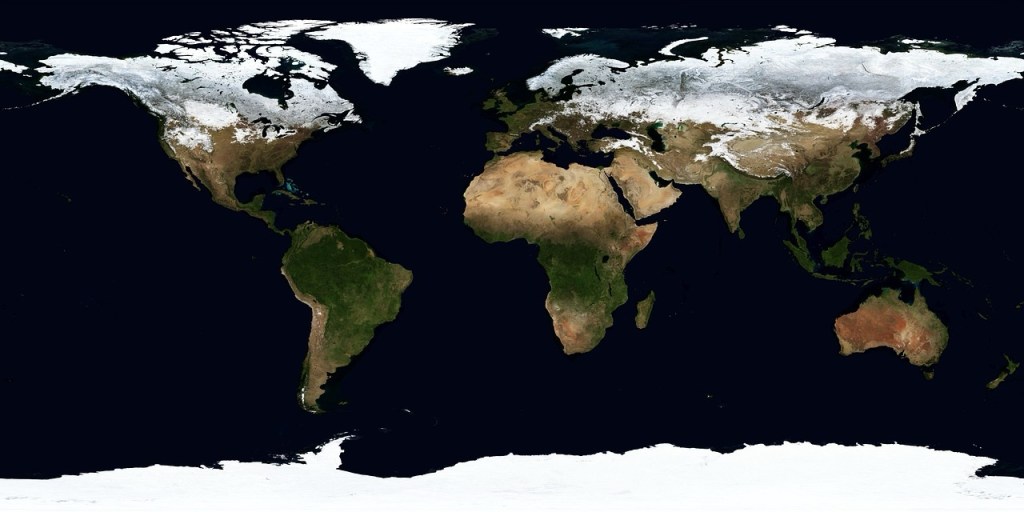
Have you ever wondered why some countries thrive while others seem stuck in cycles of poverty and struggle? Books like “Why Nations Fail” try to answer this question by pointing to the strength of institutions—whether they’re inclusive and fair or extractive and exploitative. But as our world grows more connected, this nation-focused lens starts to feel too narrow. What if we asked a bigger, deeper question: Why do systems fail? Or even more provocatively: What’s failing on earth that causes so much suffering for so many people?
These questions move beyond borders, inviting us to look at global forces that shape our lives in ways we might not always see. Let’s explore this together, peeling back the layers of institutions, geography, and global systems to understand what’s really going wrong—and what we can do about it.
The Nation-Centered Lens: Why It’s Not Enough Anymore
When we think about why some places succeed and others don’t, we usually look at their governments and economies. “Why Nations Fail” gives us a powerful example: Nogales, a town split in two by the US-Mexico border. On one side, Arizona thrives with prosperity and opportunity, while on the Mexican side, people struggle under weaker institutions. This comparison makes it clear how much governance matters.
But here’s the thing: focusing only on nations creates blind spots. Today, global challenges—like climate change, economic inequality, and the power of Big Tech—don’t respect borders. These are problems that no single country can fix alone. Plus, what happens when a nation’s struggles are tied to something bigger, like global trade systems or the influence of multinational corporations? If we keep our eyes only on nations, we risk missing the full picture.
The truth is, while nations are still important, they’re just one piece of the puzzle. To truly understand why people suffer or why systems break down, we need to zoom out and think globally.
The Rise of Global Systems: The Power of Information
Take a look at how much of our lives is now shaped by a handful of tech giants—Google, Amazon, Meta. These companies aren’t just businesses; they’re global forces, controlling the flow of information, shaping economies, and even influencing our opinions. In many ways, they’ve become more powerful than some governments.
This shift has been both a blessing and a curse. On one hand, these companies have connected people in ways that were unimaginable a few decades ago. You can learn anything online, stay in touch with friends across the globe, and even start a business from your living room. On the other hand, this concentration of power creates new problems. Countries in the Global South often rely on technologies developed in the Global North, leaving them dependent on systems they didn’t design and can’t control. And let’s not forget issues like data privacy, misinformation, and the rise of AI tools that could be used to exploit rather than empower.
These global systems are a new layer of influence, one that transcends borders but lacks accountability. Who decides how these systems work? And who benefits? These are questions we urgently need to address.
Geography and Institutions: A Complicated Dance
Beyond global systems, geography still plays a big role in shaping how societies develop. Think about tropical regions, which often face challenges like poor soil, disease, and extreme weather. Historically, these natural obstacles have made it harder to build thriving economies. And when you combine those challenges with extractive institutions—systems designed to take resources rather than build long-term prosperity—you get a cycle that’s hard to break.
But geography isn’t destiny. Singapore, for example, overcame its lack of natural resources and tropical location to become one of the world’s most successful nations. How? By building a centralized government that focuses on efficiency, transparency, and strategic planning. Its model is far from perfect—there are concerns about limited political freedoms—but it shows that smart systems can adapt to even the toughest environments.
The key takeaway here? Geography might set the stage, but it’s the systems we create that determine whether a nation succeeds or struggles.
Centralized Systems: The Good, the Bad, and the Fragile
Speaking of Singapore, its approach offers important lessons—and warnings. At first glance, its centralized system might seem overly controlling. But what sets it apart is how effectively it uses information to make decisions. Policies are based on data, feedback loops keep things running smoothly, and the government invests heavily in long-term goals.
Still, centralization comes with risks. The success of such systems often depends on the integrity of their leaders. Without strong checks and balances, power can easily become abusive. And as we’ve seen with other centralized governments, what starts as efficiency can sometimes slip into authoritarianism.
What Singapore teaches us is that centralization isn’t inherently good or bad—it’s how you use it that matters. The challenge is finding the balance between efficiency and fairness, between control and accountability.
Beyond Nations: What’s Really Failing?
So, if nations aren’t the full story, and systems like Big Tech and centralized governments are part of the puzzle, what’s really failing on earth? Why do we see so much suffering?
One major issue is our relationship with nature. Modern economies often treat the planet as an endless resource, leading to environmental destruction and climate change. This isn’t just about the environment—it’s about survival. Rising sea levels, extreme weather, and loss of biodiversity are already displacing millions of people and threatening livelihoods.
Another failure lies in how disconnected we’ve become from each other. Technology has brought us closer in some ways, but it’s also created loneliness, mental health crises, and a loss of community. Economic growth alone can’t fix these issues because they’re about something deeper: the human need for connection and purpose.
These failures show that the systems we’ve built—whether national or global—are out of balance. They prioritize short-term gains over long-term well-being, and that’s a recipe for suffering.
Building Systems That Heal
If the problem is imbalance, the solution lies in restoring harmony. This means rethinking not just how we govern nations but how we design systems at every level—local, national, and global.
One way forward is to measure success differently. Instead of focusing on GDP, we could prioritize well-being, sustainability, and equity. Models like Doughnut Economics, which balance human needs with ecological boundaries, offer a glimpse of what this might look like.
Global cooperation is also essential. Challenges like climate change and tech governance can’t be solved by any one country. We need frameworks that bring nations together, built on shared values and mutual respect. Imagine a world where data privacy, AI ethics, and environmental protections are treated as global priorities, not afterthoughts.
Finally, we need an ethical shift—a new way of thinking about our role on this planet. Many cultures and religions already teach the idea of stewardship: the belief that we’re caretakers of the earth, not its owners. Embracing this mindset could help us design systems that heal rather than harm.
A Shared Earth, A Shared Future
Asking why nations fail is a good starting point, but it’s not enough anymore. The real question is bigger: Why do systems fail? And beyond that: What’s failing on earth that causes so much suffering?
By exploring these questions, we start to see that the answers aren’t confined to borders or institutions. They’re about how we relate to each other, to nature, and to the technologies we create. They’re about the balance—or imbalance—between short-term success and long-term survival.
The good news? We have the tools to fix this. By reimagining our systems with care, creativity, and collaboration, we can build a future where people and the planet thrive together. It’s not just about nations anymore. It’s about all of us, sharing this earth and shaping its future.
Image by WikiImages
 Tom’s Blog