
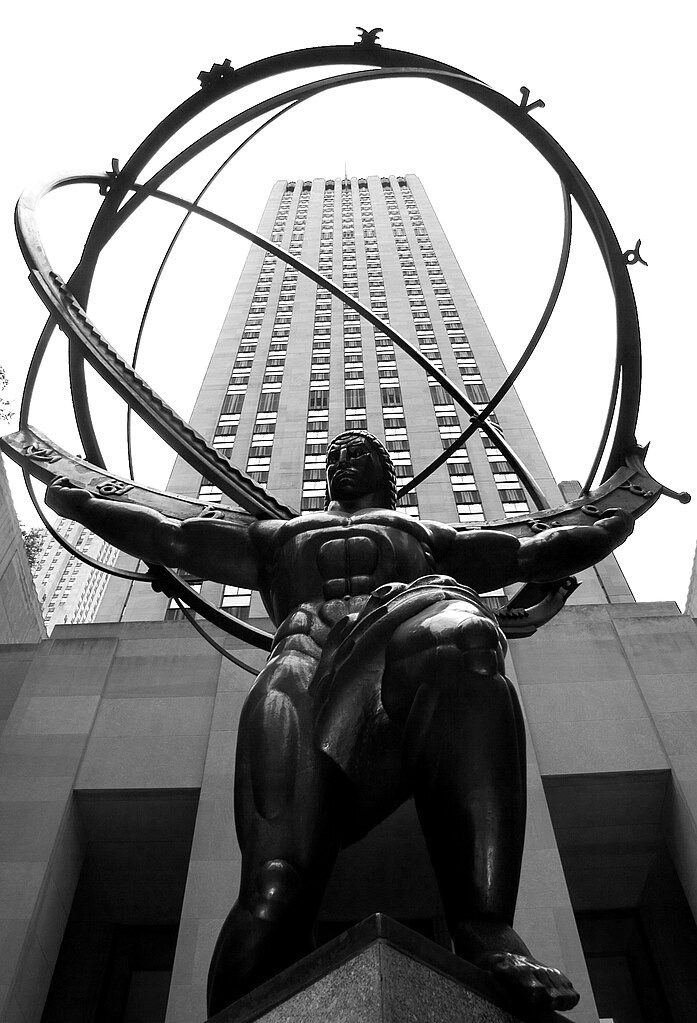
Not only in the latest presidential election but across countless other moments in history, I have found myself reflecting on a peculiar tension: the concept of the mainstream. What defines the mainstream, and how is it maintained? Whether in movie reviews, where expert critics and audiences diverge dramatically, or in the polarizing reactions surrounding figures like Donald Trump, this recurring divide feels emblematic of something deeper.
The memory of Ayn Rand’s books—Atlas Shrugged and The Fountainhead—stands out in this context. As a young reader, I was struck by the fervor her works inspired, particularly her philosophy of Objectivism, which has built a passionate and enduring following. For many Americans, Rand’s books are ranked among the most influential of all time, second only to the Bible, according to certain surveys. Yet this influence remains virtually invisible within the walls of academia. Her work is dismissed, ignored, or outright criticized by intellectual elites, creating a profound gap between her widespread cultural impact and her institutional marginalization. This phenomenon—the rejection of influential ideas or figures by the so-called mainstream—appears everywhere in the modern world, but it has a particular resonance in American society.
What drives this tension? Why do certain individuals, ideas, or movements find themselves sidelined, even as they shape the very culture that ignores them? Exploring this question reveals not just a pattern but a mechanism—an ongoing interplay between the arbiters of credibility and those who thrive outside their validation.
Defining the Mainstream
The term “mainstream” evokes a sense of consensus, a collective agreement about what holds value in society. In its purest form, the mainstream represents the central current of thought, art, politics, or culture—a space where norms are established and ideas are refined. Yet it is also a construct, maintained by institutions that act as gatekeepers, determining which voices are deemed credible and which are dismissed.
At its best, the mainstream functions as a stabilizing force. In philosophy, literature, and science, it has historically upheld rigorous standards, ensuring that ideas withstand scrutiny before gaining acceptance. In politics, it fosters continuity, creating a shared framework for debate. Without this filtering mechanism, chaos might reign, with every idea given equal weight regardless of merit or consequence.
However, this process is far from neutral. The mainstream often reflects the biases of those in power—academics, critics, political elites—who shape its contours according to their values and priorities. What falls outside these boundaries is frequently ignored or dismissed, not because it lacks merit, but because it challenges the system itself. In this way, the mainstream becomes not just a reflection of collective wisdom but a tool of exclusion, rejecting voices that disrupt its authority.
The Case of Ayn Rand
Ayn Rand’s position within this dynamic offers a vivid illustration of how the mainstream operates. Her novels, Atlas Shrugged and The Fountainhead, have left an indelible mark on American culture. They are revered by business leaders, politicians, and countless readers who find inspiration in her celebration of individualism, reason, and laissez-faire capitalism. Yet in academia, Rand remains an outlier, dismissed as dogmatic, unsophisticated, or overly ideological.
The reasons for this rejection are manifold. Rand’s philosophy, Objectivism, is unapologetically absolutist. It offers a stark dichotomy between producers and parasites, reason and mysticism, individualism and collectivism. For academics, such black-and-white thinking appears simplistic, failing to grapple with the complexities of human experience. Moreover, Rand’s disdain for established philosophical traditions—her fierce critiques of thinkers like Immanuel Kant—alienated her from institutions that prize engagement with intellectual history.
Yet this dismissal overlooks the sheer breadth of her influence. Rand’s ideas have shaped American political and economic thought, inspiring figures from Alan Greenspan to leaders of the libertarian movement. Her novels remain perennial bestsellers, their appeal enduring across generations. This disconnect—between her widespread cultural impact and her marginalization by academia—highlights the limitations of the mainstream. It reveals how institutions can fail to recognize the significance of ideas that thrive outside their gates.
The Case of Donald Trump
A similar dynamic is evident in the rise of Donald Trump. Like Rand, Trump exists outside the traditional corridors of power, yet his influence is undeniable. His presidency redefined American politics, shifting the discourse around globalization, nationalism, and the role of elites. For his supporters, Trump represents a voice for the “forgotten man,” a champion of those left behind by the status quo. For his critics, he is a dangerous populist, unfit for office and dismissive of democratic norms.
The mainstream’s response to Trump has been characterized by rejection and alarm. Media outlets, political institutions, and cultural elites have largely framed him as an aberration—a deviation from the principles that define American democracy. Yet this framing often ignores the deeper forces driving his popularity. Trump’s appeal lies in his ability to bypass traditional gatekeepers, speaking directly to people who feel alienated by those same institutions. His rhetoric, though divisive, resonates with those who see themselves as excluded from the mainstream.
This rejection by elites has, paradoxically, amplified Trump’s appeal. By casting him as an outsider, the mainstream has reinforced the narrative that he represents a challenge to their authority. In this way, Trump’s rise reflects the limitations of the mainstream’s gatekeeping function. It shows how ignoring or dismissing disruptive figures can backfire, strengthening their influence rather than diminishing it.
The Mechanism of Marginalization
The marginalization of figures like Rand and Trump reveals a broader mechanism at work. The mainstream, as a system, is inherently conservative—it resists change and defends established norms. When faced with disruptive ideas or individuals, it often responds not with engagement but with dismissal. This creates a cycle of rejection and resistance, where those excluded by the mainstream find alternative paths to influence.
The tools of marginalization are varied. Dismissal is perhaps the most common: labeling ideas as simplistic, unworthy, or dangerous allows the mainstream to avoid grappling with their substance. Silence is another strategy—ignoring disruptive voices denies them the visibility that comes with institutional recognition. Misrepresentation, meanwhile, reduces complex ideas to caricatures, making them easier to discredit. Together, these tactics create a barrier that separates the mainstream from those who operate outside its bounds.
Yet this barrier is porous. In an age of decentralized media and grassroots movements, influence no longer depends on institutional approval. Rand’s novels continue to sell millions of copies without academic endorsement. Trump’s message reaches millions through social media, bypassing traditional gatekeepers. This shift challenges the very notion of the mainstream, forcing it to adapt or risk irrelevance.
The Illusion of Neutrality
The mainstream often presents itself as a neutral arbiter, a space where the best ideas rise to the top through merit and rigor. Yet this neutrality is illusory. The mainstream reflects the values and biases of those who control it—academics, critics, media organizations—shaping its priorities and exclusions. What is deemed credible or valuable is not an objective truth but a product of cultural, historical, and political forces.
This illusion of neutrality obscures the dynamic nature of influence. It suggests that those excluded by the mainstream are unworthy, when in fact their exclusion may reflect the mainstream’s limitations rather than their own. Rand’s dismissal by academia, for example, says more about the priorities of the academic establishment than about the value of her ideas. Similarly, Trump’s rejection by elites reflects their discomfort with his disruption of established norms, not the absence of his influence.
Rethinking the Mainstream
The cases of Ayn Rand and Donald Trump challenge us to rethink the concept of the mainstream. They show that influence operates on multiple levels, often bypassing traditional gatekeepers to reach people directly. They reveal the tension between institutional authority and popular appeal, highlighting the ways in which the mainstream can fail to recognize the significance of those who operate outside its bounds.
This dynamic is not unique to Rand or Trump. Throughout history, figures who have shaped the world—whether politically, culturally, or intellectually—have often been ignored or dismissed by the mainstream in their time. The cycle of marginalization and influence is a recurring one, ensuring that the boundaries of the mainstream are constantly being tested and redefined.
The Myth of the Mainstream
The “myth of the mainstream” lies in its claim to define what is valuable, credible, or legitimate. In reality, the mainstream is a construct—a system of inclusion and exclusion shaped by those in power. Figures like Ayn Rand and Donald Trump expose its limitations, showing how influence can thrive outside institutional validation.
This tension is not a flaw but a feature of the mainstream’s design. It reflects the inherent conservatism of systems that seek stability and consensus. Yet it also reveals the potential for disruption, the power of ideas and individuals to reshape society despite their rejection by the establishment. In this way, the myth of the mainstream serves as both a challenge and an opportunity—a reminder that influence is not confined to the boundaries of institutional approval, but exists wherever people are inspired, moved, and changed.
Image: Atlas statue located at Rockefeller Center
 Tom’s Blog