

The recent 2024 Netflix release of Grave of the Fireflies (1988) marks a significant milestone in animation history, introducing new audiences to a masterpiece crafted 36 years ago. This global distribution is not just a re-release; it’s an opportunity for viewers around the world to engage with Isao Takahata’s artistic vision and the unique contributions he made to animation. Unlike many animated works that prioritize fantasy or escapism, Grave of the Fireflies immerses audiences in the harsh reality of wartime Japan, forcing viewers to confront the resilience and suffering of its characters.
For Takahata, animation was more than a medium for fantastic storytelling; it was a vehicle for depicting complex human emotions and societal issues. His dedication to realism stands as a powerful counterpoint to more traditional animated films, which often focus on whimsical or fantastic narratives. Grave of the Fireflies exemplifies this commitment to authenticity, with every detail meticulously designed to evoke the real challenges faced by those affected by war. As this film reaches a global audience via Netflix, it offers a fresh lens through which to appreciate Takahata’s unique approach to animation as a form of artistic realism.
This new release also highlights Takahata’s influence on the evolution of animation as an art form. His work expanded the boundaries of animated storytelling, proving that animation could tackle mature themes with depth and sophistication. By bringing Grave of the Fireflies to a global streaming platform, Netflix allows new generations to experience the emotional gravity of Takahata’s work and witness firsthand how his films transcend conventional animation to deliver profound human truths.
The Tale of Two Directors
When Grave of the Fireflies premiered in 1988, it shared a double billing with My Neighbor Totoro, a decision that highlighted the stark contrast between the styles of Studio Ghibli’s founding directors. Hayao Miyazaki’s Totoro invites audiences into a magical world of forest spirits, childhood innocence, and the wonders of nature, where hardships are softened by fantasy and wonder. In contrast, Takahata’s Grave of the Fireflies grounds viewers in the harrowing story of two siblings struggling for survival during World War II, portraying the cruel realities of war without the solace of an escapist fantasy.

This juxtaposition of films illuminated the distinct approaches that Miyazaki (January 5, 1941 -) and Takahata (October 29, 1935 – April 5, 2018) brought to their work. While Miyazaki often explores themes of harmony with nature, individual heroism, and resilience within imaginative worlds, Takahata digs into the complexities of human relationships, societal structures, and moral ambiguity within a realistic framework. The pairing of these films on a single bill symbolized the yin and yang of Studio Ghibli’s creative philosophy: Miyazaki’s hopeful idealism balanced by Takahata’s poignant realism.
Takahata’s focus on realism extended beyond just the subject matter. His meticulous attention to the subtleties of human behavior and social dynamics lent an almost documentary-like quality to his films, where characters encounter both kindness and cruelty in their interactions. This approach is a far cry from Miyazaki’s world, where good often triumphs over evil through magical or extraordinary means. By choosing to explore everyday struggles and moral complexity, Takahata established a unique voice within the animation industry, challenging audiences to confront uncomfortable truths.
The Power of Collaboration
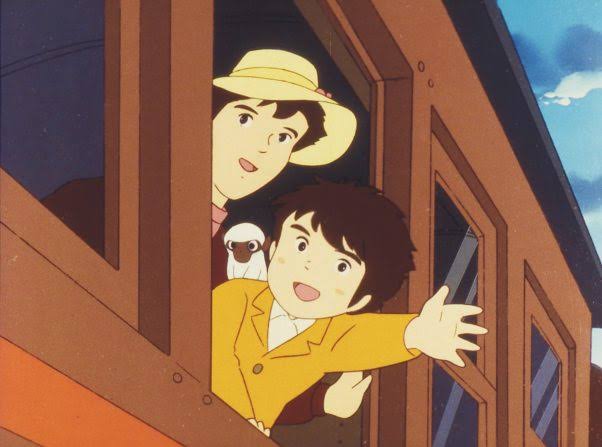
The early partnership between Takahata and Miyazaki, forged during their pre-Ghibli years, produced a series of works that managed to balance their contrasting sensibilities. Their collaboration on Heidi, Girl of the Alps demonstrated how their different strengths could harmonize, creating a series that was both visually captivating and deeply grounded in human emotion. Takahata’s direction brought authenticity and emotional weight to the characters, while Miyazaki’s artistic style added warmth and visual poetry, resulting in a work that resonated with both children and adults.

This collaborative dynamic continued to enrich their work, even when they took on different roles within the same projects. In A Dog of Flanders, a project with more limited involvement from both directors, their influence was still felt. The series maintained Takahata’s characteristic realism while incorporating Miyazaki’s flair for visual storytelling, creating a narrative that could address serious themes without alienating younger viewers. These projects illustrated how the intersection of their artistic philosophies could elevate animation, setting a foundation for the creative direction that would later define Studio Ghibli.

Their partnership also laid the groundwork for the broader range of storytelling seen in Ghibli’s productions, showing how animation could address complex themes while remaining accessible. Takahata’s commitment to realistic storytelling was tempered by Miyazaki’s softer, more fantastical perspective, creating a balance that allowed their works to explore diverse aspects of the human experience. Through their early collaborations, Takahata and Miyazaki demonstrated that animation could be a medium for both profound introspection and visual delight.
Takahata’s Distinctive Voice
As Takahata established himself as an independent director, his approach to filmmaking took on an intellectual depth that distinguished him from his peers. Unlike Miyazaki, who is celebrated for his intricate drawings and imaginative worlds, Takahata focused primarily on directing and screenwriting, viewing animation as a means to explore the nuances of human nature and societal issues. His films are characterized by a scholarly approach, often grounded in literature and philosophy, and they use animation not to escape reality, but to confront it.
One of Takahata’s most notable works, 3000 Leagues in Search of Mother, as well as his later masterpiece Grave of the Fireflies, demonstrate his willingness to tackle difficult subjects head-on. These films examine themes of loss, resilience, and the impact of social circumstances on individuals. Takahata’s characters often find themselves trapped by circumstances beyond their control, yet their responses to these challenges reveal profound truths about human nature. This exploration of character, rather than plot-driven action, is a hallmark of Takahata’s style and sets his work apart from more conventional animated narratives.
Takahata’s films also challenge the viewer to consider the broader implications of personal choices within a societal framework. In Grave of the Fireflies, the siblings’ struggle for survival is not merely a personal tragedy but a reflection on the societal failures and moral dilemmas of wartime Japan. Takahata’s ability to weave these complex themes into his narratives without moralizing or simplifying makes his films resonate with audiences across generations. His focus on realism and authenticity has left a lasting impact on the animation industry, demonstrating that animated films can tackle mature, thought-provoking themes with the same gravity as live-action cinema.
Contemporary Relevance
The 2024 Netflix release of Grave of the Fireflies comes at a time when audiences are increasingly drawn to meaningful and sophisticated storytelling in animation. Takahata’s work exemplifies how animation can address mature themes with emotional depth and intellectual complexity. At a time when animated films are often expected to entertain rather than provoke reflection, Takahata’s approach serves as a reminder of the medium’s potential for profound storytelling. His films encourage viewers to confront difficult truths, offering a counterpoint to the more commercialized, entertainment-driven narratives that dominate the industry.
This renewed exposure to Takahata’s work highlights the importance of his legacy for a contemporary audience. While Miyazaki’s films have garnered widespread commercial success and acclaim, Takahata’s contributions offer an equally vital perspective, one that challenges and expands the viewer’s understanding of animation as an art form. By making Grave of the Fireflies available on a global streaming platform, Netflix enables a new generation of viewers to experience Takahata’s commitment to authentic storytelling and his willingness to explore the darker aspects of human experience.
Through his realistic approach, Takahata set a precedent for animated films that address complex emotions and societal issues with sensitivity and insight. His work proves that animation need not be limited to children’s entertainment or fantasy, but can also serve as a powerful medium for social commentary and human drama. As audiences around the world revisit Grave of the Fireflies, they are invited to see animation through Takahata’s eyes – as a vehicle for exploring humanity’s deepest and most challenging questions.
Legacy and Impact
Takahata’s influence on animation extends beyond his individual films, leaving an enduring legacy that has shaped the industry’s artistic possibilities. His determination to address serious themes and his commitment to realism redefined the expectations for animated storytelling, demonstrating that animation can be as powerful and impactful as live-action cinema. By using the medium to explore human nature and societal issues, Takahata expanded the boundaries of what animation could achieve, inspiring future generations of filmmakers to see animation as a form of artistic expression capable of addressing the full spectrum of human experience.
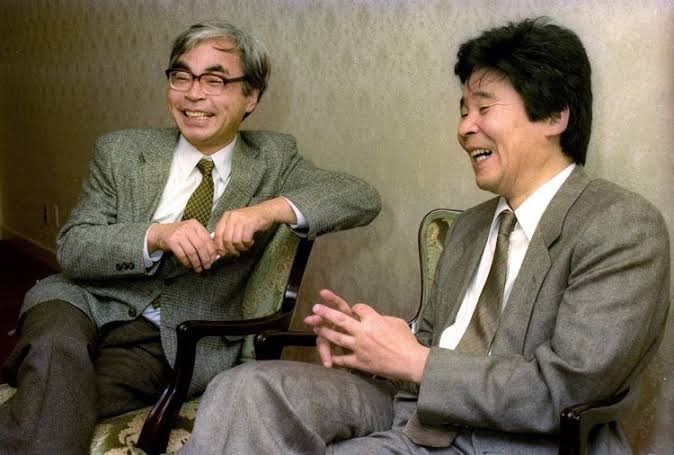
The contrast between Takahata’s realism and Miyazaki’s idealism ultimately strengthened Studio Ghibli’s artistic range, allowing the studio to offer diverse perspectives on the human condition. While Miyazaki’s works often celebrate the beauty of nature, individual heroism, and resilience, Takahata’s films explore the complexity of human relationships, societal pressures, and moral ambiguity. Together, their contrasting styles have allowed Studio Ghibli to create a body of work that resonates with audiences of all ages and backgrounds, providing insights into both the magical and the mundane, the joyful and the tragic.
As new audiences discover Grave of the Fireflies on Netflix, Takahata’s legacy continues to grow, reminding viewers of the profound potential of animation to illuminate the human experience. His films, grounded in authenticity and emotional depth, remain as relevant today as when they were first released, inspiring audiences to look beyond entertainment and consider the deeper truths that animation can reveal. Through his work, Takahata demonstrated that animation is not merely a medium for escapism, but a powerful tool for exploring the essential questions of life. His legacy endures as a testament to animation’s capacity to delve into themes that resonate universally, transcending language and culture.
Takahata’s legacy is a reminder that animation, often associated with whimsy and fantasy, has a profound power to reflect the human experience in all its complexity. By challenging the notion that animated films are primarily for children, Takahata paved the way for a more sophisticated understanding of the medium. His films speak to audiences of all ages, appealing not through spectacle, but through emotional depth and social insight. This enduring relevance illustrates the timeless quality of his work, which continues to invite reflection on the beauty and tragedy of life.
In a world where animation is increasingly utilized to tell diverse stories, Takahata’s influence remains invaluable. He showed that animation could serve as a lens through which to view real-world issues, a perspective that is more essential now than ever. Takahata’s work offers a blueprint for using the medium to explore themes of resilience, empathy, and the human spirit, pushing boundaries and inspiring future storytellers to approach animation with the same integrity and respect for their audience. Through this legacy, Takahata’s vision lives on, continuing to shape animation as a medium that, at its best, does more than entertain—it enlightens, educates, and endures.
 Tom’s Blog