
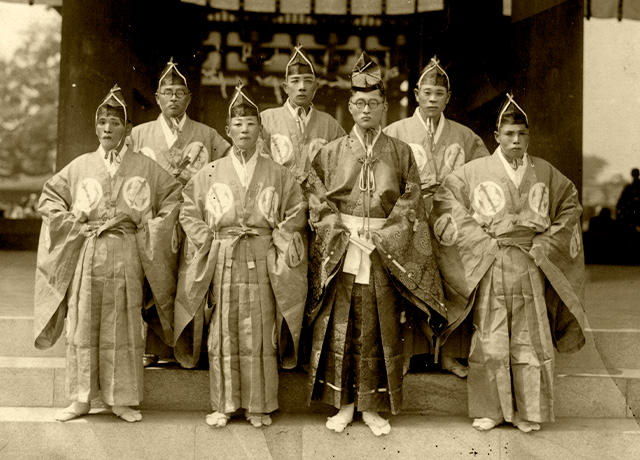
In an era where “change or die” is often touted as a business imperative, examining the story of Kongō Gumi—the world’s oldest continuously operating company—offers a refreshing perspective.
Founded in 578 AD in Osaka, Japan, Kongō Gumi has withstood over fourteen centuries of economic, political, and social upheaval. Its legacy speaks to the power of continuity, resilience, and adaptability in a world where industries constantly evolve and disappear. Kongō Gumi’s ability to endure brings into focus the importance of traditions and how, like companies, they serve as resilient anchors amid shifting societal tides.
Examining this company’s journey, alongside broader cultural practices, reveals how institutions and traditions that sustain their essence over time offer a meaningful framework for navigating the present without sacrificing the lessons of the past.
Longevity Through Values: Kongō Gumi as a Living Legacy
The story of Kongō Gumi offers a contrast to the high-speed, growth-driven world of modern capitalism. For over 1,400 years, Kongō Gumi has specialized in building and maintaining Buddhist temples and Shinto shrines, drawing on a deep well of craftsmanship that has been passed down through generations. The secret to its longevity lies not in constant reinvention but in maintaining values and practices that adapt in response to societal needs. During times when temple construction was less in demand, such as during World War II, the company shifted to crafting coffins, a product still in line with its cultural and spiritual roots. Rather than simply chasing new opportunities for profit, Kongō Gumi continuously found ways to remain true to its identity while serving a role that people valued.

Kongō Gumi’s enduring success shows that adaptability does not mean abandoning one’s core values. Today’s fast-paced corporate world often equates success with rapid transformation and aggressive market expansion. However, Kongō Gumi’s legacy reminds us that sustainable business models may benefit from prioritizing community needs, continuity, and quality over sheer growth. By focusing on their craft and the long-term satisfaction of their communities, Kongō Gumi has weathered wars, economic shifts, and societal transformations that might have destroyed companies rooted solely in profitability. Their resilience points to a model where change is guided by core principles rather than dictated by the pressures of quarterly results.
The lessons of Kongō Gumi extend beyond Japan and the construction industry; they challenge businesses in every sector to rethink the nature of resilience. In a world driven by rapid change, they offer an alternative model where sustainability is achieved not through constant reinvention but through deeply rooted values that are flexible enough to accommodate gradual shifts. The question Kongō Gumi poses to modern corporations is not simply about longevity, but about finding ways to endure in a manner that respects both tradition and progress, merging the two in a balanced approach.
The Wisdom of Tradition: Continuity Without Stagnation
While the longevity of a company like Kongō Gumi is remarkable, it is just one example of a more profound human endeavor: the preservation of tradition. Traditions, whether in craftsmanship, cultural practices, or social customs, are the accumulated wisdom of countless generations. Unlike formal institutions, traditions often lack official structure, yet they survive through the persistent efforts of individuals who see value in passing them down. Just as Kongō Gumi has survived by adapting while remaining true to its roots, traditions endure because they allow for flexibility without losing their essence. They offer continuity without stagnation, evolving slowly to meet the needs of each new era.
The adaptability of tradition holds important lessons for modernity. In a rapidly changing world, traditions can serve as anchors, providing stability while still allowing for growth. Practices like tea ceremonies, martial arts, or religious observances may seem rigid from the outside, yet they adapt subtly over time, responding to the unique pressures of each generation. Traditions are not static; they respond to cultural, social, and technological changes while preserving a sense of identity and purpose. This balance is what allows them to survive for centuries, outlasting many institutions that pursued change without regard for continuity.
Learning from tradition means recognizing that resilience is not about resisting change but about integrating it meaningfully. In business, this could mean defining values that stay constant even as products and strategies shift. For societies, traditions offer a blueprint for preserving cultural memory while engaging with new ideas. In a way, traditions operate on a “millennial scale,” reminding us to view progress as a long-term endeavor rather than a race to reach the next milestone. They reveal that change is most enduring when it respects what has come before, allowing each generation to build on a foundation rather than starting anew.
When Change Becomes Destructive: Lessons from Cultural Genocide
Unfortunately, history also provides examples of attempts to erase traditions in the name of progress. Movements like the Cultural Revolution in China, the Khmer Rouge regime in Cambodia, and even aspects of the Russian Revolution sought to sever societies from their past, equating traditional practices with backwardness. These “cultural genocides” reveal a darker side of “change or die” when leaders interpret progress as a mandate to destroy all remnants of the past. In these cases, traditions were not seen as flexible frameworks but as barriers to a new social order, resulting in the systematic destruction of cultural practices, monuments, and even human lives.
These episodes remind us that radical disruption without regard for cultural heritage and history risks hollowing out the very foundations that allow societies to thrive. When traditions are dismissed as mere relics, societies lose more than rituals; they lose the shared memories, values, and identities that create social cohesion. The belief that wiping the slate clean is the only way to progress is a misinterpretation of “change or die.” Traditions, far from being obstacles to innovation, provide continuity and a grounding framework that allow societies to integrate new ideas without losing their essence.
In reflecting on these tragic events, we are reminded that meaningful progress builds on history rather than discarding it. Innovation does not require destroying the past; rather, it can be enriched by the insights and stability that traditions offer. The resilience of traditions and the human cost of their destruction underline the importance of a balanced approach to change, one that acknowledges the role of heritage as a vital, living part of the present rather than something to be overcome.
The Long-Term View: Technology and the Limits of Rapid Change
Kongō Gumi’s legacy and the resilience of tradition prompt us to consider how we view change in our own era, particularly in sectors like technology, where the pace of innovation is unprecedented. Technology companies, especially those in AI and IT, often embody the “change or die” mindset, pursuing constant innovation to remain competitive. However, approaching technology through a long-term lens, as part of the broader history of human progress, reveals that the most significant breakthroughs often emerge not from abandoning old frameworks but from integrating them thoughtfully into new systems.
AI, in particular, offers a striking example of a technology that has faced skepticism and fear yet holds immense potential if approached with a sense of responsibility and history. Like past technologies, AI’s role in society depends on how it is integrated into existing structures and guided by ethical principles. Rather than viewing AI as a disruption that renders the past obsolete, we can see it as a tool that builds on the collective knowledge of centuries, one that can serve humanity well if used correctly. This perspective challenges the industry to think beyond immediate profit and short-term gains, emphasizing the need for a balanced, thoughtful approach that considers the broader context of AI within the continuum of technological history.
Viewing AI within this long-term framework reminds us that meaningful change does not need to be abrupt or destructive. Every major technological advancement has faced resistance initially, yet technologies that endure are those that evolve in harmony with societal values rather than in opposition to them. Just as Kongō Gumi adapted its craftsmanship to meet changing needs while preserving its essence, modern technologies can adapt to serve human needs without disrupting the social fabric. The question is not whether technology should change us, but how we choose to shape it in ways that respect our shared values and traditions.
Bridging Tradition and Innovation: A Path Toward Sustainable Progress
The lessons of Kongō Gumi, the resilience of traditions, and the consequences of cultural destruction all converge on a central theme: progress is most sustainable when it respects the foundations upon which it is built. The most enduring forms of innovation emerge not from abandoning the past but from a process of thoughtful integration. Kongō Gumi’s legacy illustrates that change, to be meaningful, does not need to discard tradition; rather, it can draw on the wisdom of the past to inform a future that is both adaptable and grounded.

In a world where speed and disruption are often prioritized, it is easy to overlook the quiet strength of continuity. Traditions and institutions that endure offer a reminder that resilience comes from a balance of change and stability. They show that the past, far from being an obstacle, is a resource—a guide that helps societies and industries adapt without losing their essence. In business, this could mean adopting a long-term perspective that values quality and trust over rapid expansion. In technology, it could mean developing frameworks that prioritize ethics and human welfare over pure innovation.
The path toward sustainable progress is not about choosing between change and tradition; it is about finding a balance that honors both. By looking to examples like Kongō Gumi and the wisdom of enduring cultural practices, we can cultivate a model of progress that respects history while embracing the future. Such a model offers not only resilience but also a sense of purpose, guiding us toward a vision of change that serves humanity rather than erasing its foundations. In this way, we can shape a future that is not merely different but truly enriched by the depth and continuity of the past.
Images: Kongō Gumi
 Tom’s Blog
One thought on “Tradition and Continuity in the Age of Rapid Change: Lessons from Kongō Gumi”