
For those who grew up with the original Mobile Suit Gundam in 1979, watching Requiem for Vengeance in Netflix evokes a complex mixture of nostalgia and discovery. The childhood experience of gathering with friends to watch both the TV series and theatrical versions created lasting memories of a groundbreaking series that redefined mecha animation. These early encounters with the One Year War story shaped our understanding of what animated series could achieve in terms of storytelling depth and thematic complexity.
The return to this familiar setting through Requiem for Vengeance creates a unique viewing experience that resonates across decades of fandom. The familiar elements – the imposing presence of mobile suits, the military operations, the moral complexity of the Zeon-Federation conflict – are all present, but viewed through a contemporary lens that adds new layers of meaning.
For “moderate fans” of the franchise, this new interpretation strikes a delicate balance between honoring the source material and pushing creative boundaries. The series manages to capture the essence of what made First Gundam special while offering fresh insights into the conflict that started it all.
Technical Innovation and Evolution
The implementation of Unreal Engine 5 in Requiem for Vengeance represents more than just a technical upgrade – it fundamentally transforms how we experience mobile suit combat. The engine’s advanced capabilities create sophisticated visual fidelity, with real-time lighting and particle effects that make each battle feel immediate and visceral. Mobile suits move with convincing weight and presence, their massive forms casting dynamic shadows across detailed environments.
However, this technical innovation comes with notable trade-offs. While combat sequences showcase the engine’s strengths, human character animations often lack the nuanced expressiveness. These limitations become particularly apparent during intimate character moments, where subtle facial expressions and body language feel somewhat rigid and mechanical. Some core fans have noted that certain mobile suit designs sacrifice the intricate mechanical detail characteristic of the franchise in favor of real-time rendering capabilities.
The visual presentation also marks a significant departure from the aesthetic legacy of the Universal Century timeline. While the modern approach brings spectacular battle sequences to life, it raises questions about whether this new visual style fully aligns with the established look of the One Year War era. Yet, these technical compromises ultimately serve a greater purpose in making the conflict feel more immediate and accessible to contemporary audiences.
Historical Resonance and War Narrative
The decision to set the story during the Battle of Odessa carries multiple layers of significance. The real-world Odessa has been a strategic focal point throughout military history, from World War II to contemporary conflicts. This historical weight lends authenticity to the fictional battle, grounding the science fiction narrative in recognizable military strategy and geographical importance.
Within the Gundam universe, the Battle of Odessa represents a crucial turning point in the One Year War, much like how the Normandy landings altered the course of World War II. The parallel between these military operations extends beyond mere setting – both involved massive coordinated efforts that shifted the balance of power in their respective conflicts. The series draws subtle but meaningful connections between historical events and its fictional narrative, enriching both contexts.
The portrayal of military operations in Requiem for Vengeance maintains the realistic approach that made First Gundam revolutionary. The series depicts warfare as a complex interplay of strategy, technology, and human factors, avoiding the simplistic good-versus-evil narratives common in mecha shows of the era. This grounded approach to military science fiction continues the tradition established by the original series while adding contemporary perspectives on warfare.
The Complexity of Home and Identity
The series masterfully portrays the internal conflict of Zeon soldiers regarding their sense of belonging. While fighting against Earth Federation forces, these space-born warriors experience a profound connection to the Earth they’re trying to conquer. This ambivalence is particularly evident in scenes where Iria Solari and her comrades gaze upon Earth’s landscape, their expressions mixing awe with a sense of ancestral connection to the planet their ancestors once called home, even as they acknowledge that their true home lies among the stars.
This dual identity creates a unique psychological tension within the Zeon forces. Despite their adaptation to life in space colonies and their political alignment with Zeon’s independence movement, they cannot fully dismiss their complex relationship with Earth. The series captures this duality through subtle moments: soldiers discussing their families’ histories on Earth, their visceral reactions to experiencing Earth’s gravity, and their bittersweet recognition that while Earth holds their past, space represents their future. This sentiment crystallizes in the poignant final moment when they look skyward, affirming their true belonging among the space colonies.
The Battle of Odessa becomes more than just a military campaign – it represents this internal struggle for identity. As Zeon forces fight on Earth’s soil, they come to terms with their evolution as a spacefaring people while acknowledging their terrestrial origins. This emotional complexity adds depth to what might otherwise be a straightforward military conflict, reflecting the larger themes of evolution and progress that run throughout the Gundam franchise. Their final glance toward the stars serves as a powerful reminder that home is not where you came from, but where you choose to belong.
Character and Narrative Development
The series centers on Iria Solari, whose character brings depth to the Zeon perspective. As both a veteran pilot and a mother, she embodies the complex human reality behind the conflict. Her maternal instincts create a compelling internal conflict when confronting the Federation’s young Gundam pilot, forcing her to see beyond military objectives to the human cost of war. This dual perspective transforms what could have been a simple military narrative into a nuanced exploration of war’s impact on both soldiers and families.
The portrayal of the Gundam as a “white devil” through Zeon eyes represents a masterful reversal of the traditional narrative. While the original series presented the Gundam as a symbol of hope and resistance, Requiem for Vengeance shows how the same machine appears as a terrifying force of destruction to opposing forces. This shift in perspective gains additional power through Iria’s recognition that behind this fearsome weapon is a pilot close to her son’s age, creating layers of emotional complexity rarely seen in the franchise.
The six-episode format, while constraining certain aspects of storytelling, forces a tight focus on these core themes. Each battle sequence serves character development rather than mere spectacle, while quiet moments carry the weight of impending conflict. The shortened format also helps maintain narrative tension throughout the series, though some fans argue it limits the full exploration of supporting characters and broader political themes that longer Gundam series typically afford.
Legacy and Impact
First Gundam’s influence on the mecha genre cannot be overstated, establishing conventions that would define “real robot” anime for decades. Requiem for Vengeance honors this legacy while pushing boundaries in both technical execution and narrative approach. The series demonstrates how the One Year War setting remains relevant for exploring contemporary themes through the lens of science fiction.
The show’s success in balancing innovation with tradition offers a potential blueprint for future Gundam adaptations. By maintaining core elements that made the original series accessible – clear narrative stakes, relatable human drama, realistic military operations – while incorporating modern storytelling techniques and visual capabilities, it creates a bridge between different generations of fans.
The series also proves that side stories and alternate perspectives can enrich rather than dilute the original narrative. By focusing on a specific battle and character, it adds depth to the broader Universal Century timeline without becoming entangled in complex continuity issues that might alienate newcomers.
Bridging Past and Future
Gundam: Requiem for Vengeance succeeds as both a technical achievement and a thoughtful expansion of the One Year War narrative. Despite its limitations in character animation and compressed storytelling format, the series demonstrates how returning to familiar territory with fresh perspectives can yield compelling results. The combination of personal drama, military realism, and technical innovation creates an experience that resonates with both longtime fans and newcomers.
The series represents a significant step forward in how classic anime properties can be reimagined for modern audiences. By maintaining the serious approach to warfare and human drama that characterized First Gundam while embracing contemporary animation techniques, it creates something both nostalgic and new. The exploration of identity and belonging through the Zeon perspective adds layers of complexity to the established narrative, while Iria Solari’s story brings a fresh human element to the familiar conflict.
As the Gundam franchise continues to evolve, Requiem for Vengeance stands as a testament to the enduring power of the One Year War setting to generate meaningful stories about the human experience of conflict. Through its technical innovations, historical parallels, and character-driven narrative, the series proves that even after more than four decades, there are still new perspectives to be found in this seminal period of the Universal Century timeline. The show’s ability to balance nostalgia with innovation, technical spectacle with human drama, and military action with emotional depth makes it a worthy addition to the Gundam legacy.
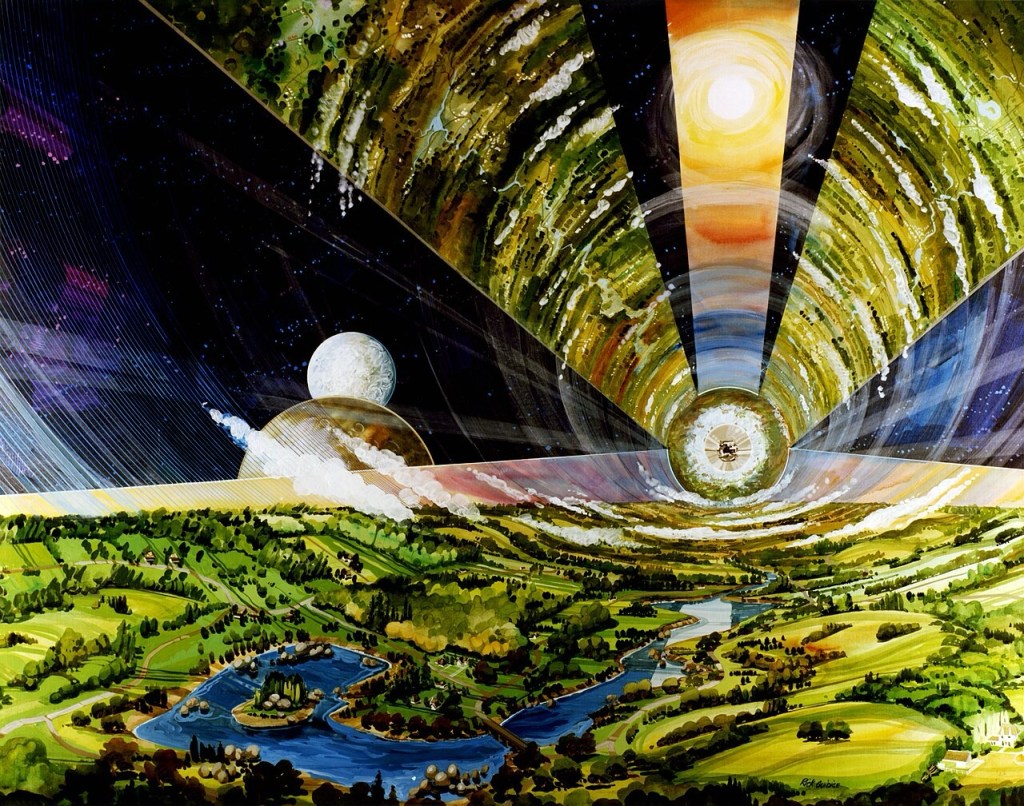
Image: Space settlement
 Tom’s Blog